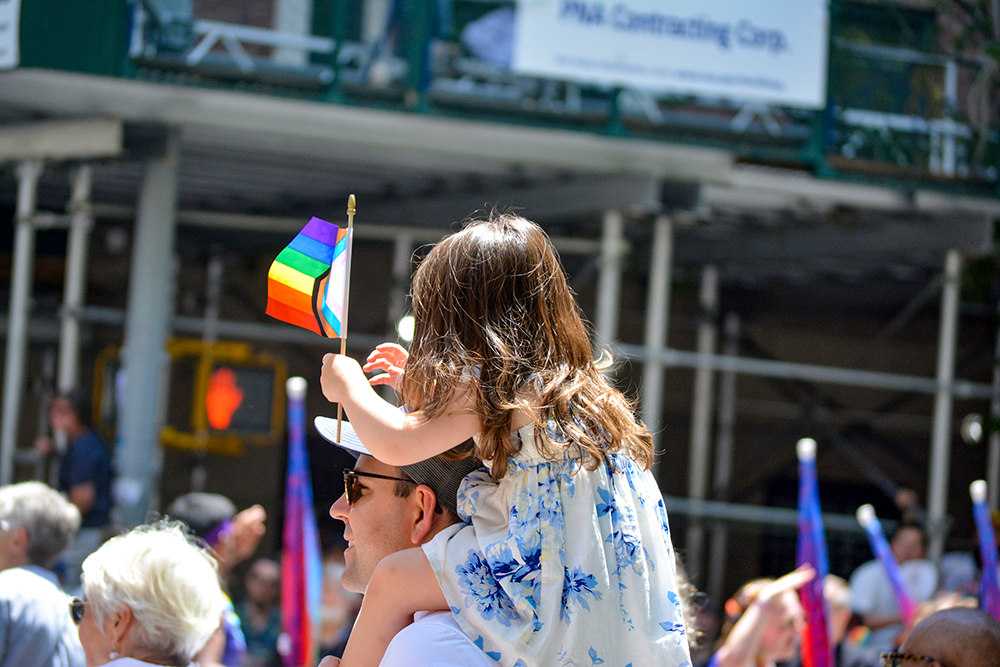
A child waves a pride flag at the New York City Pride Parade in Manhattan June 29, 2025. (Dreamstime/Cpenler)

by Emma Cieslik
Last month, the U.S. Supreme Court issued a landmark decision siding with parents who want to opt their children out of public lessons that include LGBTQ+ stories. While the decision was not a final ruling — it has been sent back to the lower courts with SCOTUS' new guidance in hand — a win is all but guaranteed for the Maryland parents.
It was a devastating blow to the LGBTQ+ community, especially queer public historians like myself, and a firm reminder of how anti-LGBTQ+ political movements leverage "parents' rights" against and above the safety of LGBTQ+ children.
While the parents in the suit argued that they are exercising a religious liberty, queer public historians and storytellers like Jason Steidl Jack, a gay Catholic theologian, know that this decision will not stop LGBTQ+ people — including children — from existing, nor will it stop the work that we do.
Jack has previously written about the importance of claiming LGBTQ+ Catholic history in his book LGBTQ Catholic Ministry: Past and Present. Born in Ohio in 1985, Jack did not have access to queer histories, much less Catholic ones.
In an interview with NCR, he said, "I didn't have access to stories, even library books, about LGBTQ+ people. I didn't know any openly LGBTQ+ people in my life."
Advertisement
At the time, there were many children in the rural Midwest who didn't have access to such stories. Strides have been made in recent decades, which makes the Supreme Court's recent decision even more devastating.
"Today, people know and they are deliberately excluding these resources from children's libraries, children's education," Jack said. "I think it's a much graver injustice today than it was when I was a child."
"What a loss," he said, "that in 2025, after there's been so much work, so much activism put in, that children in some parts of the country will still not feel represented, will still not have any understanding of what it means to be an LGBTQ+ people."
Queer and trans children will continue to exist and be born into religious families, but will remain unresourced and unrepresented. This will cause real harm to LGBTQ+ children. A 2021 study found that access to queer representation in media not only helps queer people understand their identities but also provides ways to educate their loved ones. Such representation provides the language and tools to explain that LGBTQ+ people are not new, nor are their identities at odds with their faith.
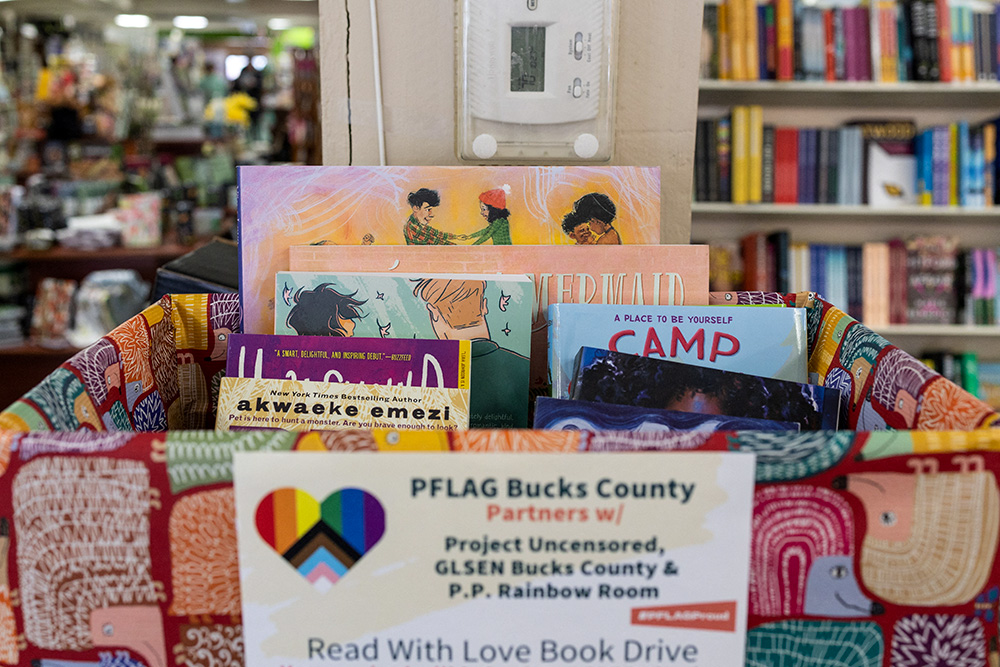
LGBTQ-themed storybooks are seen in a donation box at the Doylestown Bookshop in Pennsylvania April 7, 2023. (OSV News/Reuters/Hannah Beier)
"I didn't know what a flourishing gay life could look like," Jack said. "I didn't know what it would mean to be a queer person of faith. Growing up, these ideas, these identities were incompatible within my family, within my faith community."
Bestselling stories like Sonora Reyes' The Lesbiana's Guide to Catholic School depict lives in which queer people of faith exist and find happiness, love and gender euphoria. These stories are not only a form of spiritual care but are beneficial to the mental health of LGBTQ+ children. As Joshua Goodman, assistant professor of psychology at Southern Oregon University said, "having an LGBTQ-inclusive curriculum is associated with lower rates of suicide attempts for queer youth and higher GPAs for LGBTQ students."
The children whose parents want to opt out of lessons with LGBTQ+ stories are the very ones who need this representation the most. And for those children who are not LGBTQ+, a lack of diverse representation perpetuates homophobia and robs them of the opportunity to grow in empathy.
Elizabeth Kriebel, a queer Catholic museum professional, says that lack of representation led her to feelings of confusion, isolation and fear as a child and young adult. She worries about the impact of book bans on children today.
'Silence is violence, and visibility is resistance, so I am committed to continue telling queer stories.'
—Elizabeth Kriebel
"If archivists and historians are not allowed to learn about themselves as children," she asks, "who will tell our stories when we are gone?"
Restricting access to LGBTQ+ stories inadvertently means restricting access to many Catholic stories, since LGBTQ+ individuals have long been leaders in faith circles. Will children learn about the gay Catholic priest and Franciscan friar who served as chaplain for the New York City Fire Department and was the first confirmed casualty on 9/11? Will they learn about community pioneers like gay Catholic activist Brian McNaught or lesbian Catholic nun Nancy Manahan? What about our rich history of gender expansive saints?
"We read that we are fearfully and wonderfully made. Many of the saints in our church led lives which we would read as queer today. Under this decision, will their lives be censored?" Kriebel continued, "Silence is violence, and visibility is resistance, so I am committed to continue telling queer stories. Madonna di Montevergine and all you queer saints, pray for us."
As director of Queer and Catholic: A CLGS Oral History Project, I find the preservation of history to be sacred. The stories I record not only hold institutions accountable by documenting systemic harm in the church, but they also showcase queer Catholic joy and liberation.
The recent Supreme Court decision not only hinders this work but mistakes the movement of "parental rights" for permission to erase LGBTQ+ people, deny the existence of queer and trans children, and violate the religious liberty of queer people of faith striving to share their own stories.