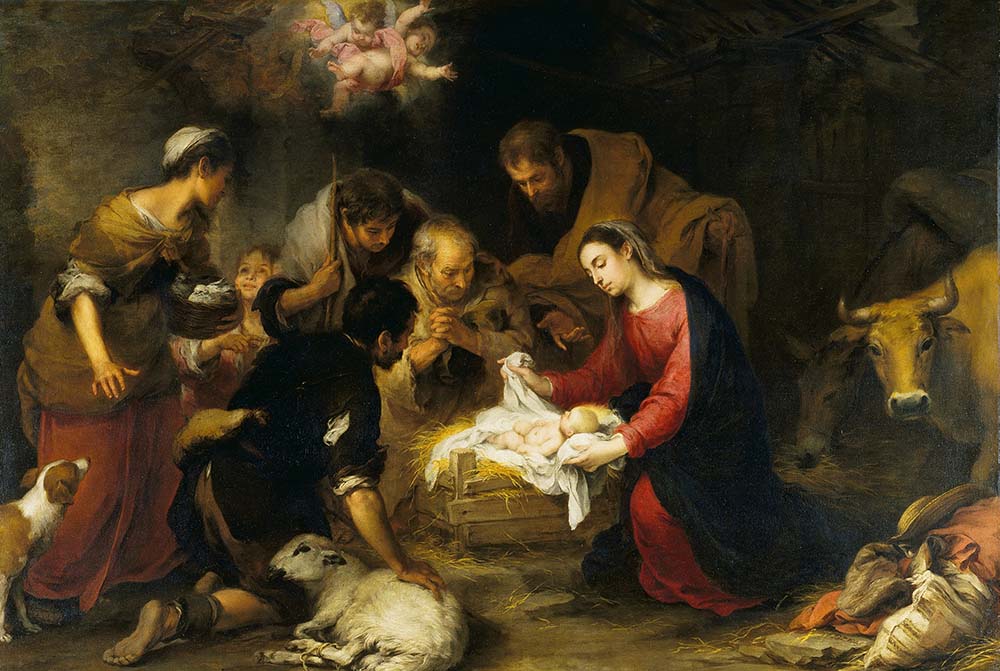
"The Adoration of the Shepherds" by Bartolomé Estebán Murillo (Artvee)

Advent began yesterday. "O house of Jacob, come, let us walk in the light of the Lord!" the prophet Isaiah told us at Mass yesterday. Jesus urged us to be wakeful in Matthew's Gospel: "So too, you also must be prepared, for at an hour you do not expect, the Son of Man will come." Advent is a forward looking season and what is it to which we look forward? Grace.
In a sense, Advent began back in March, on the Feast of the Annunciation. Luke's Gospel tells us that the angel Gabriel appeared to the Blessed Virgin, greeting her with the words: "Hail, full of grace! The Lord is with you." Advent is Marian at its core, for it is she who is pregnant with the Word of God. The Incarnation happens in her womb. There, the second person of the Trinity becomes the Word made flesh. How proper it is that we also call the mother of God the mother of the church. The body of Christ, which is the church, still becomes incarnate in her womb.
Advent is also a time of penance. How else are we to prepare ourselves to receive grace than by confessing our sins? The Hebrew and Christian Scriptures are filled with instructions on how we are to live, but the word of God comes alive and pierces our minds and hearts when we recognize our unworthiness. It is then, and only then, when we recognize how great a gift we receive in the Lord who washes away our sins. He is "death of death, and hell's destruction" as we sing in the great hymn "Guide Me, O Thou Great Jehovah."
Advertisement
This year, we have a son of Augustine in the chair of St. Peter. The bishop of Hippo did not shy away from confronting the sinfulness of the human heart. He saw the way it lurks in even our good deeds. What would he make of our contemporary insistence of self-promotion and relentless affirmation? He would have none of it. Augustine understood that acknowledgement of our sinfulness was one of the necessary predicates for true conversion and self-surrender to which any follower of Christ must see him or herself called. No matter what the pop psychologists think, shame is a necessary part of the Christian vocation.
The other predicate for conversion has to do with human nature. On the Feast of Christ the King, we listened to St. Paul's beautiful hymn to the Colossians:
He is the image of the invisible God,
the firstborn of all creation.
For in him were created all things in heaven and on earth,
the visible and the invisible.
Augustine knew that we were created in Christ, that our innermost nature is restless until we rest in him, and that while that nature is stained by sin making our efforts to rest in the Lord fitful and frustrating, it is yet possible to be saved from that torment through grace. Indeed, grace is the only way to be saved.
A friend the other day commented on the parable of the sheep and the goats found in the Gospel of Matthew 25: "Whatever you did for one of these least brothers of mine, you did for me." My friend said, "Matthew 25 is the heart of the Gospel." It is easy to understand what he meant at a time when our country is not welcoming the stranger, which was the topic of our conversation.
But my friend was also quite obviously wrong. Setting aside the fact that this parable is found in only one of the four Gospels, the heart of the Gospel, of all four of them, the very content of the Christian kerygma, is the passion, death and resurrection of the Lord. "Being Christian is not the result of an ethical choice or a lofty idea, but the encounter with an event, a person, which gives life a new horizon and a decisive direction," Pope Benedict XVI reminded us in Deus caritas est.
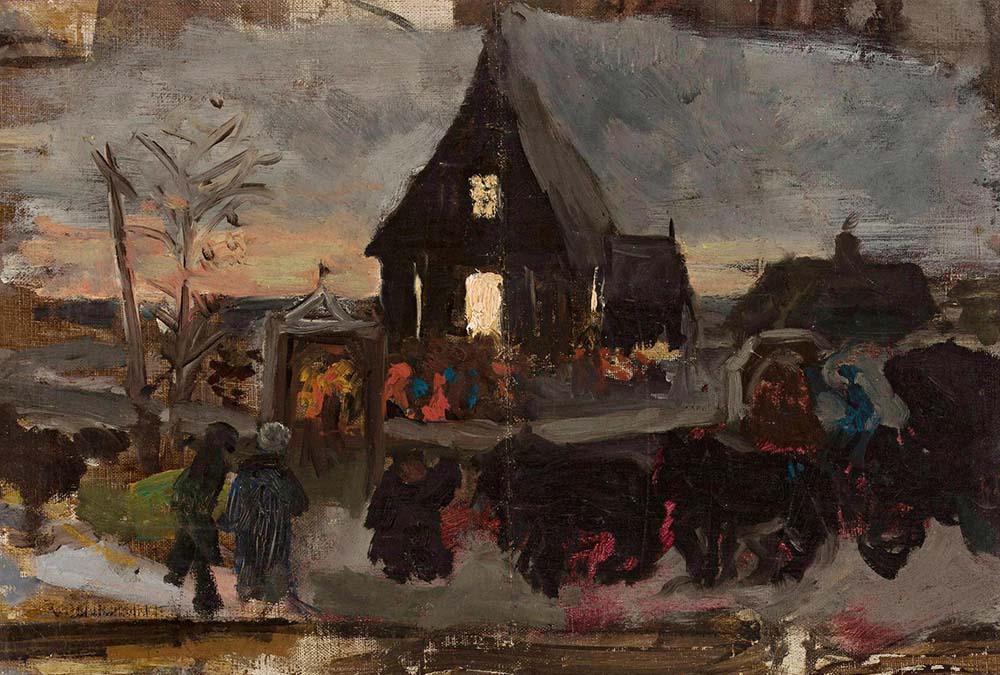
"To the Advent Dawn Mass," a sketch by Wojciech Piechowski (Artvee)
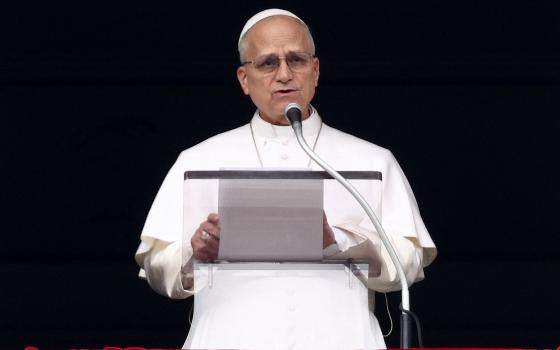
Pope Leo XIV's apostolic letter, In Unitate fidei, issued last week in advance of his trip to Turkey and Lebanon, marked the 1700th anniversary of the Nicene Creed and echoed Benedict. The pope wrote:
The profession of faith in Jesus Christ, our Lord and God is the center of the Nicene-Constantinopolitan Creed. This is the heart of our Christian life. For this reason, we commit to follow Jesus as our master, companion, brother and friend. But the Nicene Creed asks for more: it reminds us not to forget that Jesus Christ is the Lord (Kyrios), the Son of the living God who "for our salvation came down from heaven" and died "for our sake" on the cross, opening the way to new life for us through his resurrection and ascension.
The heart of the faith is not ethical, even if it has ethical consequences, enormous ethical consequences. We are called to more than we humans can achieve, more even than we can understand.
Unless we place this awareness at the center of our consciousness as Christians, we will over time begin to slip into the heresy of Pelagianism, the idea that our good deeds will merit heaven. We will, over time, fixate on others' deeds rather than our own, so convinced we are of our own moral virtue. (And so pathetically obvious in our ability to signal that virtue!) Augustine understood the depths of human sinfulness too well to fall for the heresy of Pelagianism. We should too.
Augustine is not called "the doctor of sin." He is "the doctor of grace." He understood Advent well. He grasped in the depths of his soul what it felt like to have been traveling to Bethlehem with Mary and Joseph, to be the innkeeper who had no room, to be a shepherd tending the flock, all unaware of what was about to happen. Grace is not merited. It is gratuitous.
It is also painful. One of the most haunting images of the Child Jesus is found in a painting by Bartolomé Esteban Murillo in which the Christ Child is asleep on the cross. Suffering, not self-assurance, is redemptive.
Advent is the time of preparation to receive the grace of Christmas the only way we Christians can truly prepare: clinging to the cross and begging for mercy for our sins. We can deck the halls with boughs of holly, but we must deck our souls with contrition.