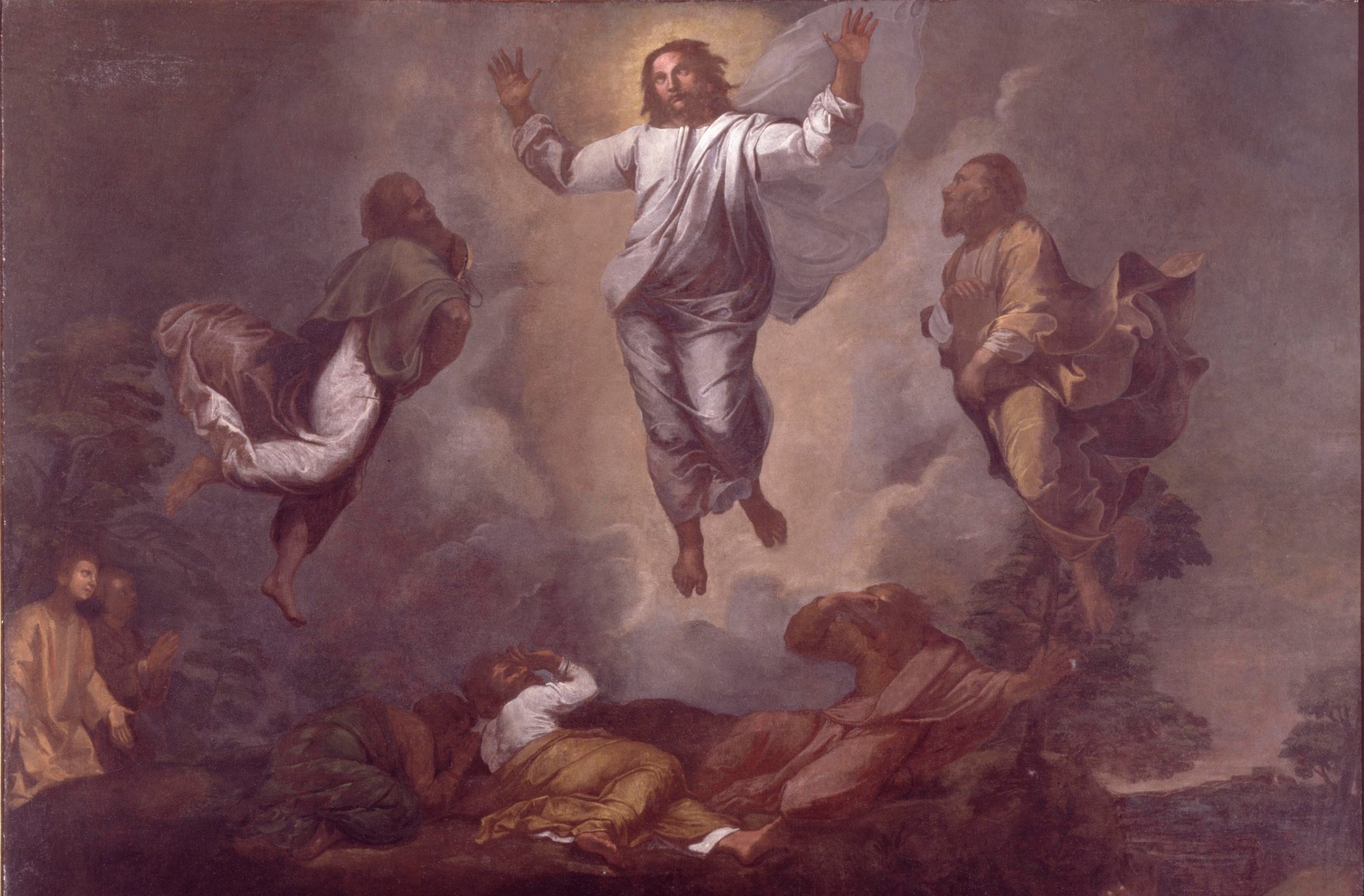
A portion of "The Transfiguration" (1560-1520) by Raphael (Artvee)
by Mary M. McGlone
Go forth: That's God's word to us today.
One of our undeclared American saints is the bishop Dom Helder Camara of Brazil. Living and ministering among the poor of Brazil, he promoted "Abrahamic" spirituality, a path of openness to growth, ready to go wherever God might lead. One particular quote summarizes his spirituality: "Accept surprises that upset your plans, shatter your dreams, give a completely different turn to your day and who knows? — to your life. Leave the Father free himself to weave the pattern of your days."
God invited Abram to leave all behind and venture into the unknown, trusting solely in God's promise. Abram took the offer and became the father of nations, the patriarch of three world faiths. He changed the world forever.
Paul wrote to Timothy reminding him that their strength came from God. There's a trick hidden here: Nobody is assured of receiving God's strength until they venture beyond their own, often self-imposed, limits. Go forth!
Paul told Timothy that God "called us to a holy life." Paul humbly insisted that the holy life is not possible to achieve on one's own: Holiness is a work of God with a community and we know God's design for humanity through Jesus.
The early Christian community, like Abram, would pave their path by walking. Just as Abram had to abandon all that had defined his life, those who hope to find God's strength and grace must venture far enough beyond their security to experience what only God can give. God's grace gives us the strength to set off. Then, God's grace appears most vividly in difficult circumstances. The future is God's design, not ours. These readings lead us to the Transfiguration because they are about transformations.
To understand the Gospel account of the Transfiguration, we need to remember the context Matthew gave it. He told the story of the Transfiguration just after Jesus asked the disciples, "Who do you say that I am?" When Peter declared that Jesus was the Messiah, Jesus swore him to silence. The disciples had faith in him, but Jesus knew he would be a Messiah unlike any they hoped for or expected.
On the seventh day after this incident, Jesus went up a mountain with three disciples. There, with his prediction of suffering and death still ringing in their ears, he appeared to them in an absolutely new dimension. Jesus the Messiah appeared in divine glory. The simple pilgrim preacher they knew so well shone within the glory of God, revealing his deepest identity and God's design for all of humanity. As they stood baffled by seeing the glory of a soon-to-suffer Messiah, they heard God declare, "Listen to him."
At first, Jesus' appearance in glory must have seemed a dream come true for Peter. Seeing Jesus with Moses and Elijah revealed Jesus as the Messiah who fulfilled the law and the prophets. Then, instead of letting them preserve the vision, Jesus led them down from the heights, commanding them not to tell anyone about their experience — the very same thing he had said about not proclaiming him as the Messiah.
Advertisement
The disciples had to remain silent because they couldn't yet grasp who Jesus really was. Teacher, healer, friend, leader: He was all of those. But the idea that the Messiah would reveal the love of God in weakness, that was beyond their comprehension and probably their desire to understand. Their minds had not yet stretched enough to convey the message.
They would begin to understand only after Jesus' resurrection, so vividly anticipated on that mountain. They needed to suffer through the tragedy of the cross and the perplexity of meeting the Risen Lord before they could grasp the vision that anticipated his resurrection. Once they had gone through that process, they could take on their own Abrahamic journey as evangelists who trusted the God of surprises more than their own ideas.
What about us? Today's Gospel questions our conception of Jesus and our trust in the Spirit and the love of the Father. The story of the Transfiguration bids us to let go of inadequate images of God in order to discover something new. An ever-growing experience of Christ readies us to risk our plans or opinions. Free of our preconceptions, we can be surprised by God's unimaginable new and greater designs.
We are called to holiness. Are we willing to risk? To let the Father weave the pattern of our days? To accept an uncharted vocation rather than settle for a career? To follow a Messiah whose weakness is glory? Are we ready to stand with and up for people who represent the suffering Christ? Such paths to holiness can transform us and even change the world forever!
Go forth!