
(Unsplash/Leutrim Fetahu)

by Jonathan Tomick
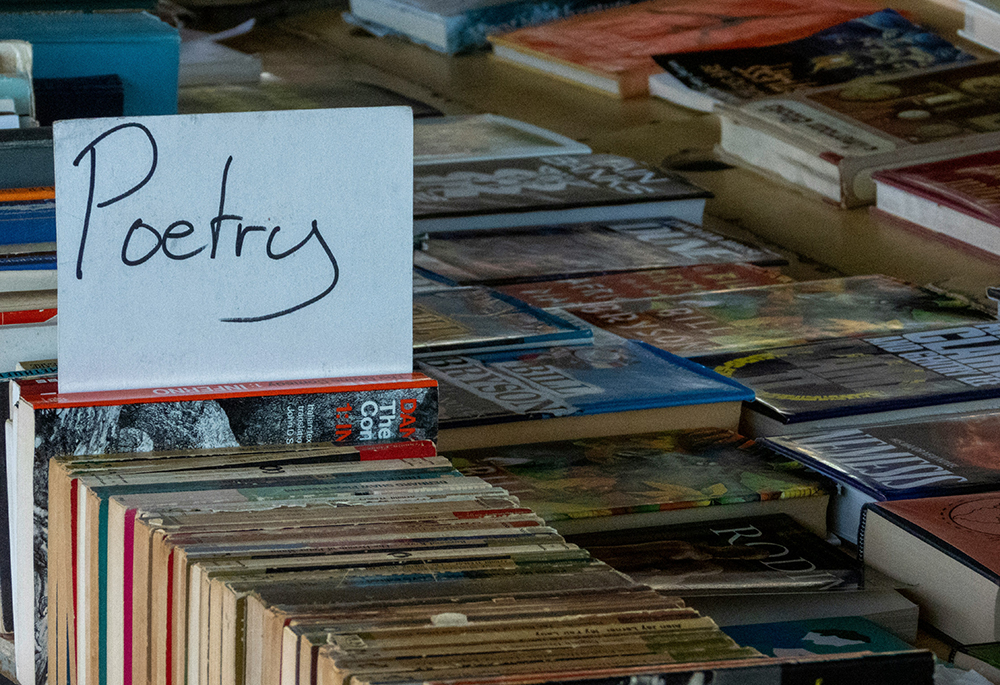
Poetry is not a practical thing. It's inefficient. It leaves too much space on the page. Its lines are uneven and unpredictable. Its edges are sharp as shards of glass, and what are shards of glass good for except to be swept away to make room for more solid, dependable things?
Such was my mindset when, two years ago, I once again found myself teaching writing to middle and high school students. The goal of my course was to support students in their academic writing. That meant essays. That meant narratives. That meant arguments and analyses — all prose genres with nice, smooth edges that spread comfortably from margin to margin, forming paragraphs as functional and solid as bricks. There was no room in my curriculum for poetry.
Prose, after all, is what we grown-ups do in the academic and professional worlds:
Scholarly articles? Prose.
Annual reports? Prose.
Grants? Prose.
Professional emails? Prose.
If my job was to prepare students for the academic and professional worlds, then I needed to teach and practice prose. And I did. Enough to make me forget that I am a poet. Or, I used to be.
The first piece of writing I ever published? Poetry.
The literature I fell in love with in high school? Poetry.
The spoken word I wrote and performed in college? Poetry.
My favorite units to teach when I taught traditional English classes? Poetry.
(Unsplash/Nick Fewings)
Something happened, though, along the way. Looking back, it coincides strangely with "growing up." Somewhere in the mix of starting a career, having kids and setting out to become a "real writer," I stopped writing poetry. I stopped reading poetry. And now, it seemed, I stopped teaching poetry.
Poetry was no longer practical. I was all grown-up. I had a family, a career, and capital "R" responsibilities. One does not build a home out of shards of glass. I needed bricks. So, I filled my life until there was no space left for poetry.
Advertisement
In Ephesians, Chapter 2, Paul writes, "For we are [God's] handiwork, created in Christ Jesus for the good works that God has prepared in advance, that we should live in them." Some translations of Scripture write this verse as "We are God's poem" or "God's poetry." Whether or not the translation actually includes the word "poetry," Paul speaks of our relationship with God as poetic. Paul defines our relationship with God in a way that poetry gives us unique insight into understanding.
Poetry leaves space on the page. As soon as we see that space, we recognize the words as poetry. We notice the broken lines and consider the way they are broken, the way they are set together, the shape they make. When we approach a poem's unique brokenness with earnestness and curiosity, we find meaning.
(Unsplash/Rafael Garcin)
That's what Paul reminds us in Ephesians 2: We don't take up the whole page. We are broken lines, shaped into meaningful work by our Creating God.
Over the course of this past school year, poetry did what poetry has done throughout my life: It broke through. Over lunch, my friend and colleague spoke of introducing her students to new poetic forms. Her planning inspired me to create opportunities for my own students to write poetry. Lo and behold, doing so revealed cognitive and creative strengths in some students that I hadn't observed on any other assignment.
Their writing in turn inspired me to write my own poetry again. I even shared it with other people. In doing so, I discovered just how crowded I'd let my life become and how little space I'd left in my heart for the people I cared for or the God I proclaimed to serve.
By any measure of this world, poetry is impractical. … But we are called to craft the kingdom of heaven, a kingdom of broken people, set together. Poetry is a way of seeing that creates space for the soul and, through it, the Spirit.
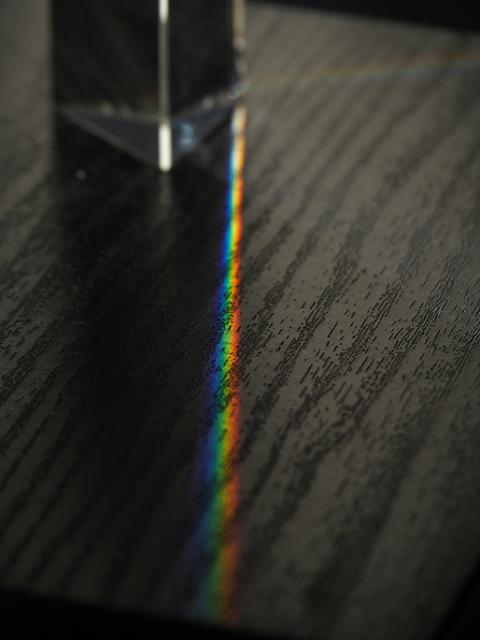
My friends, my colleagues, my students, they didn't make poetry any more practical. They didn't make it any more efficient. They just took those broken lines and reminded me what happens when we raise shards of glass up rather than sweep them away: They catch the light. They reflect rainbows. They shine.
By any measure of this world, poetry is impractical. We live in a world of bricks, after all. But we are called to craft the kingdom of heaven, a kingdom of broken people, set together. Poetry is a way of seeing that creates space for the soul and, through it, the Spirit.
Let us not sweep each other away.
Let us raise each other up to the light
And let us shine.