
(Unsplash/Louis Galvez)

by Yolanda Chávez
Not long ago, I recorded a video to share my experience of deportation. When I went back to watch the video after filming, I was struck by the tears on my face. The person crying was me, yes, but it was also the many people whom I have ministered to for so long. Those tears were not just my personal memories, but also the grief and exhaustion of years of accompanying Latin American people through the uncertainty of not knowing whether they will return home safely at the end of the day; through the pain of families torn apart.
Seeing myself in tears also revealed something I had learned to hide: Those of us who accompany the suffering of others don't often stop to feel what we are carrying inside. We listen, console, guide, look for solutions — and begin to accumulate all the faces, farewells, fears and losses that are not ours yet cling to the soul nonetheless.
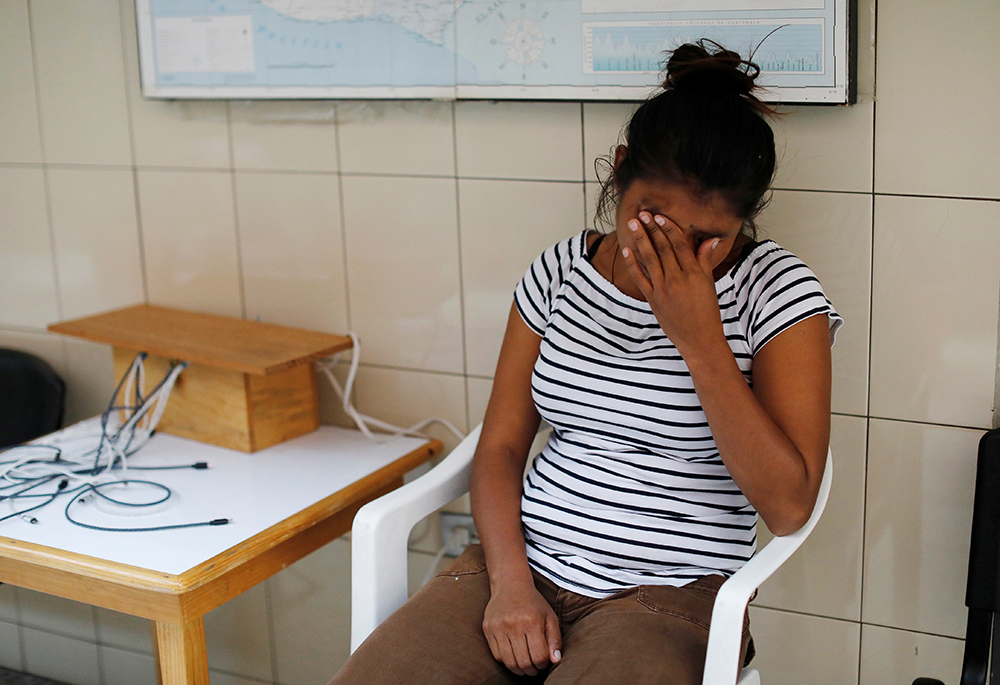
A Honduran woman holds back tears while waiting in a migrant shelter in Guatemala City, Guatemala, July 15, 2019. (CNS/Reuters/Luis Echeverria)
I have seen migrant mothers crying for the children they left behind. I have listened to fathers who do not know when they will be able to hold their families again. I have seen entire communities live under constant fear. But I have also seen in tears those who accompany these stories: catechists, pastoral workers, friends, people who listen and quietly carry the wounds of others even when they cannot change their situation. In those tears there is no spectacle but solidarity; no dramatization but love wounded by injustice.
It's easy to assume that suffering belongs to those who experience it directly, yet those who remain close are marked as well — and only when the body allows itself to weep do we realize how much we have been carrying.
Advertisement
We live in times when it is expected to keep moving forward, to be resilient, to find hope quickly. Pain must be processed in near silence so as not to make others uncomfortable. We distrust lament. We live in a culture that values efficiency, productivity and the ability to recover quickly; pain interrupts, unsettles and inconveniences. Even in the spiritual life, we favor the language of victory and rush toward consolation; tears must be resolved as soon as possible.
But the biblical tradition tells a different story. Scripture is filled with tears. Israel weeps in slavery and in exile. The psalms cry out from abandonment. Jeremiah cries over the devastation of his people and the Book of Lamentations turns suffering into a collective prayer: "Look and see if there is any sorrow like my sorrow." Jesus himself weeps at the tomb of his friend Lazarus, even knowing that death would not have the final word.
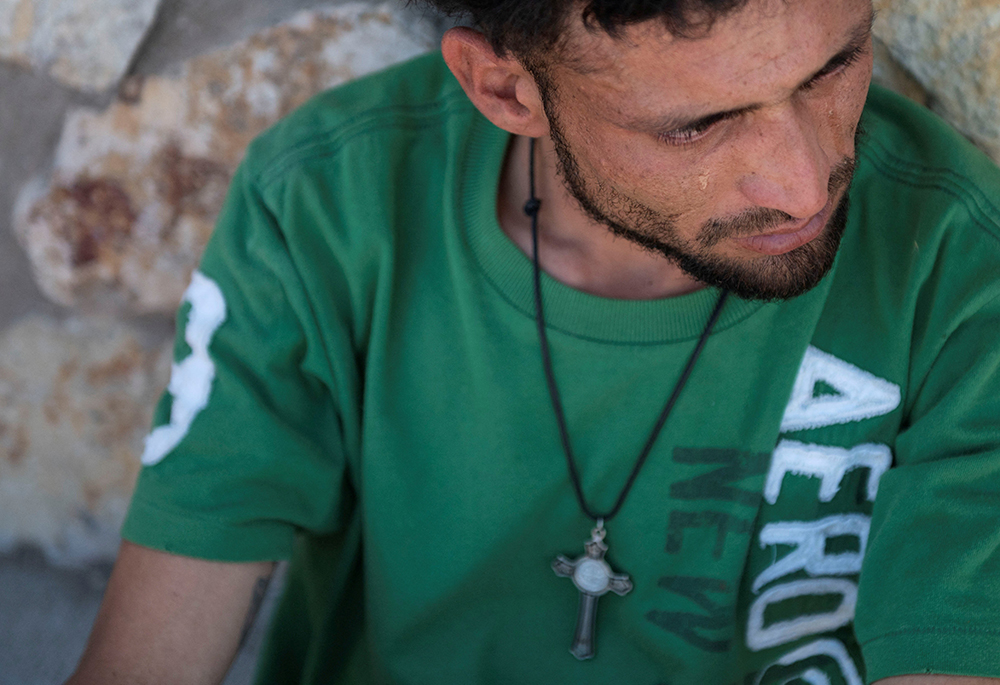
Bryan, an immigrant who says he came from Nicaragua and crossed the border to the U.S. from Mexico seeking asylum, sheds tears outside a U.S. Customs and Border Protection office near El Paso, Texas, May 9, 2023, where he was directed by U.S. border authorities as the United States prepared to lift COVID-19-era Title 42 restrictions that have blocked migrants at the U.S.-Mexico border from seeking asylum since 2020. (OSV News/Reuters/Roberto Schmidt)
Far from being an absence of faith, tears appear as a profound form of prayer when words are no longer enough.
Biblical lament is not defeat; it is an act of truth. It is standing before God without spiritual disguise, acknowledging that some wounds take time to heal and that some losses have no immediate solution. Perhaps that is why those ancient texts still resonate today: They remind us that faith, too, can be expressed as a cry. Some things need to be wept over so they do not remain trapped within the body.
There are tears born from our own suffering, but there are also those that emerge when we realize the world can be cruel and that we do not know how to stop the cruelty.
There are tears born from our own suffering, but there are also those that emerge when we realize the world can be cruel and that we do not know how to stop the cruelty. These are tears that never appear in statistics or headlines, yet leave their mark within those who remain close, reminding us that we are still capable of accompanying the wounds of others.
Before speaking of hope, we need to allow ourselves to lament; not to remain trapped in pain, but to honor what has been lost. For tears do not draw us away from God, but bring us closer to what is most human within our faith. And in that quiet moment when tears fall, we touch something deeply sacred.