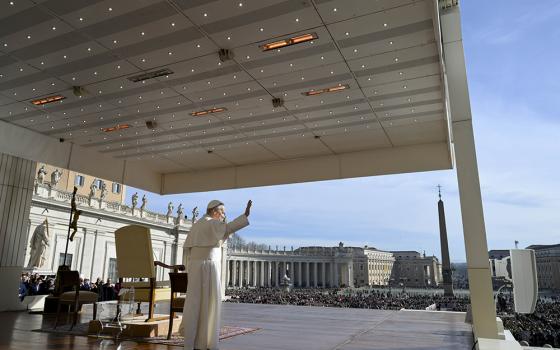
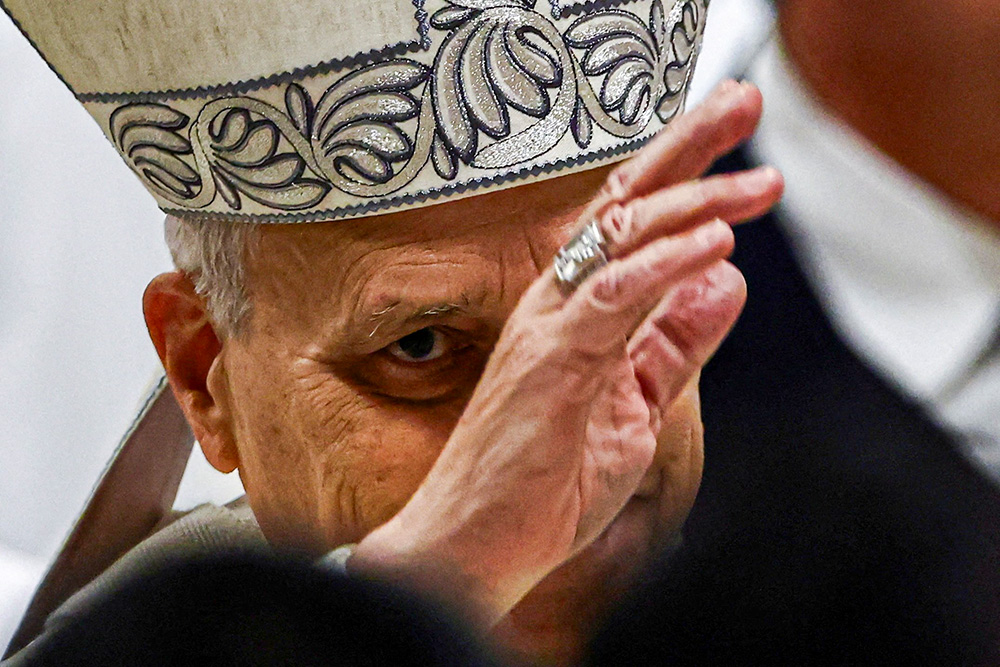
Pope Leo XIV blesses the faithful following a Mass marking the feast of the Presentation of the Lord and the Vatican celebration of the 30th World Day for Consecrated Life in St. Peter's Basilica at the Vatican Feb. 2, 2026. (OSV News/Reuters/Vincenzo Livieri)

After a furious start to 2026 which saw Pope Leo XIV close the Holy Year opened by his predecessor, convene the world's cardinals in Rome and deliver perhaps the most pointed speech of his pontificate yet on the urgency of peace, the pope has since grown noticeably quieter on the world stage.
For U.S. Catholics in particular, that has meant an absence of English-language papal soundbites from nightly newscasts and social media feeds.
Following months in which Leo weighed in on the day's events by speaking near weekly to reporters upon leaving the papal retreat at Castel Gandolfo outside Rome, the pope has sharply pulled back from directly engaging with the press.
And as the global news cycle has continued to churn, major developments have come and gone without the kind of papal commentary Leo had offered earlier in his pontificate.
Those informal appointments saw Leo weigh in on current events, and particularly American ones: from wading into controversy around a proposed church award for Illinois Sen. Dick Durbin and calling out the Trump administration's treatment of migrants, to lamenting an assisted suicide law signed into action in Illinois, offering articulate and focused responses that often broke into the mainstream news cycle.
Deep into the first year of his pontificate, the pope still appears to be working out in what way, and how often, he wants his voice to enter public debate.
Yet Leo's last face-to-face encounter with reporters on Jan. 27 was instead a brief walk-by in which he generally called for prayers for peace. The previous press appointment before that came more than a month prior on Dec. 23.
No reporter has since had the chance to ask Leo for comment on the topics that have dominated the news cycle in the last month: the killing of two U.S. citizens by Immigration and Customs Enforcement officers in Minnesota, increasing tensions over Greenland, and Iran's violent crackdown on protesters calling for regime change.
That shift has led to a messaging vacuum from the Holy See.
Whereas journalists once brought questions of the day directly to the pope, that role in recent weeks has been filled by Cardinal Pietro Parolin, Vatican secretary of state.
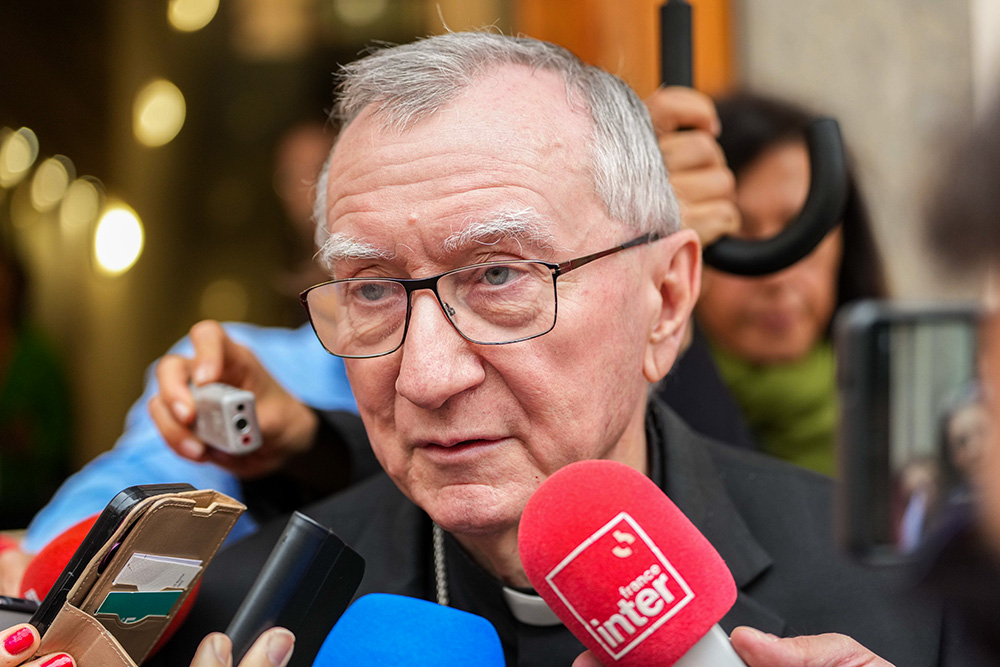
Cardinal Pietro Parolin, Vatican secretary of state, speaks with the press after the presentation of the 2025 Religious Freedom Report compiled by the papal foundation Aid to the Church in Need and released Oct. 21, 2025, during a conference at Rome's Augustinianum Patristic Institute. (CNS/Lola Gomez)
The cardinal, asked by reporters on the sidelines of various events, has commented on geopolitical tensions over Greenland, expressed the church's concern over Iran and called the treatment of protesters over ICE activity in Minnesota "unacceptable."
As such, Parolin has effectively emerged as the Vatican's voice on the pressing events of the day.
While this arrangement was the norm during Pope Francis' pontificate, the late pope did not shy away from injecting pointed statements on current events into his regular papal agenda.
Pointed calls for peace were common at the end of Francis' Wednesday general audiences. He famously kissed a Ukrainian flag from Bucha to condemn what he called a "massacre" of Ukrainian troops there at the hands of Russian soldiers.
In many ways, Francis' fervent appeals and potent gestures made him his own spokesperson.
It makes sense for Leo to avoid reducing the papacy to punditry. But deep into the first year of his pontificate, the pope still appears to be working out in what way, and how often, he wants his voice to enter public debate.
And pulling back from regular press encounters by no means implies he has stepped away from publicly engaging in global affairs.
Advertisement
The pope dedicated ample space in his post-Angelus remarks to Venezuela on Jan. 4, one day after the United States' capture of Venezuelan President Nicolás Maduro, and decried a looming "new arms race" the day before the expiration of the last U.S.-Russia nuclear treaty on Feb. 5. In recent weeks, he has repeatedly lamented the Russian attacks on Ukraine's energy infrastructure in the heart of winter.
Those remarks signal what the Vatican is paying attention to and provide a venue for calls to prayer — certainly in order for the head of the global Catholic Church — but they fall short of the nuanced, news-driven engagement Leo once offered the press at Castel Gandolfo.
What has prompted Leo to pull back from those weekly press appointments remains unclear. It may reflect a push for tighter message discipline from the Vatican Secretariat of State, or simply the pope's own evolving sense of the office.
In a book interview published last September, the only formal interview he has given to date, Leo said, "I've always tried to stay up on the news, but the role of pope is certainly new to me."
Some five months later, it seems the pope is still negotiating how he wants to project his voice into a relentlessly moving global news cycle.
The National Catholic Reporter's Rome Bureau is made possible in part by the generosity of Joan and Bob McGrath.