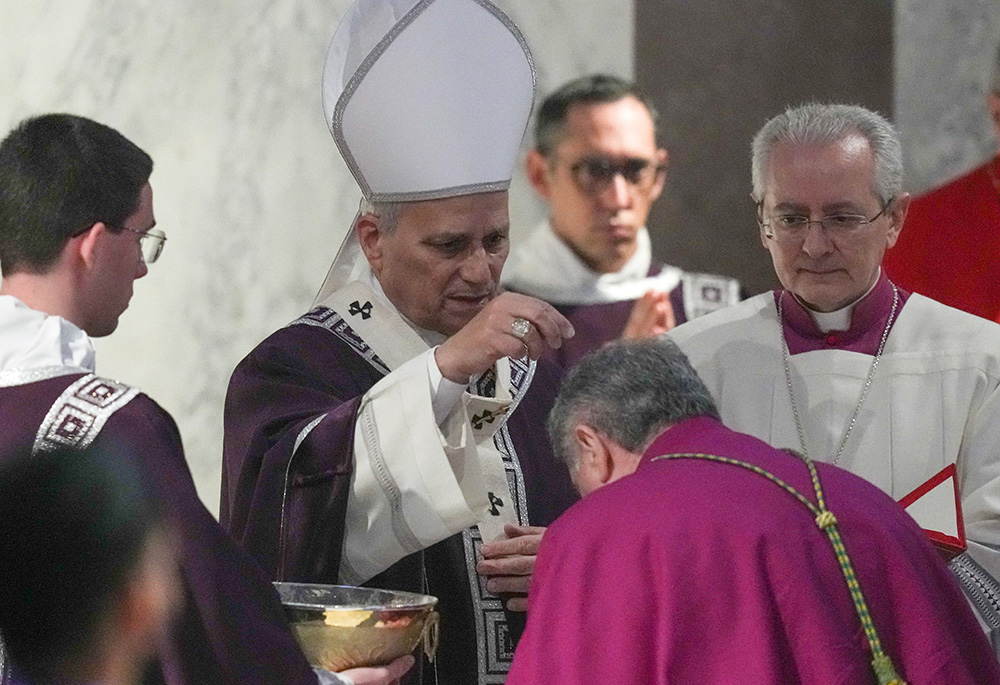
Pope Leo XIV sprinkles ashes during Ash Wednesday Mass at the Basilica of Santa Sabina in Rome Feb. 18, 2026. (CNS/Lola Gomez)

Opening the first Lent of his pontificate, Pope Leo XIV said the ashes received by Catholics worldwide on Ash Wednesday carry "the weight of a world that is ablaze," tying a sustained reflection on sin to today's climate of global disillusionment.
Though the recognition of sin during Lent is "countercultural," the pope said "it constitutes an authentic, honest and attractive option, especially in our times, when it is so easy to feel powerless in the face of a world that is in flames."
Celebrating Mass at the Basilica of St. Sabina on Rome's Aventine Hill on Feb. 18, Leo said sin is "always personal," but that it takes shape "within real economic, cultural, political and even religious structures of sin."
Yet "these sins are evils that have not come from supposed enemies, but afflict our hearts and exist within us," he said.
Today, the ashes imposed at the start of Lent evoke "the ashes of international law and justice among peoples, the ashes of entire ecosystems and harmony among peoples, the ashes of critical thinking and ancient local wisdom, the ashes of that sense of the sacred that dwells in every creature," the pope continued.
"Truly, the church exists as a community of witnesses that recognize their sins," he said.
Leo's condemnation of "structures of sin" echoes St. John Paul II's 1987 encyclical Sollicitudo Rei Socialis ("The Social Concern"), in which the Polish pope articulated how such structures of sin are "are rooted in personal sin, and thus always linked to the concrete acts of individuals who introduce these structures, consolidate them and make them difficult to remove."
Leo, who took his name after Pope Leo XIII, the pope considered to be the father of Catholic social teaching, dedicated an entire section of his first apostolic exhortation, Dilexi Te ("I Have Loved You"), to addressing "structures of sin that create poverty and extreme inequality."
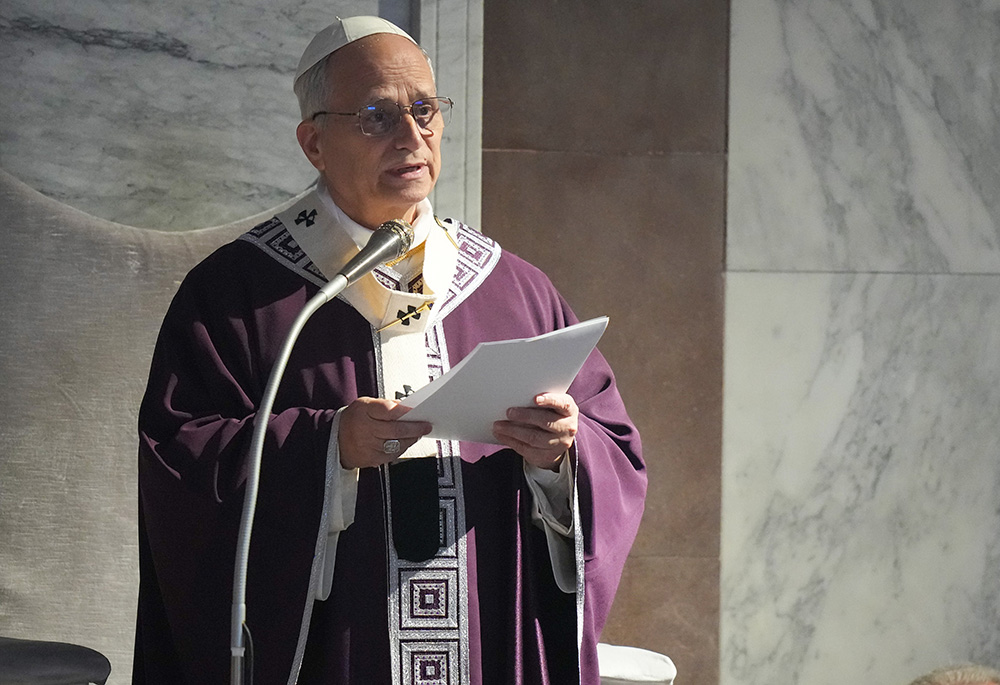
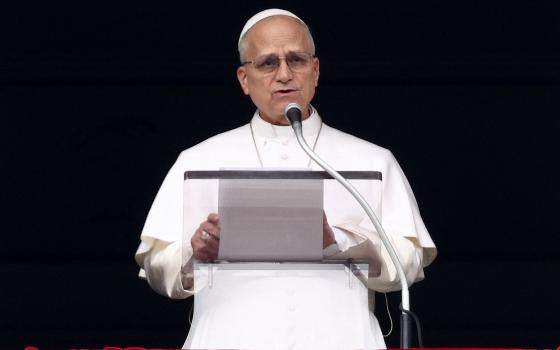
Pope Leo XIV gives his homily during Ash Wednesday Mass at the Basilica of Santa Sabina in Rome Feb. 18, 2026. (CNS/Lola Gomez)
Whereas Scripture teaches that opposing idolatry means being open to following God through growth and change, "how rare it is to find adults who repent: individuals, businesses and institutions that admit they have done wrong," Leo said in his homily.
Young people on the other hand, "more than in the past, are open to the invitation of Ash Wednesday," the pope said. "Young people especially understand clearly that it is possible to live a just lifestyle and that there should be accountability for wrongdoings in the church and in the world."
The pope began the traditional service with a penitential procession from the Church of St. Anselm, about a 650-foot walk to the nearby basilica, while flanked by 25 cardinals, 19 bishops and other priests and laypeople.
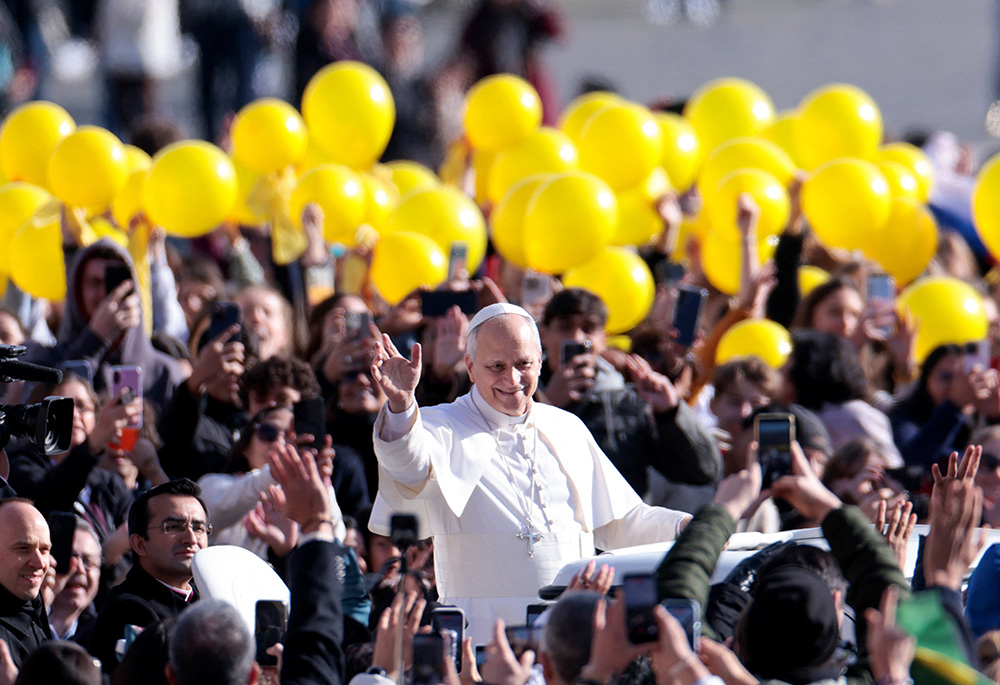
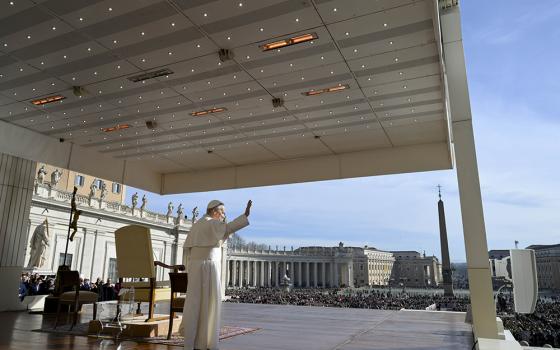
Pope Leo XIV waves to the faithful as he arrives to hold the general audience in St. Peter's Square at the Vatican, Feb. 18, 2026. (OSV News/Reuters/Remo Casilli)
Among them was Cardinal Angelo De Donatis, head of the Apostolic Penitentiary, who presided over the service last year due to Pope Francis' hospitalization.
As the cardinal tasked with handling matters related to indulgences and addressing grave sins requiring special reconciliation, De Donatis sprinkled ashes atop the pope's head — as customary during Ash Wednesday services in Italy — before Leo returned the act. The pope then went on to impose ashes on other cardinals, bishops, priests and laypeople.
Reflecting on the reading from the Book of Joel in which the prophet calls to "gather the people, sanctify the congregation," Leo recalled that "Lent remains a powerful time for community."
Advertisement
"We know that it has become increasingly difficult to gather people together and make them feel like a community," he said, "not in a nationalistic and aggressive way, but in a communion where each of us finds our place."
But during Lent, he said, "a people is formed that recognizes its sins."
The pope said that the call to conversion urged by Lent also makes the witness of Catholics "more credible" to those outside the church.
Leo, who spent more than two decades as a missionary in Peru, went on to urge Christians to "embrace the missionary significance of Lent."
"Not in a way that distracts us from our individual efforts," he said, "but in a way that introduces this season to the many restless people of good will who are seeking authentic ways to renew their lives, within the context of the kingdom of God and his justice."
The National Catholic Reporter's Rome Bureau is made possible in part by the generosity of Joan and Bob McGrath.