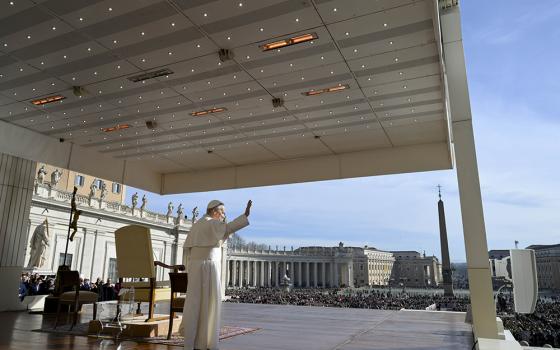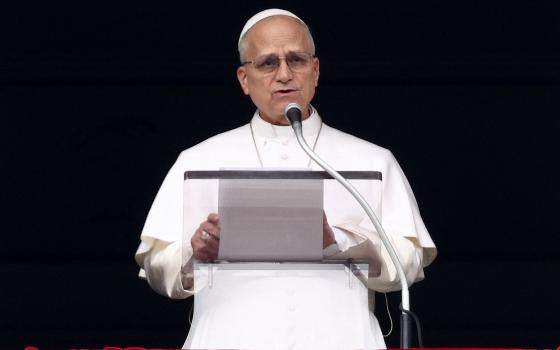
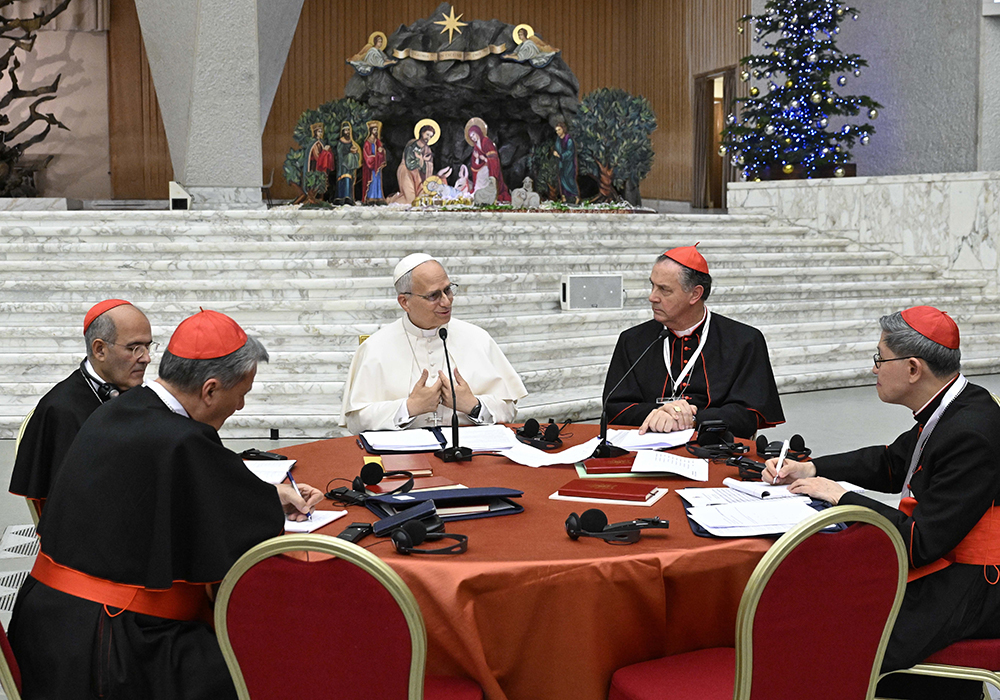
Pope Leo XIV holds a consistory with cardinals from around the world at the Vatican, Jan. 7, 2026. (OSV News/Vatican Media/Simone Risoluti)

Convened in Rome by the pope they elected just eight months ago, the world's cardinals were given a crash course in collegiality.
Sitting in small groups of five to 11 at roundtables, the 170 cardinals attending the Jan. 7-8 extraordinary consistory called by Pope Leo XIV set the church's mission and synodality — the catch-all term for creating a more participatory church — as the priorities for their two days of discussions.
The day after closing the Jubilee of Hope, Leo opened the extraordinary consistory, calling them to Rome in rare a move designed to address a particular need of the church used only once by Pope Francis and never by Pope Benedict XVI.
Ordinary consistories, by comparison, do not require the presence of all the world's cardinals and have typically focused on more routine matters, such as approving canonizations or creating new cardinals.
In contrast to Francis, who rarely summoned the full, globally dispersed College of Cardinals to Rome, Leo's decision to convene an extraordinary consistory so early in his pontificate without a narrowly defined agenda could show an openness to enlist the cardinals more directly in the governance of the church.
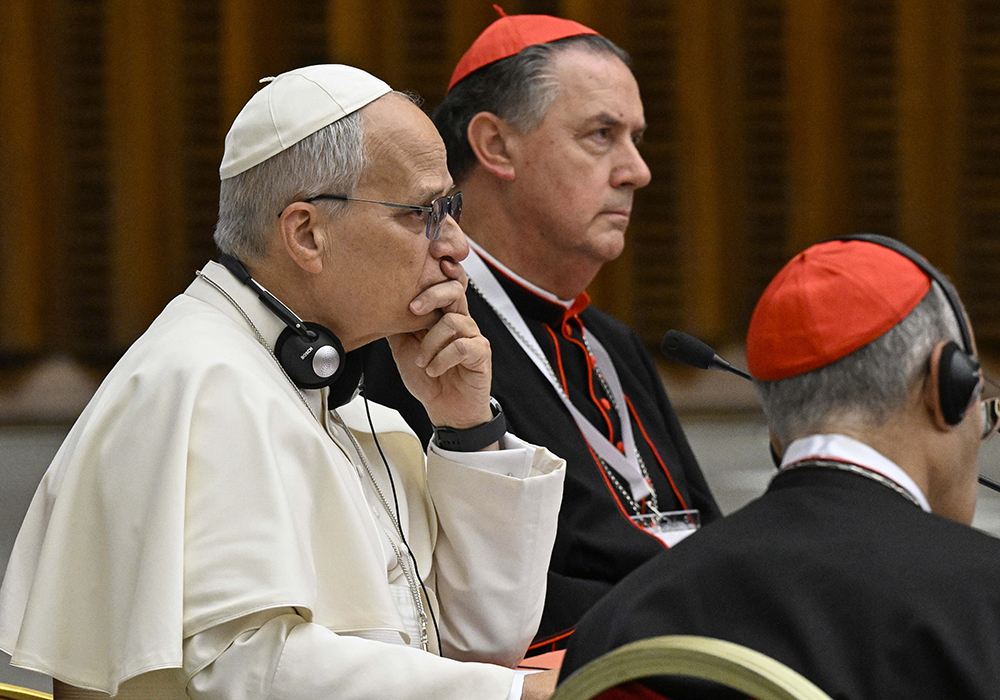
Pope Leo XIV holds a consistory with cardinals from around the world at the Vatican Jan. 7, 2026. (OSV News/Vatican Media/Simone Risoluti)
"We are a very diverse group, enriched by a wide range of backgrounds, cultures, ecclesial and social traditions, formative and academic paths, pastoral experiences, not to mention personal characteristics and traits," Leo told the cardinals. "We are called first to get to know one another and to dialogue, so that we may work together in serving the church."
For a pope who has repeatedly emphasized unity within the church and the wider world, the gesture suggested a desire to bring his closest collaborators onto a shared footing early in his pontificate.
A synodal consistory
After opening prayers, a meditation offered by British Cardinal Timothy Radcliffe, and introductory remarks, the cardinals broke into small groups at round tables in the Vatican's Paul VI Audience Hall. The scene was reminiscent of the Synod of Bishops on synodality, the multiyear assembly of clergy and lay leaders convened by Francis to foster a more participatory church in which the future Pope Leo took part.
The meeting was presided over by Cardinal Ángel Fernández Artime, pro-prefect of the Dicastery for Institutes of Consecrated Life and Societies of Apostolic Life.
Working in these small groups, the cardinals discussed four proposed themes and were asked to select two that would guide the consistory's discussions over its remaining two sessions.
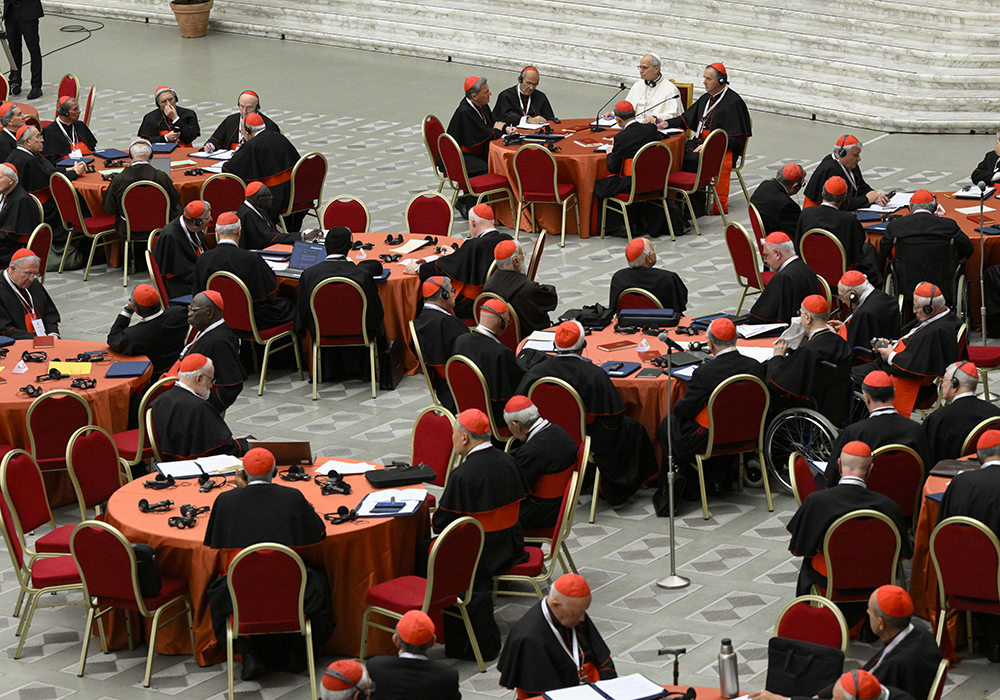
Pope Leo XIV holds a consistory with cardinals from around the world at the Vatican Jan. 7, 2026. (OSV News/Vatican Media/Simone Risoluti)
Matteo Bruni, director of the Vatican press office, said the "vast majority" of the groups opted to focus on the mission of the church in light of Evangelii Gaudium, the apostolic exhortation widely regarded as the roadmap of Francis' pontificate, as well as on synodality.
Proposed discussions on Praedicate Evangelium, the 2022 apostolic constitution reforming the Roman Curia, and on the liturgy received less support, dashing hopes among traditionalist Catholics that liturgical questions would take center stage at the consistory.
Individual cardinals intervened within their groups, and each table had a pre-selected president and secretary to report the discussion back to the full assembly.
When the groups reconvened in plenary session, the groups made up of cardinal electors (those under 80 years old) and who serve in local churches presented their choices and the rationale for them, "since it is naturally easier for me to seek counsel from those who work in the Curia and live in Rome," Leo said.
Advertisement
Consulting the whole college
Despite the weighty title of an extraordinary consistory, the direction provided to cardinals ahead of time had been limited. Letters sent to cardinals in advance identified synodality and the liturgy as primary themes and asked cardinals to review Evangelii Gaudium and Praedicate Evangelium.
Francis convened only one extraordinary consistory during his 12-year pontificate, in 2014, to discuss the family. Like Benedict XVI, he more often attached meetings of cardinals to ordinary consistories, such as the August 2022 gathering that focused on implementing the curial reforms outlined in Praedicate Evangelium.
Rather than regularly consulting the full College of Cardinals, Francis relied more heavily on the Council of Cardinals, or C9, a small advisory body he created to assist with governance and curial reform which so far has not been taken up by Leo.
Just two days after his election, Leo told the cardinals who had elected him that they are "the closest collaborators of the pope" and has signaled a desire to advance collaboration among the Curia itself and with the papacy.
Wednesday's (Jan. 7) more than three-and-a-half hour evening meeting was the first test of how the cardinals respond to that wish.
The day before the consistory opened, Leo asked in his homily for the feast of the Epiphany, celebrated with many cardinals present: "Is there life in our church?"
In his closing remarks at the end of the consistory's first session, he offered his own answer: "I am convinced there is."
The National Catholic Reporter's Rome Bureau is made possible in part by the generosity of Joan and Bob McGrath.