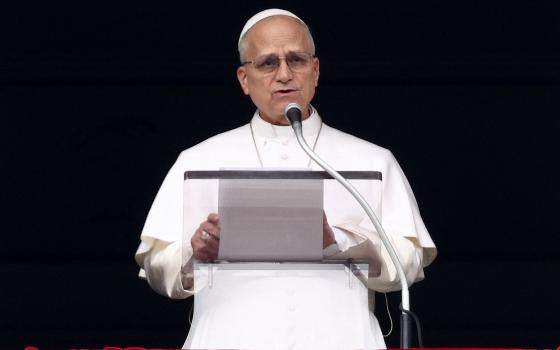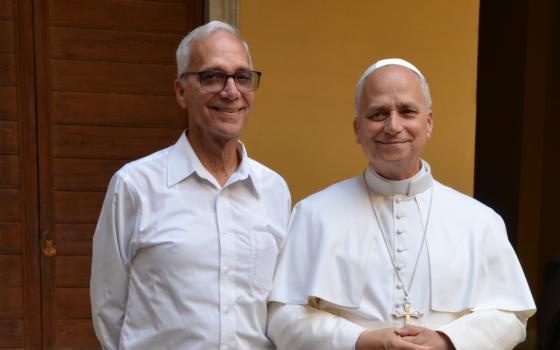
John Prevost and his brother Pope Leo XIV pose for a photo together October 2025. (Courtesy of Beth Verdun)
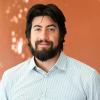
Editor's note: This is the second segment of NCR's interview with John Prevost, the brother of Pope Leo XIV, conducted at his parish in New Lenox, Illinois, as part of the series "Looking for Leo in History." In this installment, John reflects on the years after his brother left home, from his brother Robert's time in the minor seminary and missionary life in Peru to his transition into the papacy. The interview has been edited for length and clarity.
NCR: What was your first impression of going up and seeing the minor seminary where he lived?
Prevost: When we said goodbye, I think there were tears all the way home from Holland, Michigan, to Chicago. I think that hit because you don't get the reality of it until it actually happens.
When we were in Rome this time (in October), he gave me the key to (my) house. That hit me big time, because it's over. He always had a key to where I lived in case he was in town and I wasn't home. But now that he's pope, he gave me that key back, and that hit.
Was there any kind of ceremony around that?
No, he just said, "Here's a gift certificate I can't use, and here's this" (the key). He said nothing more about it. It's over, he's not ours. And the seminary trip was the start of that: He's not ours anymore, he's going out to the world.
And all that time in the seminary, there was never any doubt about his call to join the priesthood?
In our minds, no. In his mind, I don't know, because I never really asked him, 'Are you sure this is what you want to do?' I never did.
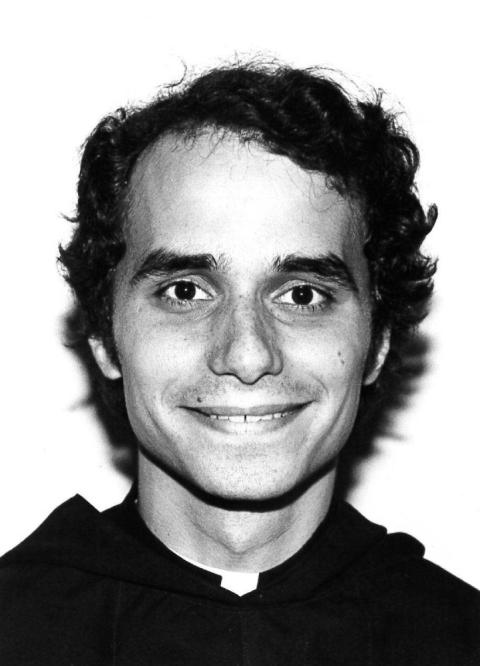
A young Robert Francis Prevost, the future Pope Leo XIV, is pictured in an undated photo. (OSV News/Augustinian Province of Our Mother of Good Counsel)
(While Robert was at Villanova) summer visits continued, but we're working summer jobs so there wasn't a whole lot of time together there. He worked at a shop that sold parts for boats, motors and propellers and that kind of stuff. He did that all the way through (college).
After Villanova he goes to Rome to continue his studies. He's then sent to the Augustinian mission in Chulucanas, Peru. Do you remember what he would say to you about his first impressions in Peru?
I think the poverty struck him, and I think it stays with him even today that there are people who not only are poor, but don't have a voice in the world. And I think that's one of his goals, is to try to give a voice to those that don't have one, or at least try to represent them in what he's doing.
Did he ever talk about how the church was different in Peru?
I think about how it was, for lack of a better term, a baby church. How it's just unfolding now in the communities where he was working.
People would give him gifts and he would bring them home. I think I have quite a few of them still in the house. He would explain what it is, and which would kind of explain part of the culture.
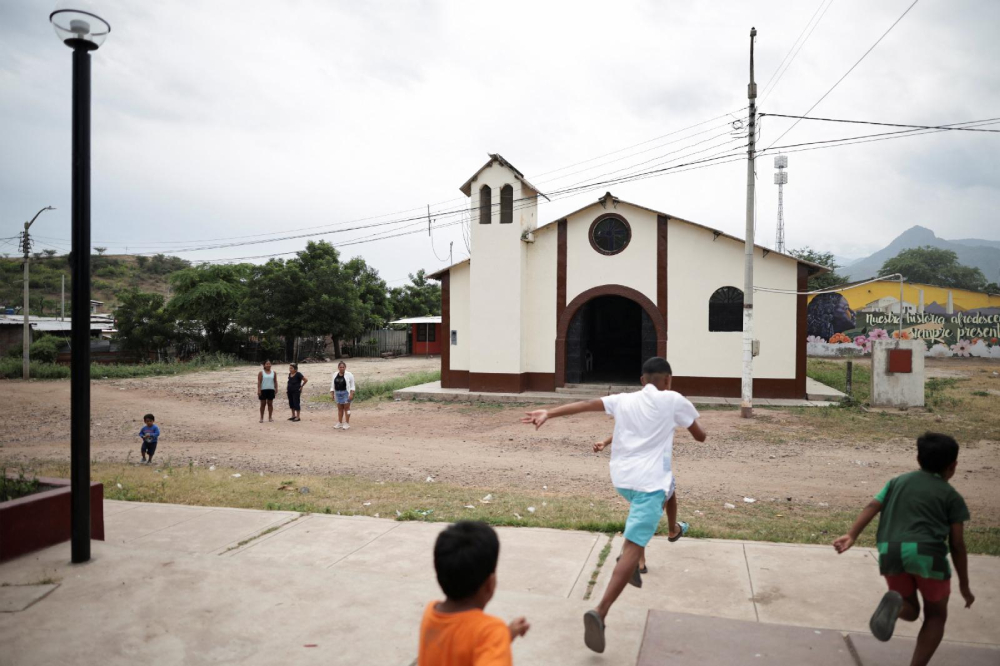
Children play in front of the Chapel Santa Rosa Cruz Pampa in Yapatera, Peru, May 11, 2025, where then-Father Robert Prevost, now Pope Leo XIV, preached as a young missionary. (OSV News/Reuters/Sebastian Castaneda)
He was in Peru for 11 years during that first stint. Did you see a difference in him when he would come home over that period?
I think so, in terms of how he related to other people. It changed him. He related to other people a little bit differently. He never really said it, but thinking to himself, "There are people starving," that kind of thing. We used to enjoy going to the boat and gambling. After this experience, [he'd say] "Nuh-uh, it's a waste. There's better things you could do with your money."
Someone that knew him in Peru told me that your mother's passing gave him a freedom to dedicate himself to his life as a missionary. Did you see that at all?
That was very difficult. It was cancer that took her. Toward the end we would say, "Uh-oh, it's over." So he'd come up and then, boom, she'd make a recovery and he'd go back (to Peru). It was unusually long because she was on some kind of experimental medicine. Originally, the doctor said six months and it went way past that; six or eight years.
It was hard on him, the back and forth, traveling, which everyone experiences when a parent dies. So, I see that point.
When he could get home, he would get home. And when it was near the end, he saw to it that he was around. Then when we knew it was the end he just stayed with her night and day so that she wasn't alone.
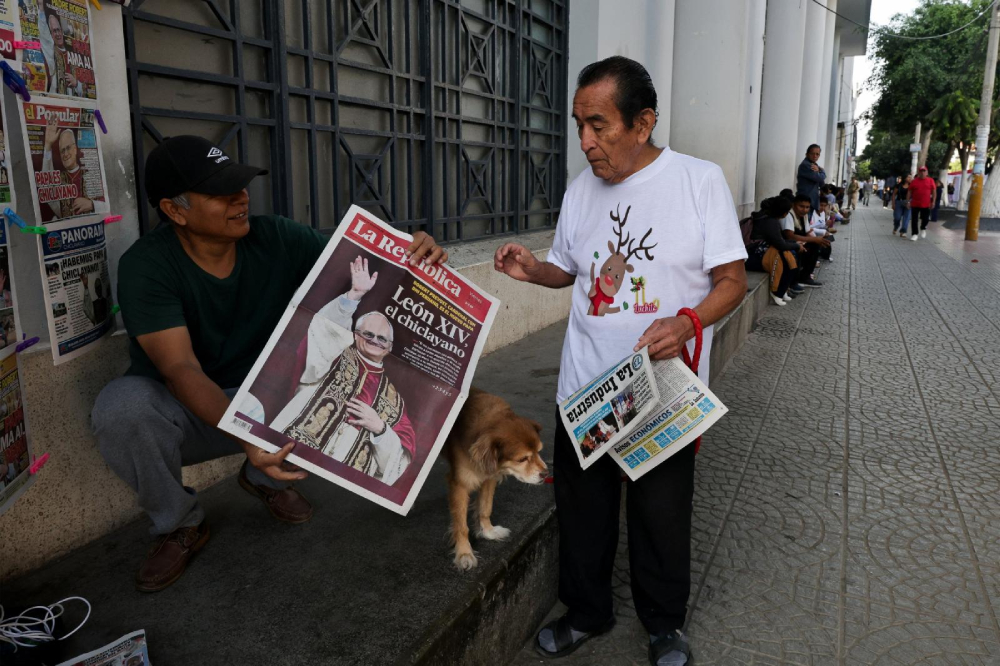
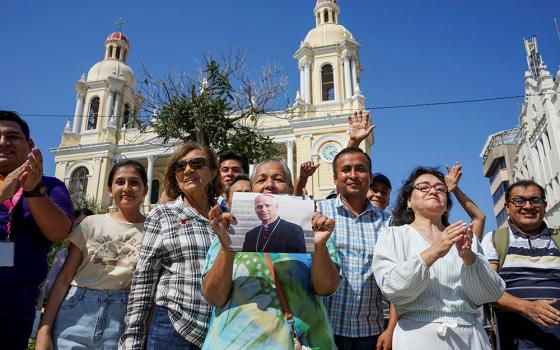
People hold newspapers in Chiclayo, Peru, May 9, 2025, reporting on the election of Pope Leo XIV, who is a dual U.S.-Peruvian citizen. Formerly Cardinal Robert F. Prevost, the prelate was elected pope May 8 at the Vatican, becoming the first American pope in history. As an Augustinian priest, then-Father Prevost spent many years as a missionary in Peru. (OSV News/Reuters/Sebastian Castaneda)
And was he around for your father's passing seven years later?
Yes, because he called me, I think it was in the hospital. Cancer also.
Once both parents were gone, he would still come up for summers and time off, but I wouldn't let him stay with me. I said, "You joined community, you're going to live with community." So he would stay with the Augustinians somewhere.
How come?
It's hard to say. We fight very nicely. Plus, it's easier when he leaves if that whole connection isn't there. So come nine o'clock, you're gone, but I say that to all guests.
What would you two do together?
He enjoyed going to, still enjoys, going to museums, going into Chicago. Friends would come up and he'd take them on tours. He liked doing that, showing them the places.
He is always watching soccer, he still does follow that. I don't think baseball so much, he follows it in the paper to see what the score was, he knows who's won and who's lost, so somehow he's paying attention.
I know after being prior general he had a brief time back in the United States before being named a bishop in Peru.
Yeah, then boom. He was looking forward to spending time in the United States. But he got home in August and he was gone by September or October.
Advertisement
We had a ceremony in St. Rita (Parish) and his speech was "Well, here I thought I'd get a car." He was hoping to have some time up here and be a person with a nine-to-five, but he just did what he was told to do. He wasn't one to complain about anything, just like he ate his food, he took his role in the priesthood seriously.
It's the same thing he did when the election was happening for the pope: He put his head down because he saw what was happening. That's one thing he did not want, but it came.
We now know how regularly he met with Pope Francis as a cardinal. What did he tell you about his predecessor?
That he had a sense of humor, that he was a regular person, that he didn't like the richness that came with the office. For example, he did not live in the huge palace, he did not like all that. He did not go to Castel Gandolfo. He wanted to do the work of the church. The other thing, which I found very interesting and wondered how healthy it was: He never took time off.
Francis was known to be an extremely early riser, what about your brother?
He still gets up before six. I know if he wakes up in the middle of the night he'll play "Words with Friends", and I'll say, "What are you doing playing this at three o'clock?" Couldn't sleep.
There was an article that said he logged into Duolingo at three in the morning.
I don't doubt that because he's currently working on German.
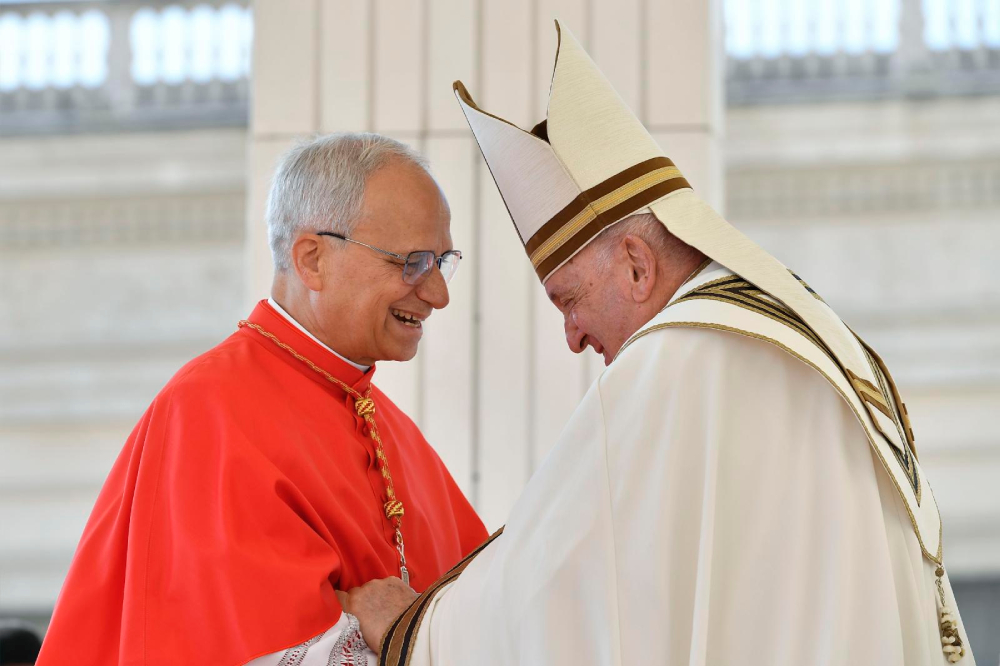
Pope Francis greets then-Cardinal Robert F. Prevost, prefect of the Dicastery for Bishops, after the cardinal spoke on behalf of himself and 20 other new cardinals created during a consistory in St. Peter's Square at the Vatican Sept. 30, 2023. (CNS/Vatican Media)
A Pew Research poll found that your brother had the highest favorability among world leaders for Americans. How does it sit with you to know this person you grew up with is one of the most popular people in the country?
It's something to be very proud of. It's also very humbling. It also makes you think, "What's going to happen when the honeymoon is over?" Because eventually he's going to have to make some tough decisions that won't please the whole crowd, which you can't do all the time. But right now it's something to be very proud of.
Do you know how he is feeling about that popularity in the office?
It doesn't bother him at all. He's going to do what he has to do, regardless of what people think. He has to do what the Spirit is telling him to do. He'll talk to everybody, but he'll make the decision regardless of what I say.
Since his election, do you see him feeling like he has to become the pope?
I do see where he's trying to be himself, but he also knows what his role as a model should be. He doesn't go out unless he's dressed as the pope, even if it's just us. We went on the roof, who is going to see him? But he had to be dressed (in white). We were going to switch clothes so he could go out as me, to see if it would have fooled anybody.
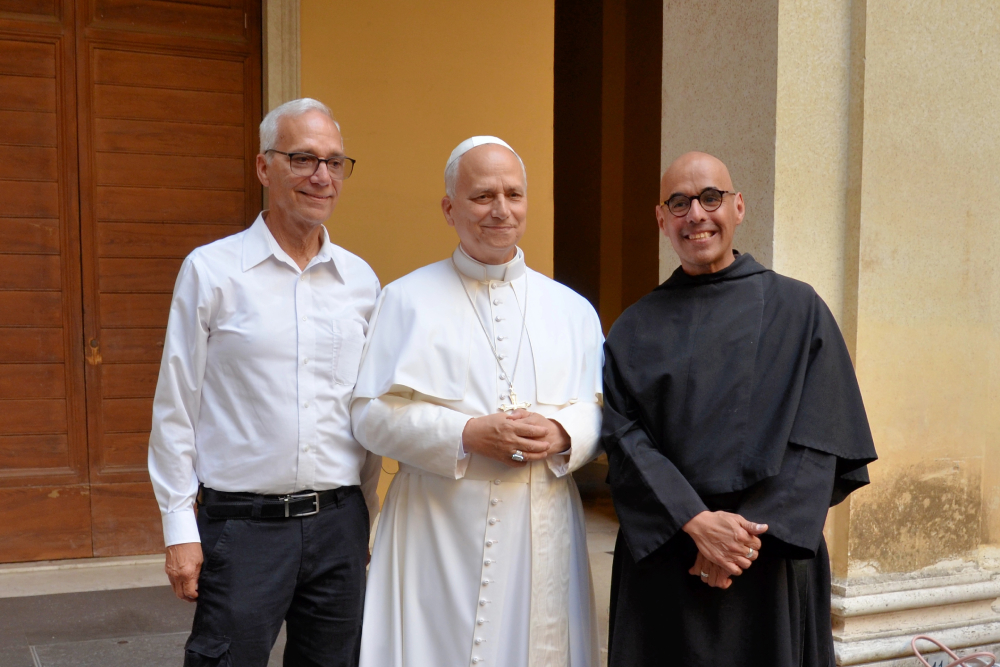
John Prevost, his brother Pope Leo XIV and Augustinian Fr. Ray Flores pose for a photo October 2025. (Courtesy of Beth Verdun)
He knows what he needs to do, and he's doing it. I think he's more tired than he was — you could see it in his face. He's trying to just stay calm and get to bed at a reasonable hour. He plays tennis when he goes to Castel Gandolfo. When the refurbishing is done at the Apsotolic Palace, he's hoping to put in some gym equipment so he could do some work there.
There's a group of Augustinians in the Vatican; that's where he has lunch. The last meal I think they cook themselves, he and Edgard (Rimaycuna, his personal secretary). Sometimes it's peanut butter and jelly, sometimes it's regular food. It depends on timing. If they don't have time to cook because he got in late, he might have a peanut butter sandwich, a bowl of cereal, that kind of thing, then other times they cook regular food.
How else is adjusting to being pope? He has said that meeting with leaders was something new to learn.
I think it's getting more comfortable for him. It's still hard. It's still tiring. And he has to stay neutral. He's getting there.
I would say he appreciates the prayers. He's praying for the people. He appreciates people praying for him.
The National Catholic Reporter's Rome Bureau is made possible in part by the generosity of Joan and Bob McGrath.