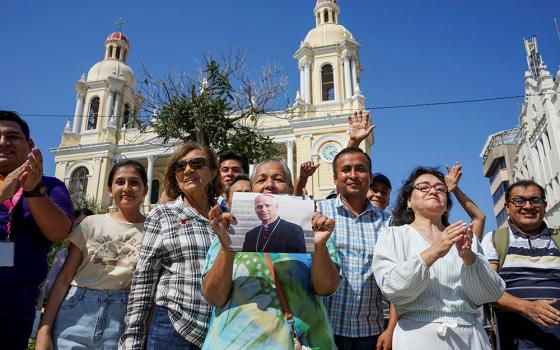
A woman holds an image of then-Cardinal Robert Francis Prevost in front of the Cathedral of St. Mary in Chiclayo, Peru, May 8, 2025, after he was elected pope at the Vatican and chose the name Leo XIV. He served as bishop of Chiclayo from 2015 to 2023. (OSV News/Reuters/Diego Torres Menchola)
Editor's note: This story appears as part of the profile series unpacking the background of Pope Leo XIV: Looking for Leo in History. Other installments look at the future pope's time in Peru as a young missionary, the theological context that formed him and his upbringing in Chicago.
With the surprise nomination of Augustinian Fr. Robert Prevost as bishop of Peru's fifth-largest city, Pope Francis sent a message to a fractured Peruvian episcopate.
At the time, Peru's bishops were split between liberation-theology-minded progressives and theological conservatives influenced by Opus Dei.
And early into his pontificate, Francis decided to put his finger on the scales by naming an outsider to take over what had long been considered a conservative stronghold in the northern Peruvian city of Chiclayo.
"This was considered an Opus Dei diocese and Pope Francis wanted to cut that and let them know: 'No, this is not an Opus Dei diocese. This is a diocesan diocese and as pope I can name whoever I want,' " said Bishop Dan Turley, the longtime bishop of Chulucanas, just north of Chiclayo.
In 2013, Prevost returned to his native Chicago after serving two terms as head of the worldwide Augustinian religious order in Rome. In that role, he oversaw a global organization of some 3,000 friars, traveling to nearly 50 countries where the order is present.
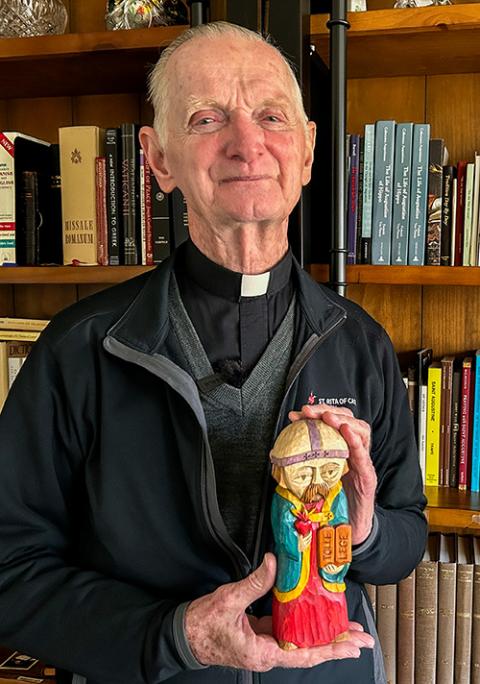
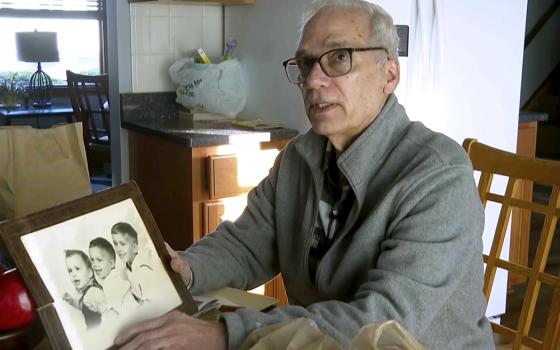
Emeritus Bishop Dan Turley of Chulucanas, Peru, holds a statue of St. Augustine while standing for a photo at St. Rita of Cascia Parish in Chicago Oct. 24, 2025. (NCR photo/Justin McLellan)
Upon leaving that role, he celebrated Mass in Rome with the recently elected Francis. Prevost later shared that the pope told him at the end of the Mass to get some rest.
"He gave me a few months and then he named me bishop of Chiclayo," Prevost said in March 2025. "I don't know when the rest will come, but here we are."
Whereas bishops are named through an opaque process managed primarily through the Vatican's representative to the country, Cardinal Pedro Ricardo Barreto Jimeno of Huncayo and Archbishop Héctor Miguel Cabrejos Vidarte of Trujillo both asked Francis to make Prevost a bishop in Peru since he had already served as a missionary in the country for more than a decade.
When Prevost was abruptly named bishop of Chiclayo shortly after another posting in the Augustinian order, it was read as a sign of direct papal intervention among Peru's episcopate.
"The Peruvian bishops, they felt that Pope Francis wanted this bishop," Turley told the National Catholic Reporter in October. "He was special right from the first moment; it was different from other bishops, he was chosen by Pope Francis directly."
Only one year into his role as formation director at St. Augustine Convent in Chicago and provincial vicar for the Midwest Augustinians, Prevost got a call informing him he would be made bishop of Chiclayo.
John Prevost, the future pope's brother, said Robert had been "looking forward to spending time in the United States" after his posting in Rome.
John recalled how, at a ceremony to celebrate Robert's episcopal appointment held at St. Rita's de Cascia Parish in southside Chicago, his brother gave a speech in which he said, "Well, here I thought I would get a car."
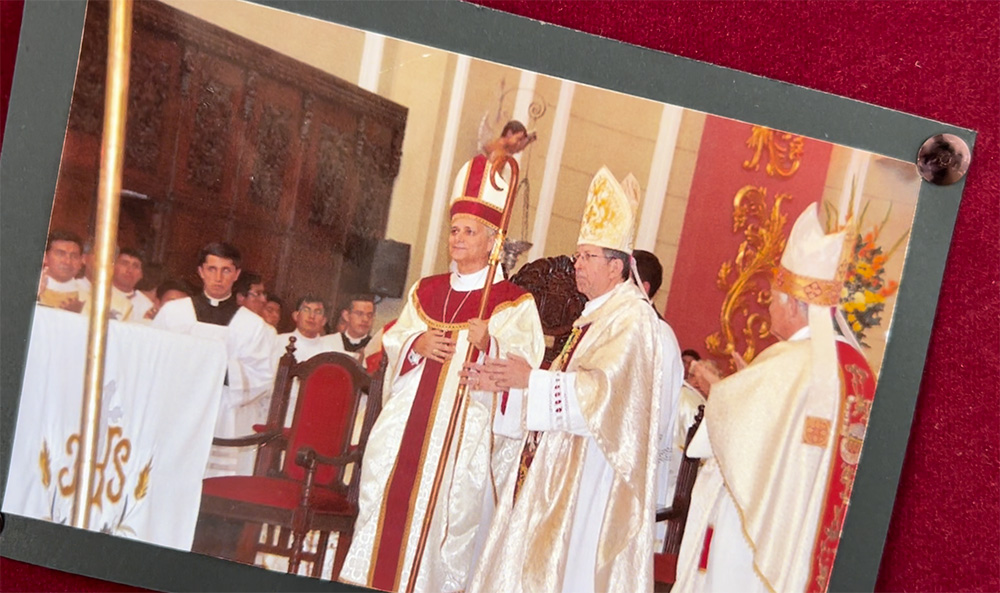
A photo of Bishop Robert Prevost's ordination Mass from Dec. 12, 2014, is displayed in the offices of the Diocese of Chiclayo, Peru in August 2025. American Archbishop James Green, Vatican ambassador to Peru, is seen to the right of the future pope. (NCR photo/Justin McLellan)
From Chicago to Chiclayo
Shortly after its founding in 1956, the Chiclayo Diocese saw the appointment of several bishops affiliated with Opus Dei, the conservative Catholic organization that was founded in Spain and exerts huge influence in Latin America. In 1961, Luis Sánchez-Moreno Lira, a member of Opus Dei, became auxiliary bishop of the diocese. He continued in that role until 1968, when Ignacio María de Orbegozo Goicoechea, a member of Opus Dei, was appointed bishop and began a 30-year tenure of leading the diocese.
Fr. Fidel Purisaca, communications director for the diocese, told NCR that Obregozo "talked a lot about a tripod he created, which guided his pastoral work, and he talked about the three legs of the tripod," namely, the diocesan seminary, the Catholic university and a Marian shrine overseen by the diocese.
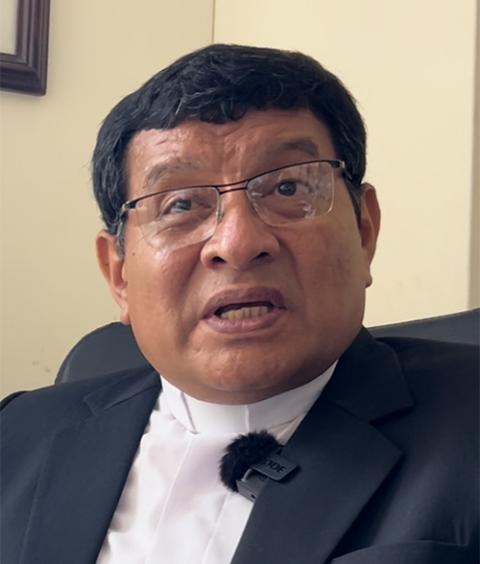
Fr. Fidel Purisaca (NCR photo/Justin McLellan)
That pastoral focus remained through the tenure of Orbegozo's successor, Bishop Jesús Moliné Labarte, a member of the Priestly Society of the Holy Cross linked to Opus Dei.
In 2014, Moliné turned 75, and as mandated by canon law, offered his resignation. Francis, one year into his pontificate, accepted it and named Robert Prevost as his successor, the first bishop without a tie to Opus Dei to lead Chiclayo in 46 years.
When Prevost was named bishop of Chiclayo, "we didn't know who he was," Purisaca said. Many in the diocese, including the local clergy, had expected "an Opus Dei bishop, someone who had been around here a long time, in order to follow the pastoral work of the other bishops before."
In 2014, a fellow American, Archbishop James Green, the Vatican's representative to Peru, ordained Prevost a bishop in the Cathedral of Chiclayo on Dec. 12, the feast of Our Lady of Guadalupe.
Much like at the start of his pontificate, "the first thing he did was to not change anything," Purisaca said. "He wasn't the kind of person who arrived in a diocese thinking he had to change everything or start remaking things from the first moment."
Prevost issued decrees to keep diocesan staff and clergy in their positions upon his arrival.
But gradually, he began to prod the structures of the diocese toward his pastoral priorities.
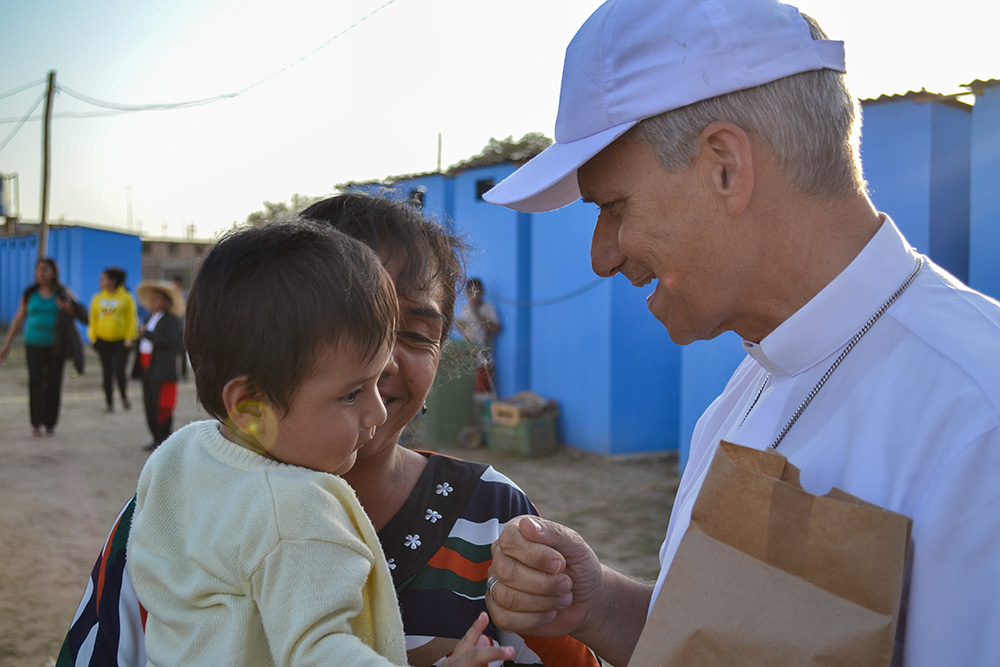
Then-Bishop Robert Prevost of Chiclayo, Peru, gives a bag of food to a family in need during an event organized by Caritas Chiclayo to assist the poor Nov. 20, 2017. (Courtesy of Janina Sesa)
One of Prevost's early priorities was revamping Caritas, the diocese's charitable arm. Prevost, who became a Peruvian citizen shortly after his ordination, expanded collaboration with local nongovernmental organizations not affiliated with the church, as well as private and public institutions — including the Peruvian air force and army — to increase the aid Caritas could deliver and broaden its reach in the community. Through Caritas, he established soup kitchens in parishes and a diocesan food bank.
Caritas' work became more closely integrated into the life of the diocese, rather than operating as a separate entity. Prevost also made personnel changes, appointing a laywoman as the organization's director.
Among the local clergy, Purisaca recalled a "certain closed-mindedness among a few who did not look favorably on the new pastoral approach the diocese sought to offer."
Yet at the same time, Prevost pushed diocesan offices to promote pastoral initiatives, revitalizing diocesan offices for the family, youth, catechesis and communications.
"This created a new sense of unity, this is what Monseñor Prevost provided us with," said Purisaca. "To make it so that pastoral programs are organic, that they have a methodology."
Advertisement
Opening the doors to lay leadership
Over the 46 years the Chiclayo Diocese was run by Opus Dei bishops, an undercurrent of foreign missionaries and local Peruvians was developing a spirituality marked by liberation theology and focused on pastoral care.
"We would go to classes, to meetings, we could not receive that through the diocese, so we looked for it among ourselves," said Yolanda Díaz, a lay Catholic leader involved in grassroots community initiatives in her native Chiclayo.
A burgeoning community of like-minded Catholics connected movements dedicated to supporting Catholic students, young workers, teachers and professionals working in the community by meeting in homes and parks to hold spiritual reflections and organize charitable initiatives.
"We did our work more in society at large, because our involvement in the church was not very welcome, and that is why the lay movements [in Chiclayo] grew so strong," Díaz said.
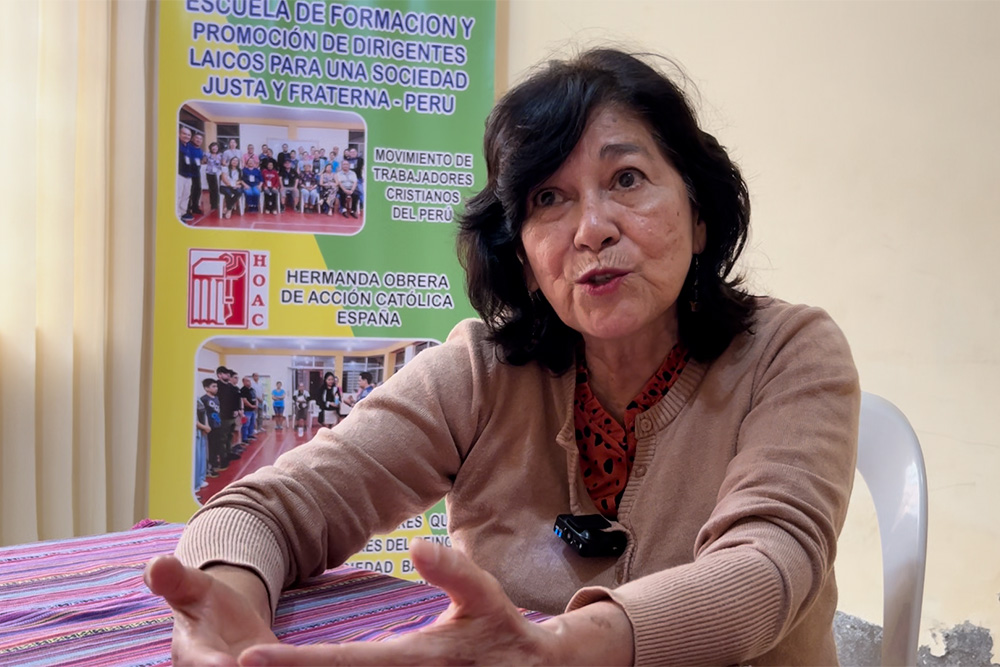
Yolanda Díaz, a grassroots Catholic activist, speaks during an interview with NCR at the offices of the diocese in central Chiclayo, Peru, Aug. 8, 2025. (NCR photo/Justin McLellan)
She recalled the hostility they were met with by diocesan priests: "They would say, 'We don't need laypeople, above all laypeople that think, that propose ideas.' "
In response, several lay-led organizations emerged outside formal church structures, carrying out education, youth formation, family support and nutrition programs in poor neighborhoods across the region, while remaining outside of the diocese and parish structures.
Those relationships began to shift under Prevost. In his first year as bishop, he accepted an invitation to meet with lay movements active in Chiclayo. Following that initial contact, the Chiclayo Diocese recognized several lay-led organizations under Prevost's direction, signing agreements to facilitate their collaboration.
Yet it was through creating space within the diocese's institutional decision-making structures that lay organizations began to truly feel like part of their own church.
Prevost began organizing diocesan assemblies, a forum created to gather parish delegates, clergy, religious and lay movements — many of them previously excluded from participating in their parishes — to listen and discuss the realities of the diocese and discern pastoral priorities together. It functioned as a consultative body that identified concrete social and pastoral challenges and informed an annual diocesan pastoral plan.
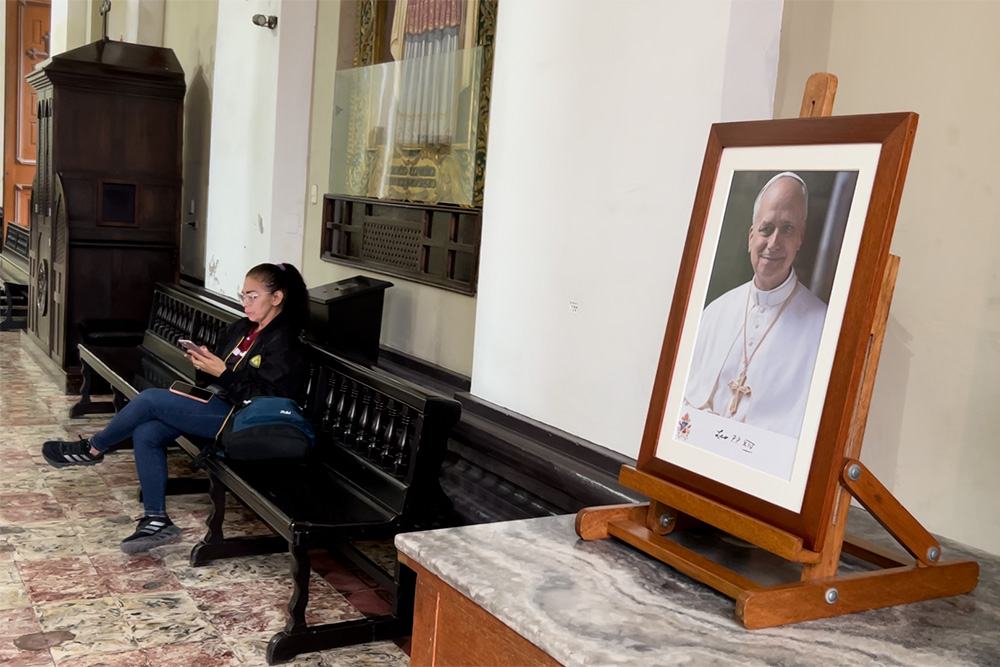
A picture of Pope Leo XIV is seen in the Cathedral of Chiclayo Aug. 8, 2025. (NCR photo/Justin McLellan)
The diocesan clergy "never used to call us, so then he [Prevost] begins this reconciliation with the lay movements and then all of the movements begin to participate," Díaz said.
At the parish level, "pastoral animation" teams were implemented, gathering laypeople to take charge of their parish's pastoral initiatives. Eventually, the parish teams were grouped into five distinct zones to encourage collaboration between them and a diocese-wide pastoral team was formed.
Luis Antonio Zapata, who worked on the diocesan team under Prevost, told NCR that the church's initiatives in Chiclayo were previously run "directly by the priests and maybe one or two laypersons in there, but in that time Monseñor Robert called for co-responsibility among laypeople, promoting more and more laypeople since the priests were busy with their tasks."
Rita Paredes was involved in her parish's pastoral animation team before being asked to serve at the diocesan level in 2018.
The goal of the diocesan team, she said, was to "go to the parishes to encourage the faithful and the parish priest to be part of this pastoral plan," one aimed at transforming the local church "to be, as Pope Francis said, an outgoing church, to not just remain in the church but to go out and evangelize, to listen to our brothers and sisters, keep going forward with them."
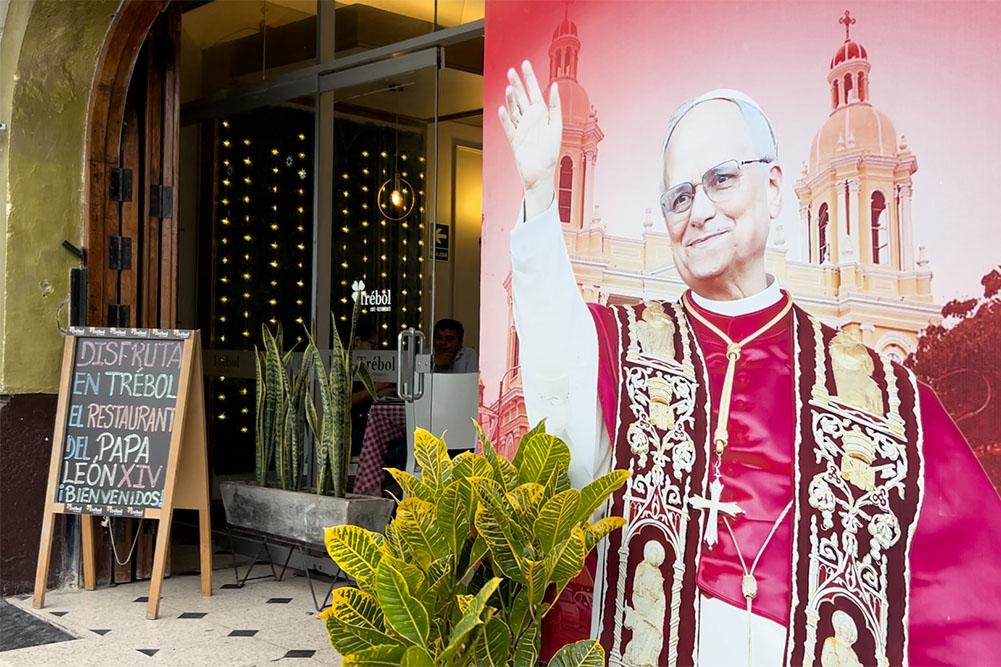
A picture of Pope Leo XIV is seen Aug. 8, 2025, outside a restaurant in Chiclayo, Peru, with a sign saying the pope used to eat there when he was bishop of the Chiclayo Diocese. (NCR photo/Justin McLellan)
The diocesan pastoral plan offered different initiatives for parishes to implement each month.
Around International Women's Day, for example, volunteers were encouraged to go into the streets and help record messages for the wives and daughters of passersby, offering them a card to give to them later in the day.
"They would be surprised. They would even ask, 'Are you Catholic?' because they had never seen the Catholic Church do those kinds of things," Paredes said.
Or for World Day of the Elderly and Grandparents, several parishes made scarves to give to the elderly in their communities "and we got them together at a certain place to give them to them; it was something very beautiful, a small thing that encourages people to follow the church."
Whenever the diocesan team would meet with Prevost, "we would generate the ideas," Paredes said. "He would sometimes say, 'This could be improved, maybe this could be removed,' and we would receive what he would say."
"There was always a consensus," she said.
A church rebuilt
In 2017, heavy rainfall and flooding led to infrastructure collapse across northern Peru.
In Olmos, about a two-hour drive north of Chiclayo, the town's 416-year-old adobe Church of Santo Domingo crumbled. For four years, it lay in ruin virtually untouched.
Fr. Melchor Pérez Cabrera was serving in another parish. Prevost, aware of Pérez's previous experience overseeing church construction, called to tell him he was being reassigned to Olmos to lead the rebuilding effort.
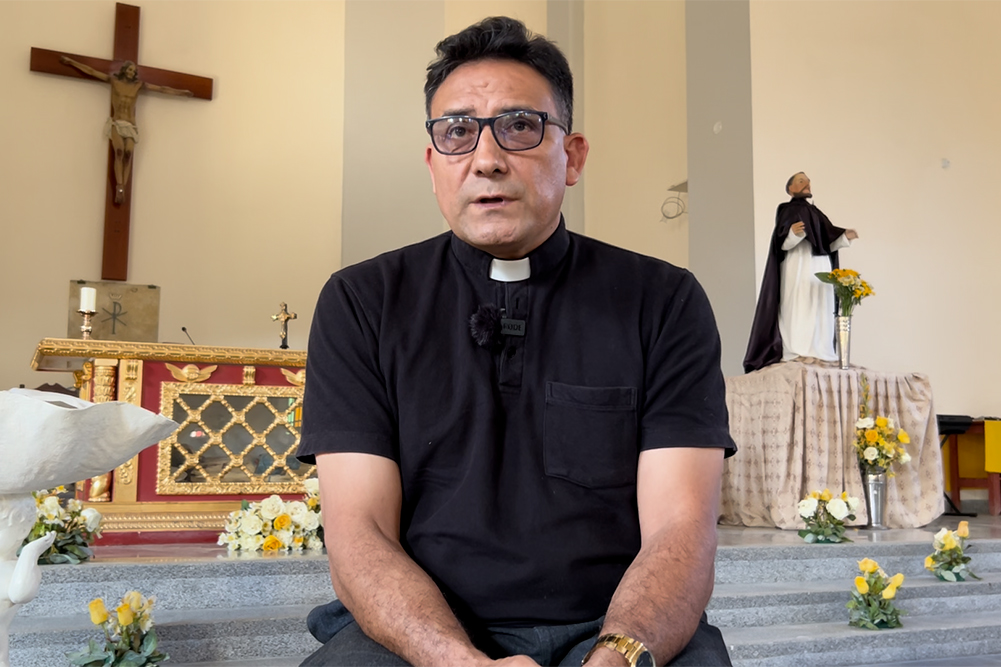
Fr. Melchor Pérez Cabrera speaks during an interview with NCR at the Church of Santo Domingo in Olmos, Peru, outside of Chiclayo, Aug. 9, 2025. (NCR photo/Justin McLellan)
When Pérez said he was content in his current role, Prevost responded: "I did not ask if you are fine or not, I said I am moving you," Pérez recalled. "Monseñor told me that more than four years had passed since the church collapsed and that he now wanted something to be done, since there still wasn't anything visible."
The full reconstruction was expected to cost some 7 million Peruvian soles (approximately $2 million). By the time Pérez showed up, the parish had only raised 1% of that sum.
Eager to begin visible work on the project, Prevost pushed initial funds toward the reconstruction. Where Prevost wanted to use the money to strengthen the foundation, Pérez thought of how to stretch it to rebuild the entire nave.
"Monseñor was a bit suspicious; he got a bit uncomfortable when I told that to him," Pérez said. But he was able to save huge amounts of money by hiring engineers and laborers directly, skirting contractors and renting equipment to do large swaths of work directly.
"I explained it to Monseñor and he was convinced," Pérez said. "He told me: 'If you can guarantee me that you will do a good job, do it. Otherwise, don't touch it.' "
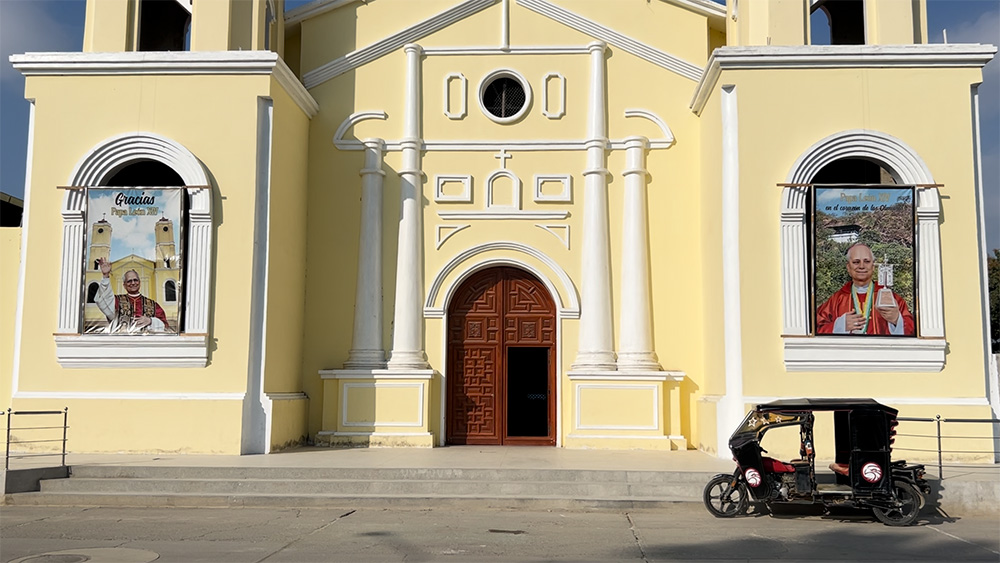
Banners of Pope Leo XIV, the former bishop of Chiclayo, Peru, hang outside the rebuilt Church of Santo Domingo in Olmos, outside of Chiclayo, Aug. 9, 2025. (NCR photo/Justin McLellan)
Work got underway and the visible progress on the church's reconstruction led to increased fundraising. Although Prevost would leave for Rome in 2023 before seeing it to its completion, the church in Olmos was rebuilt for a mere 2.5 million soles (approximately $745,000).
Prevost, Pérez said, "always gave us great freedom, but he also advised us."
"He put great trust in us, he always listened to us, but he also solved problems very quickly," Pérez said. "He was very effective, very efficient. On administrative matters, I don't think there is another bishop that can match him."
A bridge in a time of crisis
When the COVID-19 pandemic swept through northern Peru, the line between life and death for many ultimately came down to oxygen.
Fr. Orestes Milián Flores, the parish priest in Mochumí outside of Chiclayo, recalled buying an oxygen tank to save a parishioner's life for 750 soles (approximately $225 dollars), a price that amounts to a quarter of the area's average monthly salary.
As demand for oxygen surged, Prevost launched a public appeal to business leaders and parish donors to fund an oxygen plant to provide the much-needed oxygen free of charge. Soon afterward, the diocese had established an oxygen plant just south of Chiclayo.
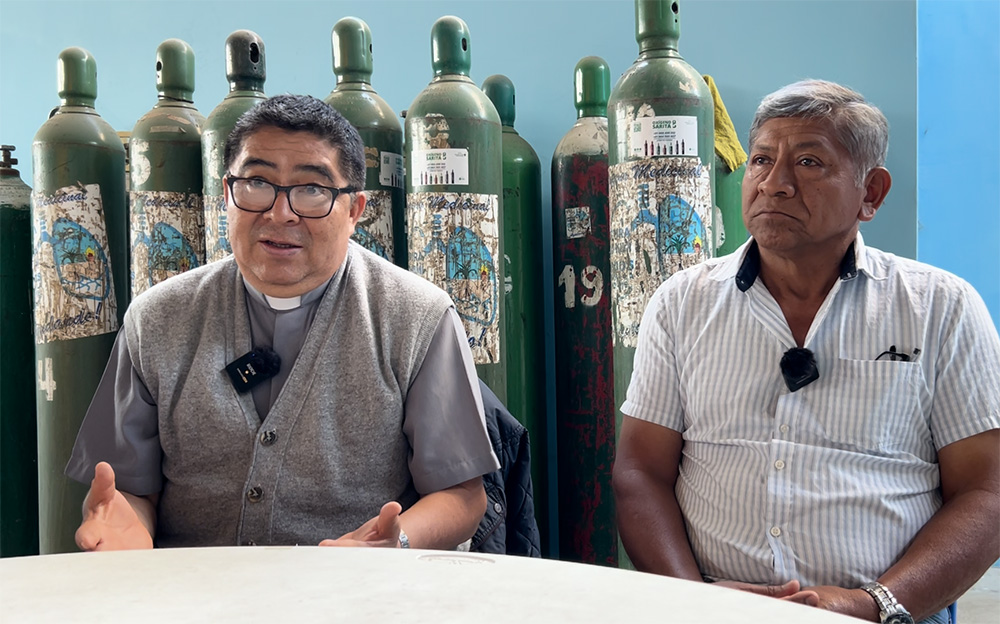
Fr. Orestes Milián Flores, left, and Jorge Musayón speak during an interview with NCR at the oxygen plant built with the support of Bishop Robert Prevost in Mochumí, Peru, Aug. 7, 2025. (NCR photo/Justin McLellan)
Yet "he asked for one plant, but he received enough to buy two," said Jorge Musayón, a member of Respira Mochumí, a nonprofit founded to deliver oxygen to residents south of Chiclayo.
That surplus is what allowed the local Caritas to partner with Musayón's organization in opening a second plant in Mochumí, north of the city.
Those involved pointed to Prevost's role as convener and bridge. He linked Caritas' technical capacity, parish networks, local nonprofits, municipal staffing and private sector donors.
"People trusted in this," said Milián, the parish priest. "That trust also influenced the civil authorities; at that time everyone was a bit divided, but they united and got to work on this project."
Prevost's credibility in the region helped. Janina Sesa, the head of Caritas Chiclayo during Prevost's tenure as bishop, said short videos of the bishop making appeals to the camera for support and donations would quickly spread through the local media and amplify donations.
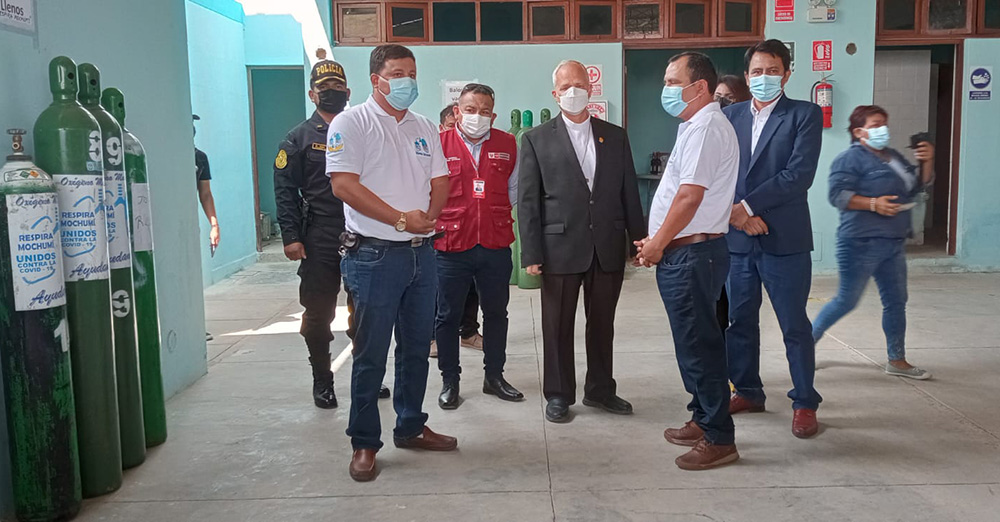
Then-Bishop Robert Prevost, center, attends the inauguration of an oxygen plant in Mochumí, Peru, which he helped establish in 2021 during the COVID-19 pandemic. (Courtesy of Janina Sesa)
Nurses made video calls to those requesting oxygen to verify their need, and appointments to pick up containers were scheduled through the messaging app WhatsApp.
All in all, the two plants served oxygen to some 8,500 people, organizers said.
Prevost "always trusted those he put in charge. He trusted in laypeople and acted as a bridge," Milián said. "Without him, none of this could be done."
Rather than micromanaging, Prevost repeatedly delegated authority and allowed others the freedom to act, stepping in only when guidance or coordination was needed. In pursuing his pastoral priorities as bishop, the future pope showed that participation and pragmatism were key to effecting change.
Prevost's tenure as bishop of Chiclayo would end after only eight years, after which Francis named him head of the Dicastery for Bishops, the powerful Vatican department that advises the pope on the selection and appointment of the world's bishops.
"I went, not entirely happy; my preference would have been to remain in Chiclayo," Prevost said on a trip to Peru shortly before his election to the papacy. "But one must obey, at all ages of life."
The National Catholic Reporter's Rome Bureau is made possible in part by the generosity of Joan and Bob McGrath.