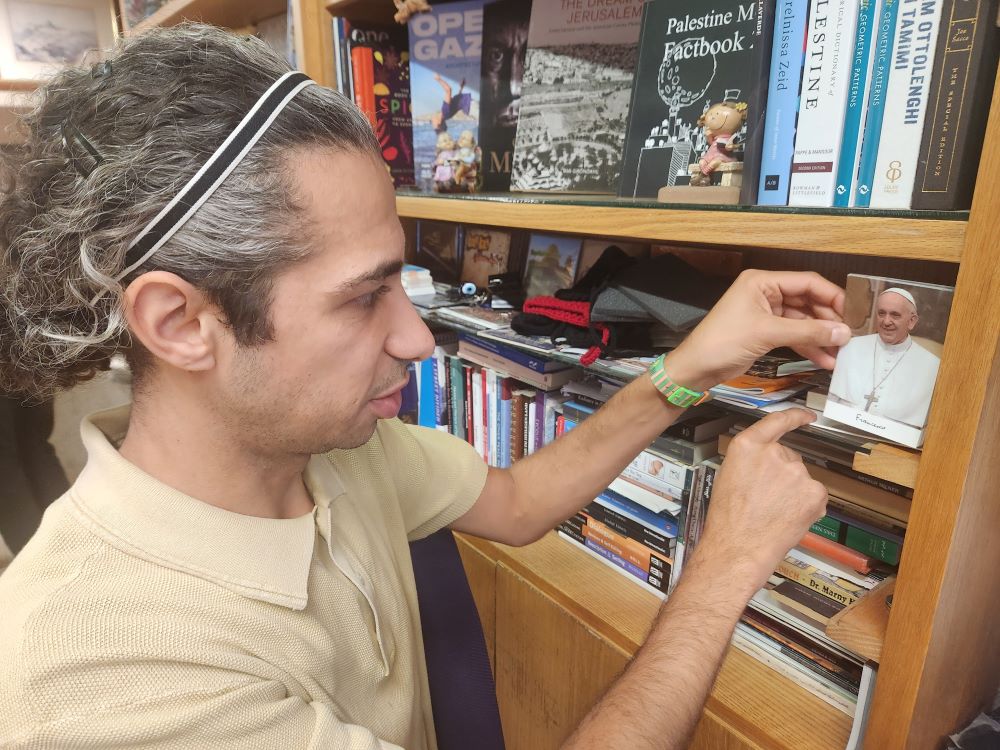
Ahmad Muna, assistant manager of the Educational Bookshop in east Jerusalem, points to a photo of the late Pope Francis he gave a place of honor at the shop. Muna, a non-observant secular Muslim, says Francis deserves a place of honor because of his commitment to Palestinian dignity. (NCR photo/Chris Herlinger)
Perched on a pile of books overlooking the cashier's spot in an east Jerusalem bookshop rests a small postcard-size photograph of the late Pope Francis.
Such an image, placed there by Ahmad Muna, the bookstore's co-owner and assistant manager, might at first seem out of place.
The Educational Bookshop, one of two branches the family owns on bustling Salah Eddin Street, is not a Catholic or religious store. Many of its 1,500 books are in English and the store caters to an international clientele, like journalists and aid workers, interested in the history of Palestine and Israel.
Both in atmosphere and in the titles it carries, many of them scholarly, the family-run business resembles an academic bookstore that might be found near a large university campus in the United States.
But to Muna, 35, a non-observant secular Muslim, Francis deserves a place of honor as his nearly daily phone calls to a Catholic Church in Gaza starting Oct. 7, 2023, proved he was a steadfast believer in human dignity — in Palestinian dignity.
"He stood by them [Gazans] because he was a human rights defender," Muna said in a late 2025 interview at the bookshop. "He was one of the good leaders," Muna said, adding that he believes Western leaders often "don't stand on the good side of things."
Muna said too often such leaders have not sufficiently recognized the humanity of Palestinians. "It's like they're sweeping us under the carpet — or the rubble. That's why it means so much to be recognized by someone who defends equality, fairness and dignity to everyone."
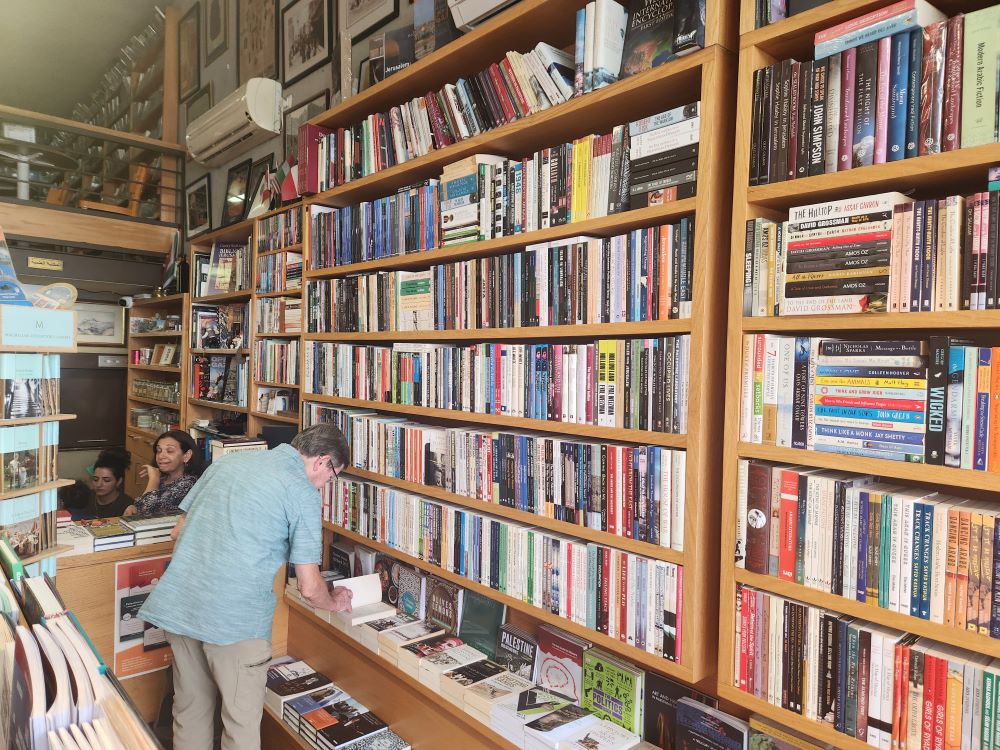
Both in atmosphere and in the titles it carries, many of them scholarly, the Educational Bookshop in east Jerusalem, a family-run business, resembles an academic bookstore that might be found near any large university campus in the United States. (NCR photo/Chris Herlinger)
Muna knows something of that dynamic personally.
Last February, Muna and his uncle Mahmoud were arrested and detained for two days after Israeli police raided the store. The police said that the bookshop contained materials — including an English-language coloring book — that incited violence and terrorism.
The bookstore closed briefly and after his brief incarceration, Muna was put under house arrest for five days and was prohibited from working in the bookshop for nearly three weeks.
An Associated Press report at the time labeled the four-decades-old bookshop "a hub of intellectual life in east Jerusalem," in part by hosting "cultural events and is especially popular among researchers, journalists and foreign diplomats." Among the titles are books by well-known Palestinian intellectuals like the late literary scholar Edward Said, and Israeli and Jewish critics of Israeli policies such as Ilan Pappé and Noam Chomsky.
The report quoted Mai Muna, the wife of Mahmoud Muna, as saying that the police "confiscated hundreds of titles" related to the history of Israel and Palestine, picking out "books with Palestinian titles or flags," without apparent knowledge of what the titles meant, the AP reported. She said the police used "Google Translate on some of the Arabic titles to see what they meant before carting them away in plastic bags," the AP reported.
The bookstore was raided again in March — but public support for the store proved formidable and the store, for the moment, has remained open.
The case remains in a kind of limbo
Still, Muna told NCR in a follow-up email that the case was not dismissed. "It's now been 11 months," he said, noting that, "we were released on bail and restrictions that lasted 20 days, and then we were not given any further orders. So we went back to normal life and went back to work in the store."
He added that the authorities did not follow up on the case "nor demanded anything else from us." He said that in similar cases such restrictions are often extended. But in the case of his family, "we did not hear anything back." The Munas "never received a notification that the case is closed or dismissed," so for all they know, the case may still be open.
Muna added that the police confiscated more than 300 books on the day they raided the shop. Many of the books have been returned, he said, but 40 to 50 books are apparently still being held by the police.
Muna said what happened to him and his uncle was "minimal" when compared to what has happened to other Palestinians, such as those in Gaza, and that the resulting public outcry against the raids and overall public support for the store is one reason the authorities have laid off the store — for now.
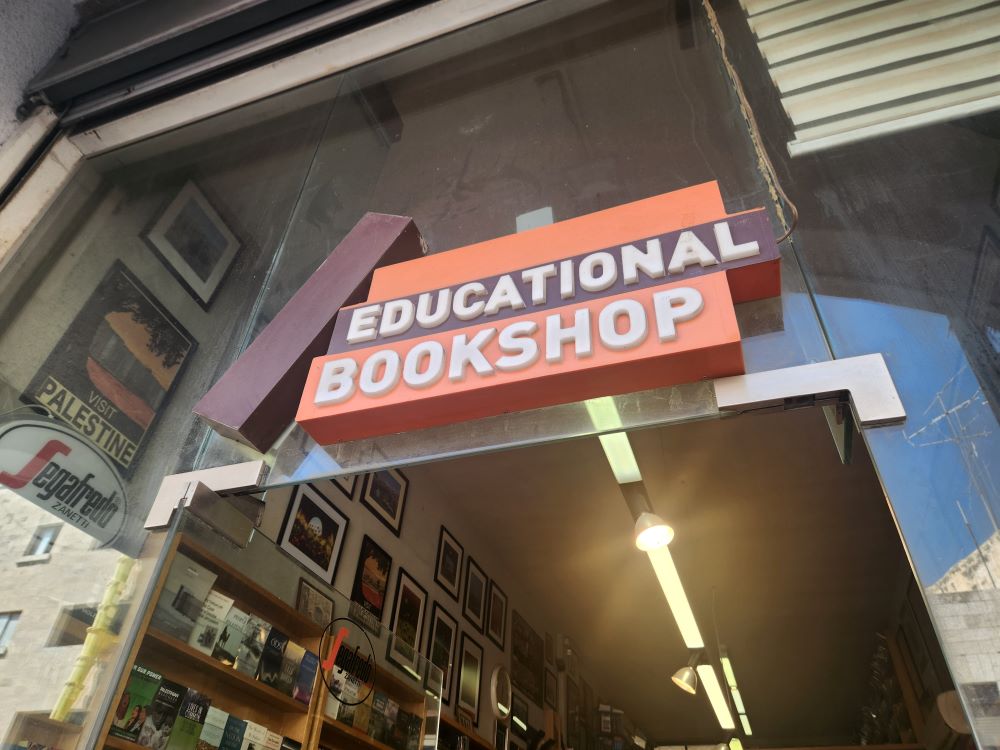
The entrance to the Educational Bookshop, on bustling Salah Eddin Street in east Jerusalem (NCR photo/Chris Herlinger)
Asked by a group of visiting journalists and scholars in October if the experience was a "one-off" or a more serious reflection of possible repression and censorship, Muna said he is not sure. "We don't have a clear answer," he said.
"The pushback," Muna said, could "make them pause and decide not to raid us again." But he added, the current political climate in Israel is not looking good for those who came to the defense of the bookstore, such as the small number of Israelis who identify as supporters of peace with the Palestinians.
"I think members of the Israeli left will be next," he said.
Which is why it has been important that Muna and his family feel support from allies — like Israeli friends who showed up for Muna in court. But also outsiders elsewhere in the world, like Pope Francis.
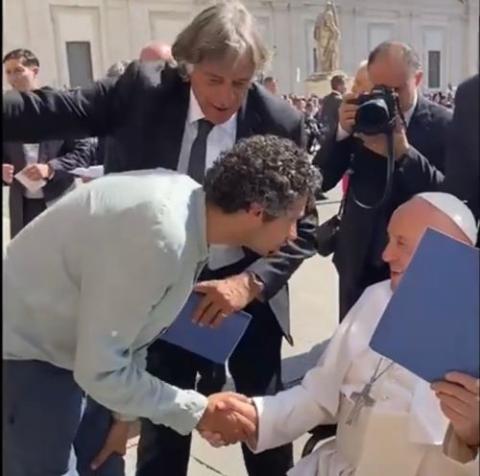
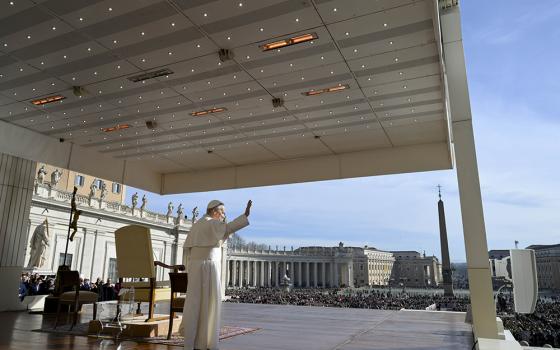
Ahmad Muna meets Pope Francis at St. Peter's Square in June 2024. Muna traveled to Rome as a participant in a program called Rome International Seminar. (Courtesy of Ahmad Muna)
Muna's relationship with the late pontiff became briefly personal. Muna traveled to Rome in June 2024 as a participant in a program called Rome International Seminar, which sponsors delegations from Middle East and Balkan countries to attend a gathering at Roma Tre University.
The program, Muna said, aims to have participating students and young professionals meet and discuss new and creative ways of peace building. The program included a visit to the Vatican and a brief meeting with the pope.
Muna said he found it inspiring that in his last months, Francis prayed for Gazans and publicly called "for peace, that the war must end."
"He took it upon himself to make those calls every day, to stand by them. For me and other Palestinians, this was something that was very much appreciated." It was an act of solidarity that stood in contrast to what Muna said was often indifference to the Palestinians in Gaza by Western countries. "For me, this was really moving."
As a result, "I became a fan, an even bigger fan of Pope Francis."
In Rome, a moment of thanks to Pope Francis
When he was finally able to meet the pope in an informal encounter at St. Peter's Square, Muna shook hands with Francis and told him to keep praying for Palestinians. The wheelchair bound pontiff said, "I will do that."
"He seemed very firm in his commitment," Muna recalled.
Muna said while it is too soon to make a judgment about Pope Leo XIV's commitment to peace and justice in the region, he hopes that Leo will affirm peace and justice as passionately as Francis did.
"I very much hope he will follow the steps of the previous pope, and even hope that he can do more and influence more. We need his leadership and the world needs and deserves leaders who speak the truth and stand in solidarity with those who are suffering."
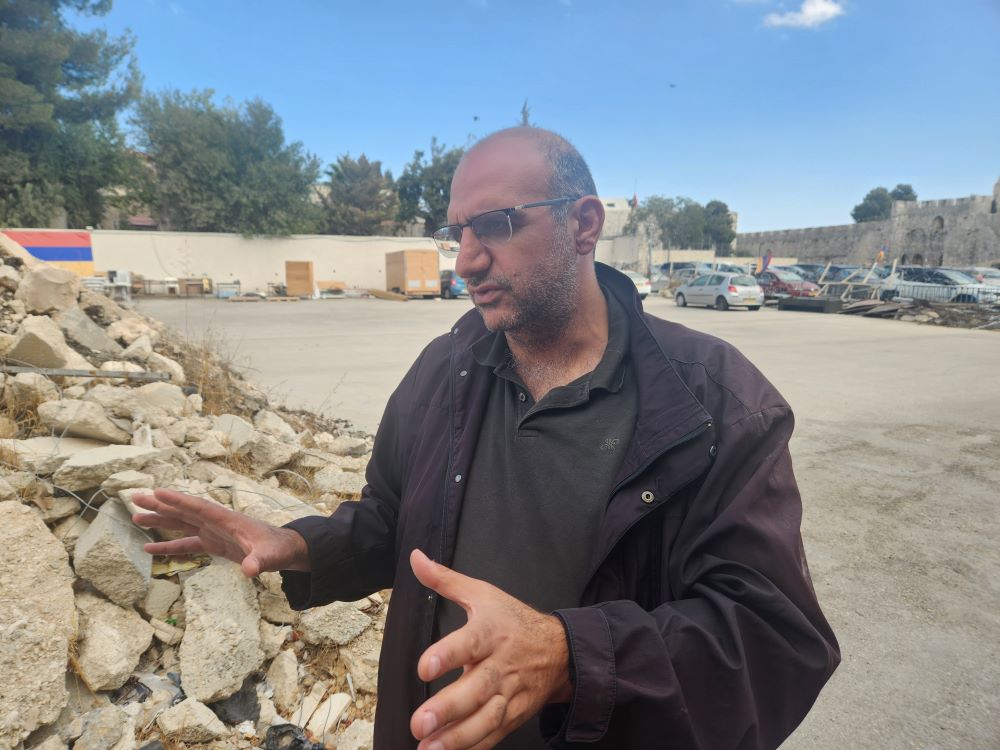
Omar Haramy, director of the Sabeel Ecumenical Liberation Theology Center, a Christian-based think tank, says that Ahmad Muna, his family and their bookstore are "taking on the task of ensuring that the Palestinian story — our lived experience, our truth — is heard in the West." (NCR photo/Chris Herlinger)
Muna reiterated that he is saddened by what he describes as lukewarm support among Western governments for Palestinians in the face of what he and others, including international and Israeli human rights groups, have called Israel's genocide in Gaza. (Israel has defended its actions in Gaza as necessary for Israeli security.)
"I'm happy to be inspiring to you," he said to the group of journalists and scholars, most from the United States, who visited the bookstore. "But we look to the West for inspiration on the rule of law and we've been disappointed," adding it has felt like a "stab in the back," and that the Israeli government "has not faced any consequences for its actions."
Omar Haramy, the director of the Sabeel Ecumenical Liberation Theology Center, a Christian-based think tank which sponsored the journalists' delegation, told NCR that Muna, his family and their bookstore are "taking on the task of ensuring that the Palestinian story — our lived experience, our truth — is heard in the West. Because in today's global power structure, Western governments still hold disproportionate influence in determining whether justice for Palestine is upheld or denied."
"When international law and basic human rights are not enough to guide policy, our path forward is clear," he told NCR. Through venues like the Educational Bookshop, "we must speak directly to the people. By engaging, educating, and partnering with communities in the West, we empower them to hold their governments accountable."
Advertisement
As for Muna's affection for the late Pope Francis, Haramy said the pontiff represented a needed voice in the world.
"When the pope embodies God's inclusive love, when he speaks for justice, peace and reconciliation, he reflects the heart of Christ. In those moments, we are encouraged and strengthened in our faith. When church leaders struggle to do so, we do not turn away, but pray that they may be guided more deeply into the way of Christ."
Pope Francis, he said, "did not choose sides between Palestinians and Israelis; he chose what is right."
"He saw no Jew or Gentile, but human beings created in the image of God. He defended the dignity of all and rejected the language of fear and demonization. Pope Leo, too, appears to walk with wisdom and kindness, and his willingness to hold our people in prayer gives us comfort."
GSR international correspondent Chris Herlinger visited the West Bank, Jerusalem and Israel in October as a member of a delegation of journalists and scholars sponsored by the Jerusalem-based Sabeel Ecumenical Liberation Theology Center. That visit was augmented by additional reporting in Israel and the West Bank.