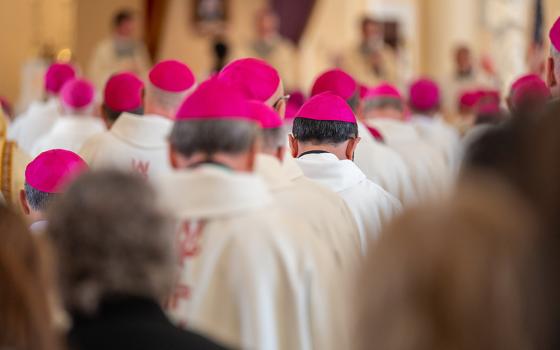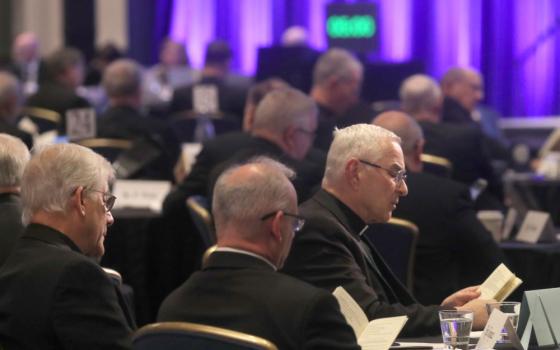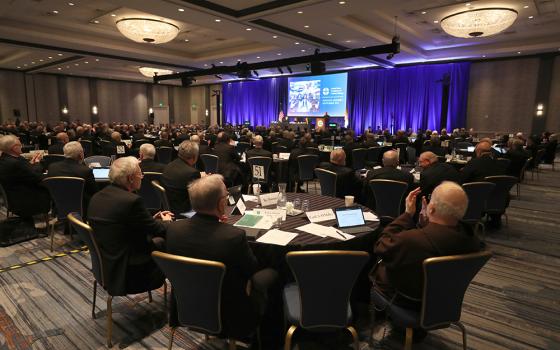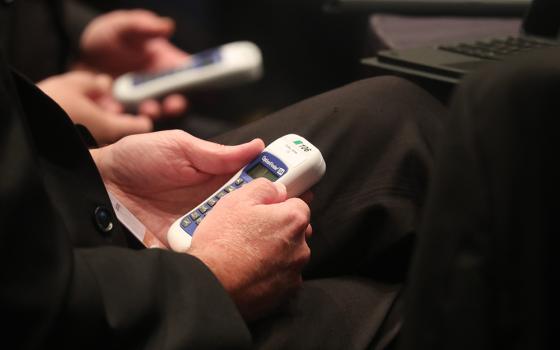
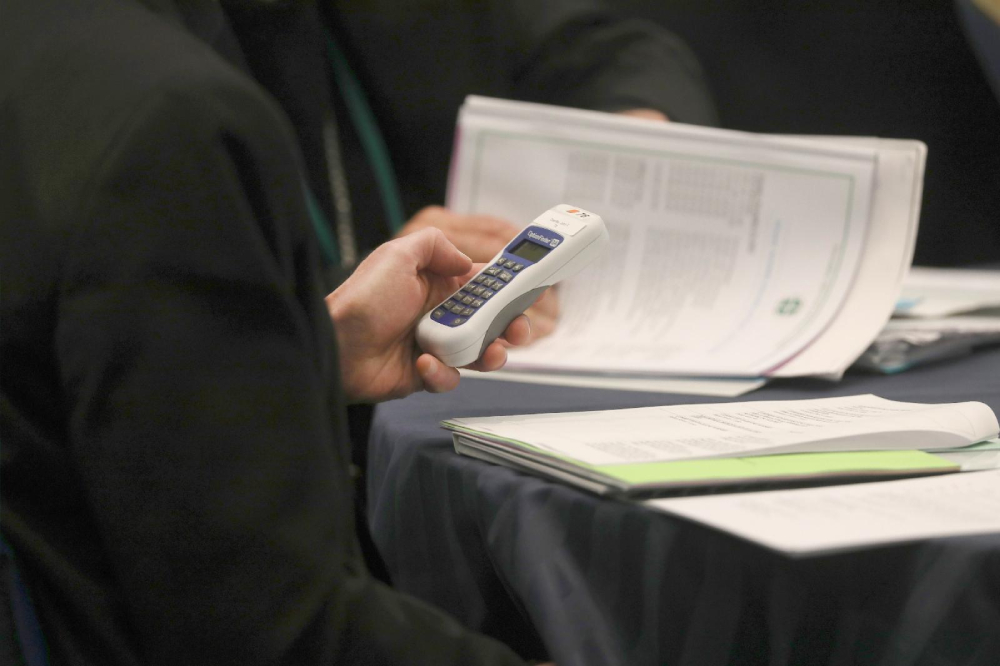
A bishop uses an electronic voting device during a Nov. 14, 2023, session of the fall general assembly of the U.S. Conference of Catholic Bishops in Baltimore. At the U.S. bishops' 2025 fall plenary in Baltimore, the bishops will vote to elect a new conference president. (OSV News/Bob Roller)

Sunday night at the bishops' conference, the University of Notre Dame always hosts a reception. This year, all the bishops who attended brought up the same two topics: the crab cakes and the election of a new president for the conference.
Maryland crab cakes are one of the things I miss most since moving to Connecticut. There is nothing like them. Outside of Maryland, crab cakes always have too much breading or too much spice. Crabmeat is delicate. It is easily overwhelmed. Only in Maryland do they know how to make crab cakes that are light, almost fluffy and with a recipe that lets the crab flavor shine through.
The selection of a new USCCB president is not so fluffy, though; The bishops are taking this election very seriously. They recognize that the election of Pope Leo XIV requires the conference to recalibrate its position. The resistance many bishops showed to Pope Francis and his reform agenda is no longer a viable option with a pope who can cut through the media noise speaking in American English.
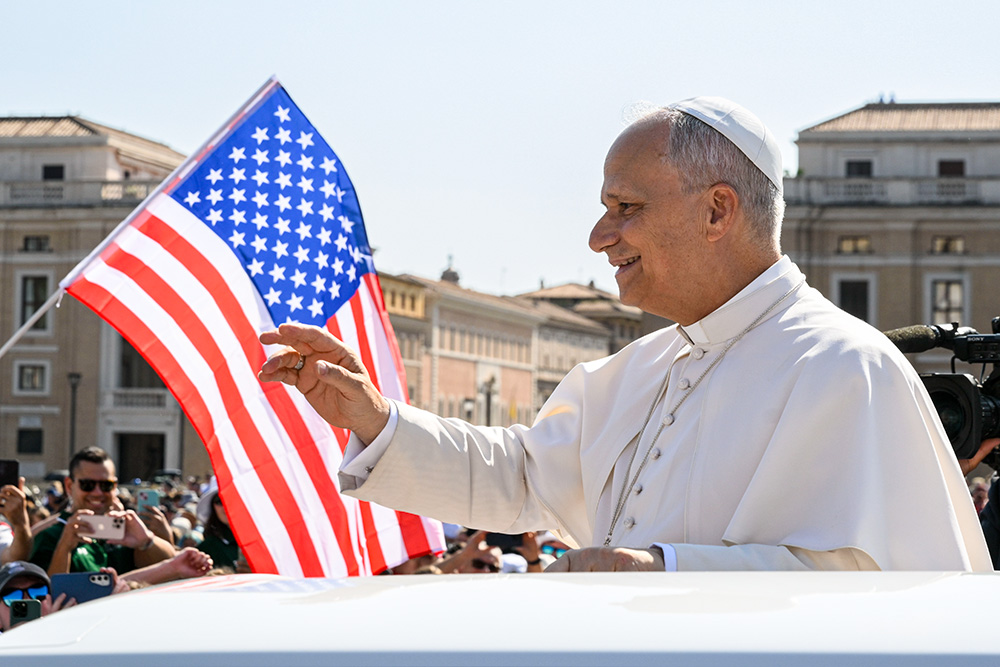
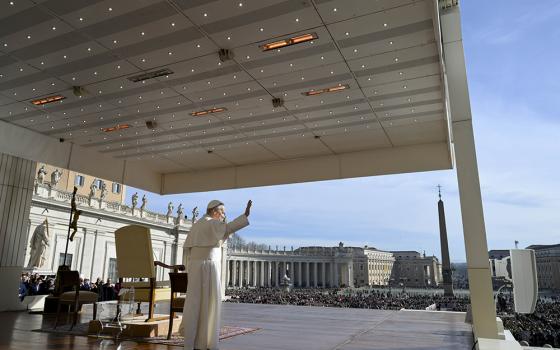
With a U.S. flag in the background, Pope Leo XIV waves to the crowd from the popemobile as he rides around St. Peter's Square at the Vatican before his weekly general audience Aug. 6, 2025. (CNS/Vatican Media)
I was surprised by how many bishops thought it would be a scandal to elect Archbishop Paul Coakley as president because of his previous support for then-Archbishop Carlo Maria Viganò when he attacked Pope Francis. They also were bothered by the argument advanced by Jonathan Liedl at the National Catholic Register that it is Coakley's turn. "If that 'next man up' precedent is followed, Archbishop Coakley will be the pick." Most bishops I spoke with last night thought being next in line was not a good reason to put someone in charge for three years.
Also surprising was the degree to which the candidacy of Bishop Robert Barron has caught some wind in its sails. Most bishops admire Barron's mastery of social media, even if they have reservations about the increasingly hard-right content of his content. Nonetheless, the presidency of the conference is mostly an administrative job and bishops recalled the many resignations at Barron's Word on Fire ministries in 2022, accusations of sexual harassment outside the workplace against the ministry's highest paid employee and the sometimes weird culture of maleness, including the hiring of bodybuilders for key positions in the ministry, that enveloped Word on Fire. As I noted at the time: "In a culture that is over-homogenized, I delight in weirdness and oddity, but this is just a bit too strange. Whatever you think of the bodybuilding lifestyle, its goal is to perfect the way one looks, which is not the usual stuff of spirituality."
Advertisement
It seems possible, however, that many of the bishops are willing to overlook questions about Barron's administrative abilities because they want someone who can cope with the media. That is a recipe for three years of messages quite discordant from the messages coming from Leo, as I noted yesterday.
Bishops also are concerned about the selection of a vice president for the conference, seeing as that person usually ascends to the top spot after serving as #2 for three years. The current conference veep is Archbishop William Lori, but he is 74 and therefore ineligible to run for the presidency. You need to be able to complete your term before the mandatory retirement age of 75. It is possible, then, that the bishops will select a more centrist president and balance the leadership by choosing the more conservative Coakley as the vice president. At 70, he also would be too old to become president three years from now.
Stay tuned. NCR reporter Brian Fraga and I will be reporting on and analyzing the election results later today.