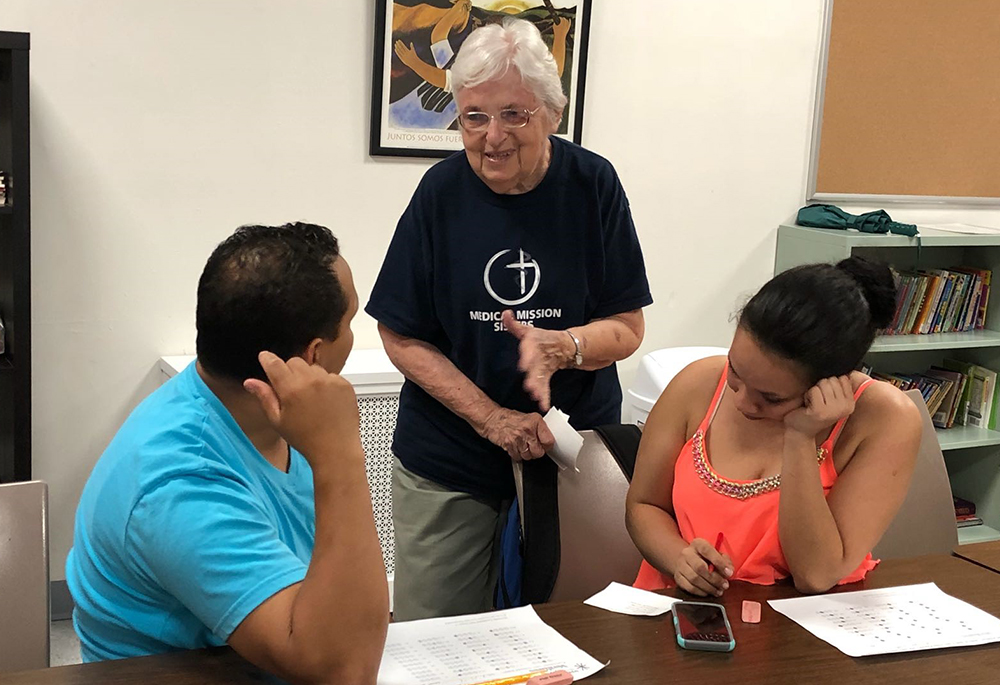
Sr. Barbara Ann Brigham teaches English as a second language in the Kensington neighborhood of Philadelphia. (Courtesy of Medical Mission Sisters)
by Christine Schenk
Editor's note: This is the second of two columns by Christine Schenk about the 100th anniversary of the Medical Mission Sisters. You can read the first column here. Unless otherwise indicated, all information is derived from interviews Schenk conducted with each sister one month after the Sept. 30, 2025, launch of the community's 100th anniversary.
As we celebrate the centenary harvest that grew from the Medical Mission Sisters' mustard seed beginnings, we would do well to remember that it came to be only because pioneering sisters planted and cultivated seeds of their own. Sisters love to quote this admonition from their founder, Mother Anna Dengel: "If you have real love, you are inventive. If you love, you find out, you are interested. If you really love, you accommodate yourself."
Essentially, if you love, you will find ways and means of doing things, of helping people.
Here are three profiles of sister-pioneers who took Mother Dengel's advice and ran with it. Many other sisters did the same. You can find more of their stories here.
Sr. Estelle Demers
"Medical Mission Sisters has been my life," enthused Estelle Demers, a 93-years-young Canadian sister. "I have never for even one second thought I would be better elsewhere. Medical Mission Sisters opened the world to me."
Demers entered in 1954 at age 22. After completing her novitiate in Philadelphia and a brief stint as assistant to the novice mistress, she was sent to study philosophy at a Catholic seminary in Ottawa, Ontario. The only woman at the school, she initially had to use the restroom facilities at a nearby gas station until school officials realized her plight.
But there was another, more significant, obstacle. All seminary courses were in Latin, and the young nun had never studied the language. Undeterred, she enlisted the help of a local high school Latin teacher who instructed her after her regular classes each day. Four years later, Demers graduated cum laude. She enjoyed her studies because "philosophy taught me to think."
This early experience exemplifies the uncommon intelligence, inventiveness and creativity that would characterize Demers for the rest of her life.
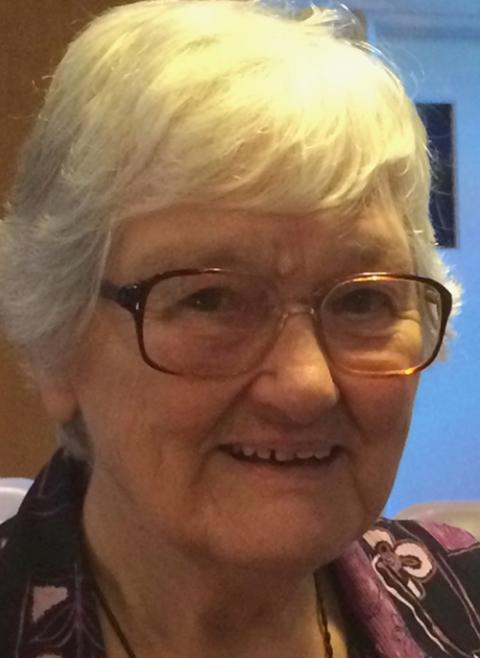
Sr. Estelle Demers, Aug. 14, 2015 (Christine Schenk)
Returning to the U.S., Demers continued studies in liturgy, catechetics, anthropology and linguistics. Time spent doing field work in Malawi helped her create effective cultural orientation programs for neophyte missionaries preparing to serve in foreign cultures.
"You have to learn to understand your own culture, and that your culture is not representative of the whole world," she said. "Other people have other ways of understanding. And this other way is as good as yours. You have to have your mind opened to that, otherwise [enculturation] doesn't work."
In 1970 Demers was elected sector superior for North America, one of only six sectors of this worldwide community at the time. In 1967, the Society had changed its governance to encourage subsidiarity. In Demers' words: "The government system went from being hierarchical to from the bottom up." Which was all well and good — except there were few structures to facilitate the new model, and no one knew exactly how to function within it. With the help of a gifted team, Demers contracted with an Ohio-based organizational development company to help.
Over the next two years, every sister in North America had the opportunity to learn how to do decision-making "from the bottom up," including how to chair a meeting, how to gather input from stakeholders and how to prepare recommendations that could be implemented. The sisters also created decision-making bodies at local, regional, national and, eventually, international levels. Bottom-up structures were now the decision-making norm for the whole Society.
After completing six years in leadership, Demers gathered a small group of Canadian sisters to search out a possible mission in Canada. The sisters explored six or seven locales and consulted widely with sisters, priests and local community activists. The group settled on the underserved Boyle McCauley neighborhood in Edmonton, Alberta. True to the sisters' community-based, bottom-up ethos, Demers and Sr. Theresa Arac spent weeks canvassing residents, asking what they would do to improve their neighborhood.
"Almost everyone said health care," Demers said.
After consulting with health officials and obtaining buy-in from leaders of local neighborhood organizations, the Boyle McCauley Health Center was born. From the beginning, said Demers, "We agreed that we would be part of that health center, but we would not be the management. … The people of the neighborhood would manage it."
The Boyle McCauley Center continues to this day, providing "compassionate care without barriers" including primary care, health advocacy, and mental health, counseling, dental and housing services.
In 1985 Demers returned to the U.S. and was again elected to leadership. From 1985 onward she participated in nearly every international chapter of Medical Mission Sisters. A particular highlight, she told me, was "to become acquainted with the different parts of the world and how different people lived. ... Now that's a life-changing thing ... and you make friends everywhere!"

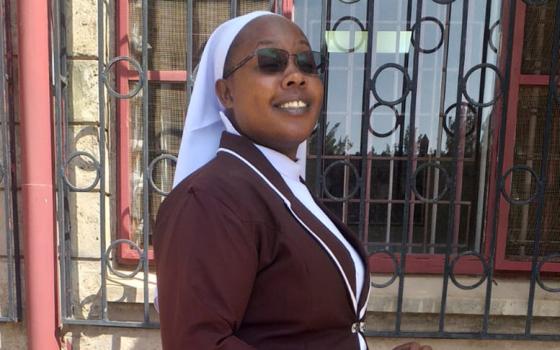
Medical Mission Sr. Joan Chunkapura, a psychologist who works among people with alcohol and drug dependence, is pictured in front of their only remaining hospital, Immaculate Heart of Mary Hospital at Bharananganam in the southwestern Indian state of Kerala. (Thomas Scaria)
Sr. Joan Chunkapura
Joan Chunkapura was born in Kerala, South India, the fifth of ten children. She met the Medical Mission Sisters in college and was attracted to their self-reliance and international focus. She entered when she was 17 years old. "The American sisters came all the way from another continent to work here … they were cheerful and never complained," she observed. "It was very inspirational to see these young ladies, very smart looking, good-looking, highly educated young women from another country coming and serving our people."
Chunkapura was especially impressed that the American sisters taught Indian girls nursing. "This was unheard of among Catholics. Women doing that kind of a work was not looked upon as praiseworthy," she said. "Women from another culture, modelling that, really touched us … it was women's empowerment, although we did not use the word. … It was educating women and empowering them."
After completing her Bachelor of Science in nursing, Chunkapura served at Nangina hospital in Kenya, an 80-bed bush facility. Three years later she made final vows and returned to Kerala, where she was asked to take charge of a nursing school affiliated with one of the sisters' hospitals. Soon the sisters shifted to focus on community-based preventive health and advocacy initiatives rather than hospital-centered care and gifted their large nursing school and hospital to the local diocese. Chunkapura sought a new ministry. "[Our leadership] said we need to be with the grassroots people, using a healing, holistic approach," she recalled. "So I said I would study psychology and specialize in addiction."
Advertisement
She returned to New Delhi to study clinical psychology and noticed that many of her fellow students were addicted to cannabis and alcohol. This solidified her desire to work with people with addictions. She also began to research addiction among socially isolated fishermen groups in Kerala. After studying 2,000 families, she discovered the incidence of addiction was alarming: "There was not even one person who didn't take alcohol. ... They had no social method of relaxation except drinking, go to the sea, drink and gamble while playing cards."
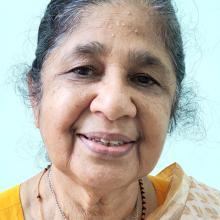
Sr. Joan Chunkapura (Courtesy of Medical Mission Sisters)
There were no holistic models of treating addiction in India at the time, so Chunkapura spent six months in Hazelden in Minnesota, where she learned about 12-step recovery models and relapse prevention programs. "All of this was unknown in India," she recalled. Returning home, an inventive and determined Chunkapura approached government officials and the Indian Bishops' Conference, asking them to find ways to bring holistic addiction treatment models to their people.
Catholic bishops decided that every diocese should open one center, so Chunkapura helped to start five. At the time, modesty prevented her from recognizing that she had in fact pioneered holistic addiction treatment models in India. It wasn't until 2014 — after receiving the president's award for her contributions to the field — that she finally realized, "It was a kind of pioneering. Unknowingly we were doing the treatment, the training and things like that."
Chunkapura attributes her role in catalyzing India's holistic models to her international community. "It is because of our internationality," she said. "Staying in my own country, this idea would not have come into my head." Echoing her founder, she remarked, "Without knowing, we stepped into new methods … because we're trying to help people."
Sr. Barbara Ann Brigham
As a young college student at Marquette University in the mid-1950s, Barbara Ann Brigham loved the theology classes taught by professor Bernard Cooke. "He was so charismatic," she said. "His classes were packed with students sitting on steps and windowsills, in a giant science hall." Cooke was teaching about incarnation theology, "which came straight from Teilhard de Chardin," explained Brigham. Pierre Teilhard de Chardin was a Jesuit priest and paleontologist, whose views about God's evolutionary presence in the universe were viewed unfavorably by church officials at the time. Nevertheless, thousands of devoted Catholics embraced his ideas.
Brigham was one of them. She was deeply moved to realize, "The presence of God can be found everyplace. … God is constantly creating and there is goodness in everything." For Brigham, "Incarnational theology was life changing ... it kind of set a fire in me and that stuck." It was a fire that would fuel her passionate 63-year adventure serving "God in everyone" as a Medical Mission Sister.
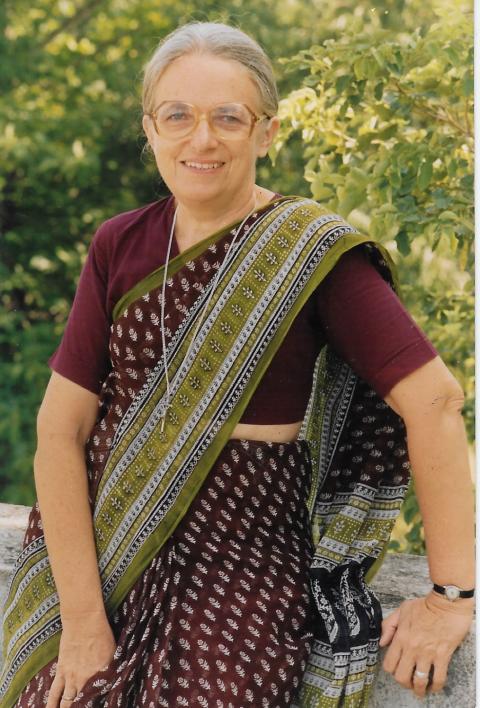
Sr. Barbara Ann Brigham poses wearing her beloved sari in 1991, in India. (Courtesy of Medical Mission Sisters)
Brigham first learned about the Medical Mission Sisters after the much-admired dean of her medical laboratory science program at Marquette entered the community. "She was blonde, a great dancer and had a white convertible … everyone was horrified," said Brigham with a laugh. But the memory stayed with her. After graduation, Brigham worked a few years and then entered the community in 1962 at age 25. She professed first vows in 1965 and was sent to work as a lab tech at Holy Family Hospital in New Delhi. She quickly "fell in love" with the Indian culture and worked hard to learn the language (Hindi) and adapt to Indian customs.
After 12 years in New Delhi, heeding the advice of a sister-pathologist who was also a close friend, she returned to the U.S. to study for a master's in medical technology. She vividly remembered how hard it was to readjust to U.S. culture.
"I had what they called reverse culture shock, and it was really horrible. It was overwhelming to see all the stuff that people had, coming from India and knowing what [the Indian people] didn't have. … It hit me in a way that I can't describe. I was just not myself for that whole year," she said.
When Brigham returned to New Delhi, the sisters were just beginning to move toward preventive care in the villages. She was considering making such a move herself, when her superior asked if she would consider formation work with women entering the community: "I said yes, because I had discovered also that I have teaching skills … and I liked teaching adults."
By this time, she was also fluent in Hindi, although English is also widely spoken throughout India. For the next 12 years Brigham and two South Indian sisters worked with aspiring sisters in North India, first in Pune and then in the small village of Maner where the novices could experience village life and ministry firsthand.
Then came what Brigham describes as "the hardest thing in my whole career." She developed intractable asthma and to her great distress could no longer remain in India. "I cried for, it seems to me, like months," she said. "Because by that time, I was totally in love with the culture."
She especially liked being thought of as Indian herself. A high point in her missionary life had occurred during a picnic outing near the Ganges with three of her Indian sisters who knew how much she loved to identify as Indian. They asked a village man who happened to be "walking through a sea of cilantro with a basket of cucumbers on his head" to guess where she was from. "O Punjabi, she's probably Punjabi," he replied to Brigham's everlasting delight.
In succeeding years Brigham learned Spanish and lived and worked in marginalized neighborhoods in Philadelphia. She also undertook a seven-year stint in Peru where she was instrumental in helping people in the very poor town of Pachacutec access an array of health, social service and domestic violence resources.
Today, at 88, Sister Barbara Ann Brigham proudly works 40 hours a week in the Medical Mission Sister Justice office. Hers is "a fire that stuck," as daily she finds inventive ways to continue loving and helping people.
Schenk is a Sister of St. Joseph and an associate with the Medical Mission Sisters. In her 20s she spent six growth-filled years with the community.