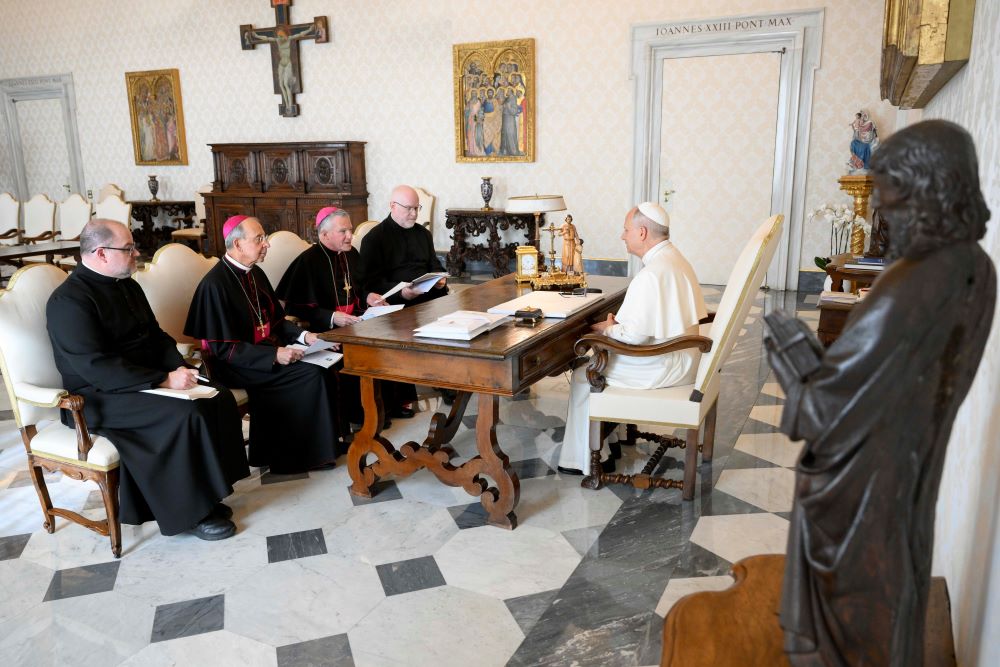
Pope Leo XIV meets with officials of the U.S. Conference of Catholic Bishops, in the library of the Apostolic Palace at the Vatican Oct. 10. From the left are: Fr. Michael Fuller, general secretary; Baltimore Archbishop William Lori, vice president; Archbishop Timothy Broglio, president; and Fr, Paul Hartmann, associate general secretary. (CNS/Vatican Media)

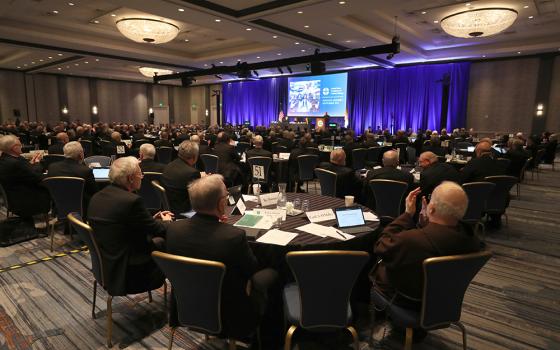
The U.S. Conference of Catholic Bishops released its slate of nominees for president and vice president of the conference. The election will be held next month when the bishops gather Nov. 10-13 for their annual plenary meeting in Baltimore.
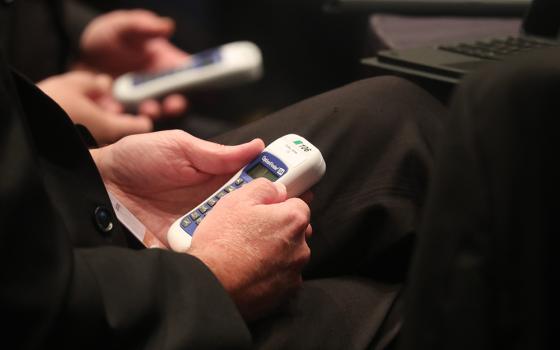
The manner in which the bishops conduct these elections is strange. There are 10 candidates and, if no one candidate receives a majority of votes on the first ballot, the same 10 candidates are placed on the second ballot. You would think they would eliminate, say, the five nominees who get the lowest total on the first ballot, but they don't. If the second ballot does not produce a winner with a majority of the votes, the top two vote-getters proceed to a runoff which necessarily produces a winner.
Then, the bishops turn to the remaining nine candidates and select the new vice president of the conference from them. For many years, the vice president moved up to the presidency at the end of the three-year terms, but in 2010, the bishops selected New York's Archbishop Timothy Dolan over the incumbent vice president, Bishop Gerald Kicanas of Tucson, Arizona. That was a shock election when it first became clear a majority of the bishops wanted to move in a different direction, away from the legacy of Cardinal Joseph Bernardin and towards a more explicitly conservative public face.
In 2013, they returned to the usual practice, selecting vice president Archbishop Joseph Kurtz as president, which also happened in 2016 and 2019 with Cardinal Daniel Dinardo and Archbishop José Gomez moving up from veep to the top slot.
In 2022, Archbishop Allen Vigneron was vice president but was too old to stand for the presidency. The Vatican requires that anyone elected to a leadership role in a bishops' conference must be able to fill out his term before reaching the mandatory retirement age. And so, in 2022, the bishops selected Archbishop Timothy Broglio as president and Archbishop William Lori as vice president. Lori is 74 and cannot become president of the conference, so next month the bishops will elect both a new president and a new vice president. What to make of the nominees?
Five of the 10 nominated would resist the path charted by Pope Francis and now embraced by Pope Leo. Instead of the popes' more holistic approach to moral theology in the public square, these five candidates are associated with the culture war approach, stigmatizing opponents, emphasizing the unique importance of the abortion issue for all elections and downplaying the importance of Catholic social teaching. None of them could unite the conference.
I have already discussed in a previous column the problematic candidacy of Archbishop Paul Coakley of Oklahoma City, the current secretary of the conference. His role at the Napa Institute does not suggest he seeks a "poor church for the poor," and his fulsome, never retracted praise for the disgraced former nuncio Carlo Maria Vigano have not won him many admirers in Rome, and the bishops need someone who can conduct the conference's business in Rome.
Portland, Oregon, Archbishop Alexander Sample is best known for his enthusiasm for the Tridentine rite and support for Archbishop Salvatore Cordileone's decision to ban Nancy Pelosi from receiving communion in her home diocese. He never worked or studied in Rome, which is a deficit for this post. Bishop Kevin Rhoades of Fort Wayne-South Bend, Indiana objected to the University of Notre Dame giving the Laetare award to then-Vice President Joe Biden but did not voice any qualms about giving it to the person who shared the honor with Biden, Speaker of the House John Boehner, who also differed from the church on many issues of grave moral significance.
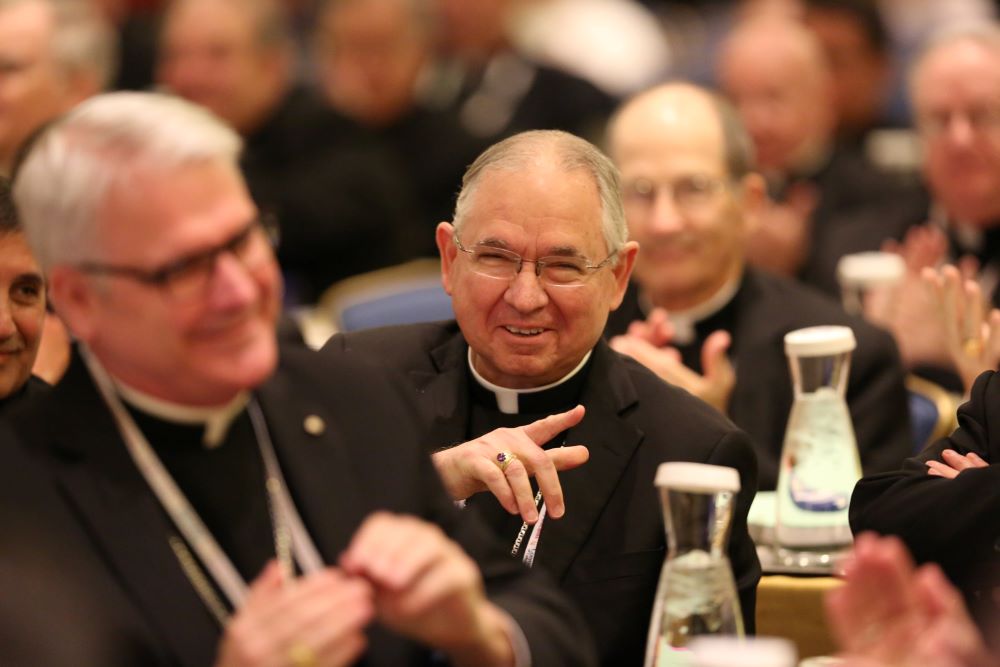
Archbishop José Gomez of Los Angeles smiles Nov. 15, 2016, after he was elected vice president of the U.S. Conference of Catholic Bishops during the annual fall general assembly of the USCCB in Baltimore. Gomez later served as USCCB president. (CNS/Bob Roller)
Bishop David Malloy of Rockford, Illinois, was the secretary-general, the lead staffer, of the USCCB in 2010 and actively campaigned against Bishop Kicanas, which is not a staff person's job. One bishop who supported Dolan in 2010 told me he thought Malloy's efforts were brutta figura and he has not been considered trustworthy ever since.
What to make of the nomination of Bishop Robert Barron? Many bishops appreciate Barron's ability to communicate and many others worry about the increasingly strident content of his communications. All recognize that his heart is in his Word on Fire ministry, not in diocesan leadership. I can't imagine he would be an effective administrator and, besides, in Rome he is seen as too much of a showman.
The only nominee who screams "Pope Francis" is Detroit Archbishop Ed Weisenburger. He rightly addressed the scandal of not just dissent from, but animus towards, the papal magisterium of the late pope at Detroit's Sacred Heart Seminary. He joined with other clergy in the Motor City on a prayerful procession to the Immigration and Customs' Enforcement agency office to protest their indiscriminate raids. But precisely because Weisenburger is so closely aligned with the Francis agenda, he could not unite the conference, which is Job No. 1 for the next president.
Four of the nominees strike me as more middle-of-the road bishops who might have a shot at uniting the conference more than it is today. Archbishop Nelson Perez of Philadelphia has not had the kind of high-profile culture war involvement as the others, but he is very conservative and he also lacks experience in Rome. Archbishop Richard Henning had the unenviable task of following the universally beloved Cardinal Sean O'Malley in Boston, and I hear good things about how the new archbishop is doing, but Boston is a huge archdiocese and I suspect Henning still has his hands full learning the ropes there. Both Perez and Henning are proteges of Bishop William Murphy, former bishop of Rockville Centre.
Advertisement
Archbishop Charles Thompson of Indianapolis and Bishop Daniel Flores of Brownsville are both smack dab in the center of the conference and both would have a better shot at uniting it than the other eight nominees. Thompson and Flores are both quite conservative on issues of sex and gender but also deeply committed to the church's social teaching. That is to say, both sides in the divided conference find things they like about them. Both have been in their posts for many years, so they could carve out the time to serve as president. Thompson has no Roman experience, whereas Flores was deeply involved in the synodal process and I suspect that many bishops like the idea of electing a Hispanic during Trump's second term just as they elected Gomez during Trump's first term.
If any of the first five candidates mentioned above are elected, it means the U.S. bishops want to keep on the same culture warrior track. If Weisenburger were to win, it means that the bishops want to finally embrace the new direction Francis charted and Leo seems set to continue. I suspect the bishops will, instead, look to the last four candidates, men who could first and foremost unite the conference in important, if not comprehensive, ways and better handle the conference's business in Rome than the culture warriors. In any event, the bishops will not just be selecting a person; They will be choosing a direction. That makes this the most significant USCCB election since 2010.