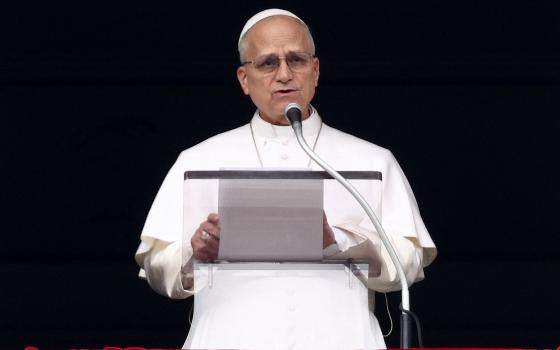
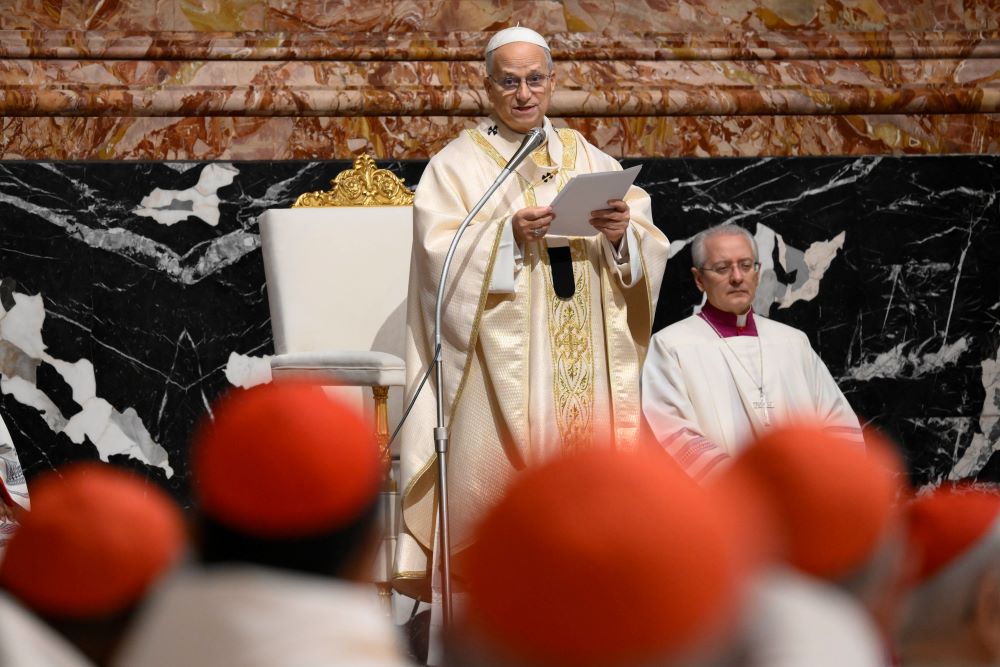
Pope Leo XIV delivers the homily as he celebrates an early morning Mass in St. Peter's Basilica at the Vatican Jan. 8, 2026, during a consistory with cardinals from around the world. (OSV News/Vatican Media/Simone Risoluti)
Pope Leo XIV directly enlisted the ongoing support of the world's cardinals after two days of meetings that served as a reset of the delicate relationship between the head of the Catholic Church and those considered to be his closest advisors.
And signaling that the direct collaboration between the pope and the College of Cardinals would be ongoing, Leo told the cardinals they will meet again over two days near the feast of Sts. Peter and Paul June 29 and then begin annual meetings of three to four days, according to Matteo Bruni, director of the Vatican press office.
During his first extraordinary consistory on Jan. 7-8, a rare meeting that summons cardinals from around the world to Rome and is sparingly used by modern popes, Leo made a direct appeal for collaboration on the part of the cardinals, asking their assistance in charting the course for the initial years of his young pontificate.
"I feel, I experience the need to be able to count on you," the pope told the cardinals in closing the first of the consistory's three working sessions. "It is important that we work together, that we discern together, that we seek what the spirit is asking of us."
After eight months largely defined by the 2025 Holy Year set in motion by Pope Francis, Leo called the world's cardinals to Rome just one day after the Jubilee's conclusion in a move widely read as the pope firing the starting gun on his agenda.
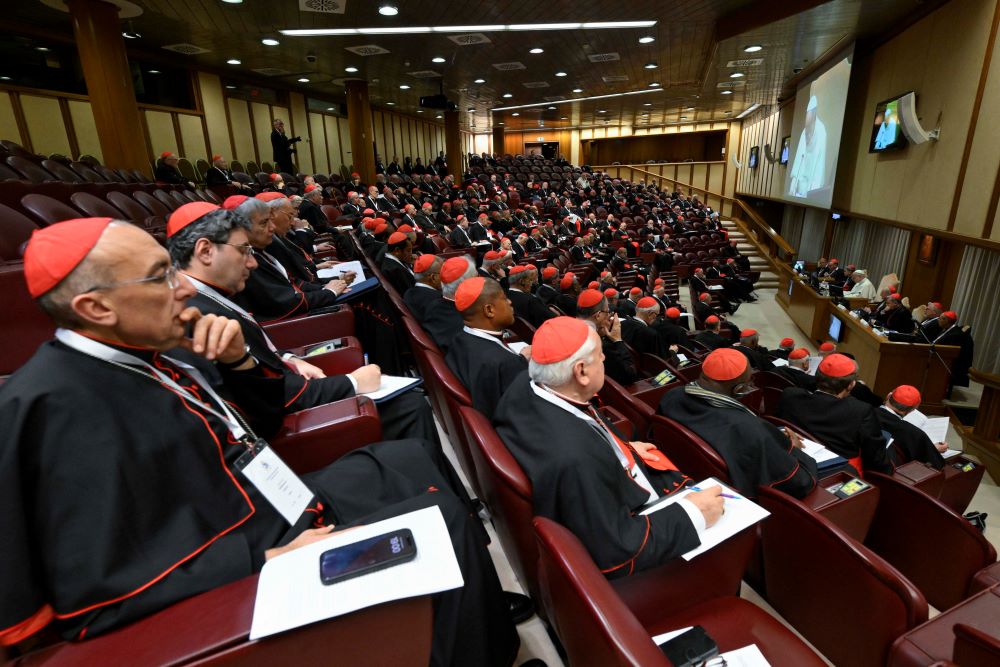
Cardinals from around the world attend a consistory with Pope Leo XIV at the Vatican Jan. 8, 2026. Of the world's 245 cardinals, 170 participated, officials said. (OSV News /Vatican Media/Simone Risoluti)
A shift toward broader consultation
Leo's appeal appeared to turn a page on the governing style of his predecessor, who relied more heavily on a small advisory group of cardinals, known as the C9, rather than regularly convening the full college. During the pre-conclave meetings before Leo's election, some cardinals expressed frustration that they had not been consulted more frequently under Francis.
British Cardinal Timothy Radcliffe, who delivered the opening meditation for the consistory's first session on Jan. 7, told the U.K. daily The Telegraph ahead of the meeting that many cardinals believe the pope should convene a consistory at least once a year. Leo, Radcliffe said, was elected in part "to bring in the people who had been alienated by Francis."
In his meditation to the cardinals, Radcliffe warned against ideological competition within the church, saying those who are more traditionally minded and those who "delight more in God's surprising newness" cannot exist in competition.
"If the boat of Peter is filled with disciples who quarrel," he said, "we shall be of no use to the Holy Father."
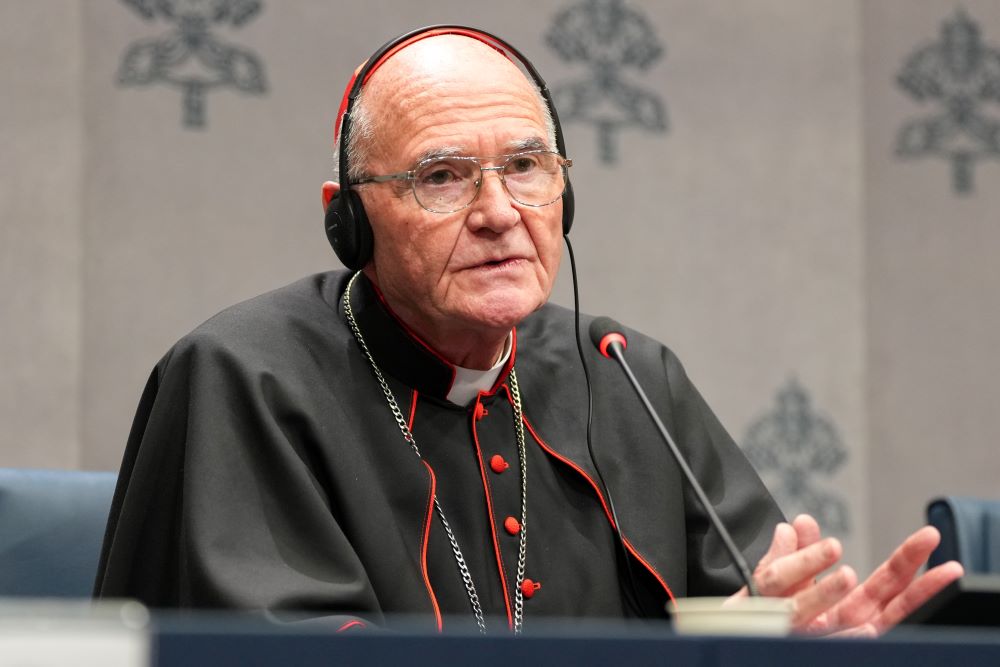
Cardinal Stephen Brislin of Johannesburg, South Africa, speaks during a news conference at the Vatican Jan. 8, 2026, where cardinals reflected on the meaning and outcomes of the extraordinary consistory that had just concluded. (CNS/Lola Gomez)
A global assembly
Of the world's 245 cardinals, 170 participated in the consistory, which took place across three sessions of more than three hours each. Cardinals were asked not to speak publicly about the discussions, so as to encourage an open and candid exchange.
Cardinal Stephen Brislin of Johannesburg told reporters after in a news briefing that the globally scattered cardinals getting to know each other was a key element of the consistory.
"The fact of the matter is that we haven't really known each other very well," he said.
Among those absent were Cardinal Baltazar Porras, archbishop emeritus of Caracas, Venezuela, whose passport was seized in a Venezuelan airport in December. Cardinal Leopoldo Brenes of Managua, Nicaragua, who did not attend the consistory, said in an interview he did not receive an invitation even though all cardinals should have been convened for the consistory, raising questions over the role of the Nicaraguan government, which has been hostile to the church, in his absence.
Advertisement
While the situation in Venezuela following the United States' capture of its president, Nicolás Maduro, was not formally part of the discussions, "the topic did not go unnoticed," said Cardinal Luis José Rueda of Bogotá, Colombia.
"It is inevitable that we, the Latin American cardinals, also the [others] they are concerned about what is happening," he said. "They are asking [us] to contextualize better what is being sought, where the situation is headed" and how the church should respond.
Celebrating Mass with the cardinals the morning of Jan. 8, Leo said that collegiality of its leadership is essential in allowing the church to address the world's challenges.
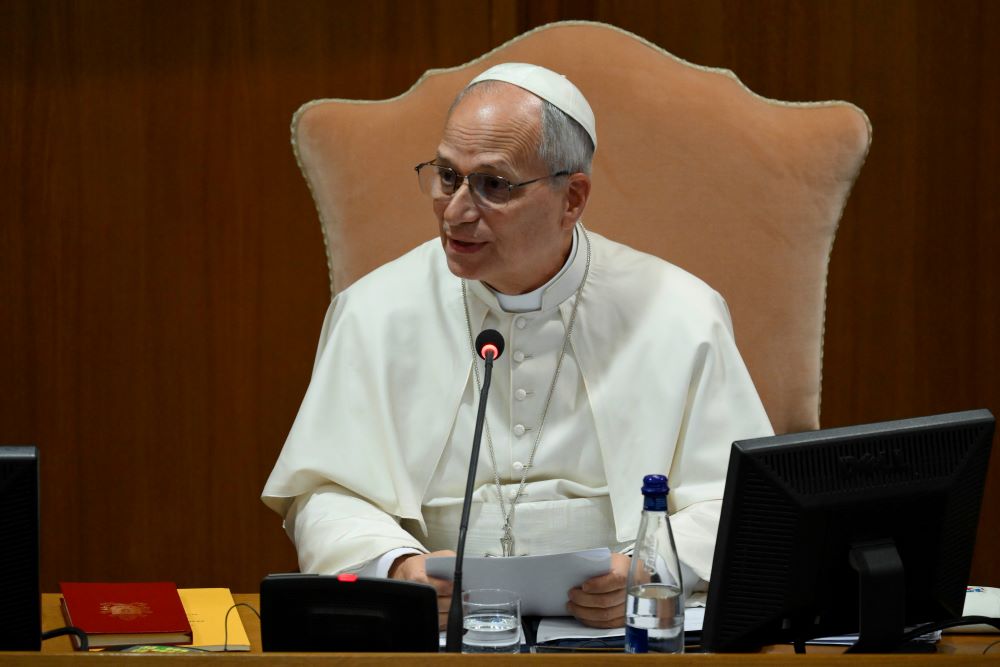
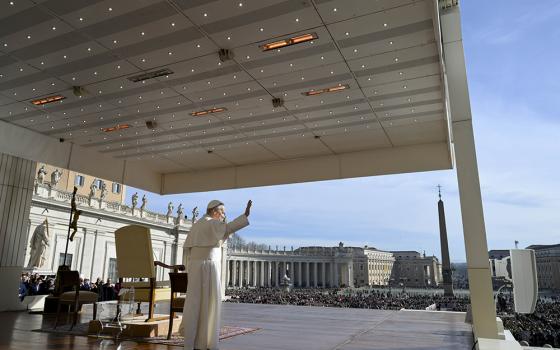
Pope Leo XIV holds a consistory with cardinals from around the world at the Vatican Jan. 8, 2026. (OSV News/Vatican Media/Simone Risoluti)
"In a world where satisfaction and hunger, abundance and suffering, and the struggle for survival together with a desperate existential emptiness continue to divide and wound individuals, communities and nations, we may feel inadequate," the pope said. "We may not always find immediate solutions to the problems we face, yet in every place and circumstance, we will be able to help one another — and in particular, to help the pope."
"Our college, while rich in many skills and remarkable gifts, is not called primarily to be a mere group of experts, but a community of faith," the pope added. "Only when the gifts that each person brings are offered to the Lord and returned by him, will they bear the greatest fruit according to his providence."
Mission and synodality take center stage
Breaking with the format of previous consistories, much of the work unfolded at roundtables in small groups. The composition of the groups, as well as which cardinals were selected to serve as president and secretary at each table, was predetermined, said Bruni, the press office director.
After the discussions, the small groups of cardinal electors serving in dioceses around the world presented their thoughts and time was later given for all the cardinals to speak about what they heard. Ten three-minute "interventions," as they are called, were given by cardinals in the morning session and 15 at the end of the afternoon session.
By a wide margin, the groups chose to focus on the church's mission in light of Evangelii Gaudium, Pope Francis' 2013 apostolic exhortation that was a roadmap for his pontificate, and on synodality. Praedicate Evangelium, the 2022 reform of the Roman Curia issued by Francis, and the topic of the liturgy received significantly less support, sidelining the hopes of some traditionalist Catholics that discussion around the pre-Vatican II Latin Mass would take center stage at the meeting.
While the first working session focused on selecting discussion themes, Thursday's two sessions (Jan. 8), each lasting more than three hours, were devoted to identifying what could guide the pope and the Curia's work on those priorities over the next one to two years.
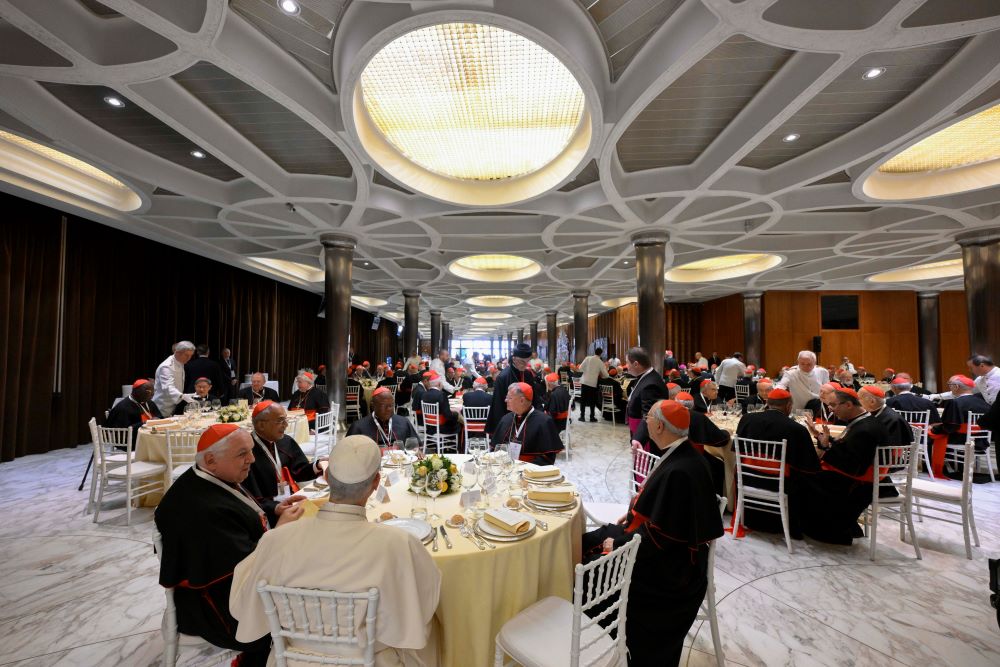
Pope Leo XIV holds a consistory with cardinals from around the world at the Vatican Jan. 8, 2026. (OSV News/Vatican Media/Simone Risoluti)
Though significant at its publication, Evangelii Gaudium has since "faded a little bit into the background," Brislin, the cardinal, said. "The cardinals felt that this really is important to go back to that document and to ensure that we make it known to people, that we form seminarians in the process of what that document demands, and that we really try to reignite the contents of that document to give a greater impetus to our evangelization."
Cardinal Pablo Virgilio David of Kalookan, Philippines, told reporters that while geopolitical, ecological and conflict crises were not explicitly discussed, "Evangelii Gaudium is one document that really asks us to take very seriously the sociopolitical context within which we exercise our pastoral roles."
And through the church's embrace of synodality, which has not been universal, "we're allowing the other sectors of the church, aside from the ordained, to be heard also," he said. "The ordained do not have a monopoly of acting 'in persona Christi' ['in the person of Christ']."
Asked whether synodality opens the door to an uprooting established church doctrine, Brislin said that "the cardinals were saying we need to get more clarification" regarding synodality. "We need to work on that, and that will happen."
The National Catholic Reporter's Rome Bureau is made possible in part by the generosity of Joan and Bob McGrath.