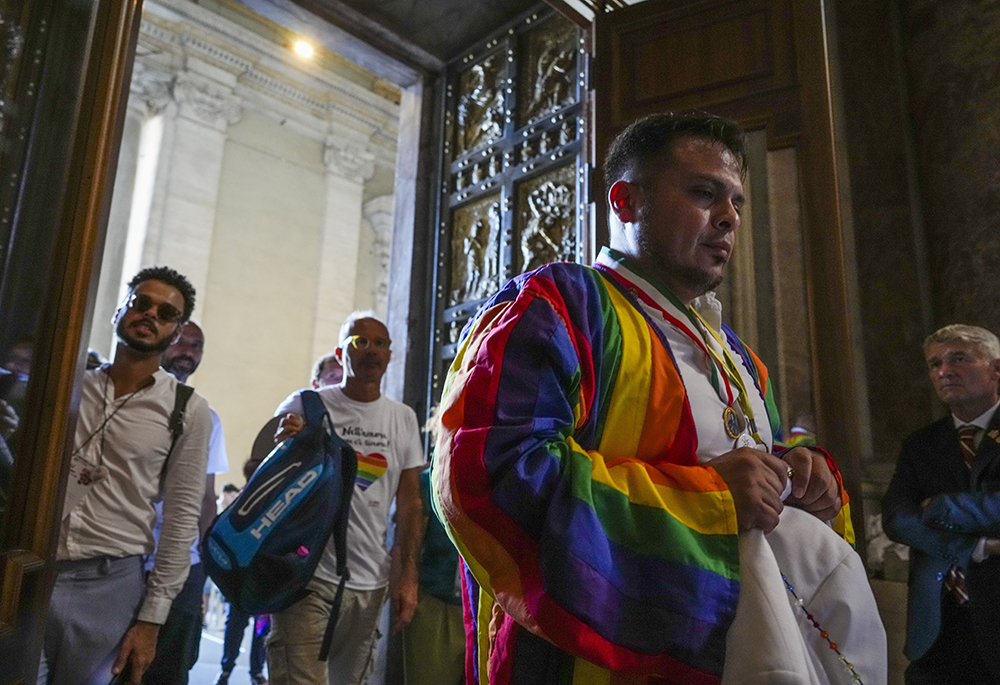
Some of the hundreds of LGBTQ+ Catholics and their families who joined a Holy Year pilgrimage to Rome, celebrating a new level of acceptance in the Catholic Church and crediting Pope Francis for the change, walk through the Holy Door of St. Peter's Basilica at the Vatican, Saturday, Sept. 6, 2025. (AP/Andrew Medichini)

by Ryan Di Corpo
On the heels of an exuberant, 1,400-person pilgrimage that gathered LGBTQ Catholics in Rome for the Jubilee Year, advocates said that Pope Leo XIV is following the spirit of inclusion modeled by his Jesuit predecessor, even as the new pontiff has called doctrinal change unlikely.
And while the American-born pope's public statements and gestures thus far appear broadly aligned with the "big tent" vision of Pope Francis, who repeatedly welcomed LGBTQ Catholics and supporters to the Vatican, some questions remain as to Leo's personal views on this diverse community of believers.
"Under Francis, the approach to LGBTQ Catholics changed dramatically. That kind of approach continues with Leo," said Jesuit Fr. James Martin, who spoke privately with Leo at the Apostolic Palace days before this month's pilgrimage.
A globally recognized champion for LGBTQ Catholics who met numerous times with Francis, Martin said he was not surprised the first Augustinian pontiff would follow in Francis' footsteps, referencing the new pope's first address to the College of Cardinals. In May, Leo urged cardinals to continue the "precious legacy" of Francis, saying his papacy was defined by simplicity and service.
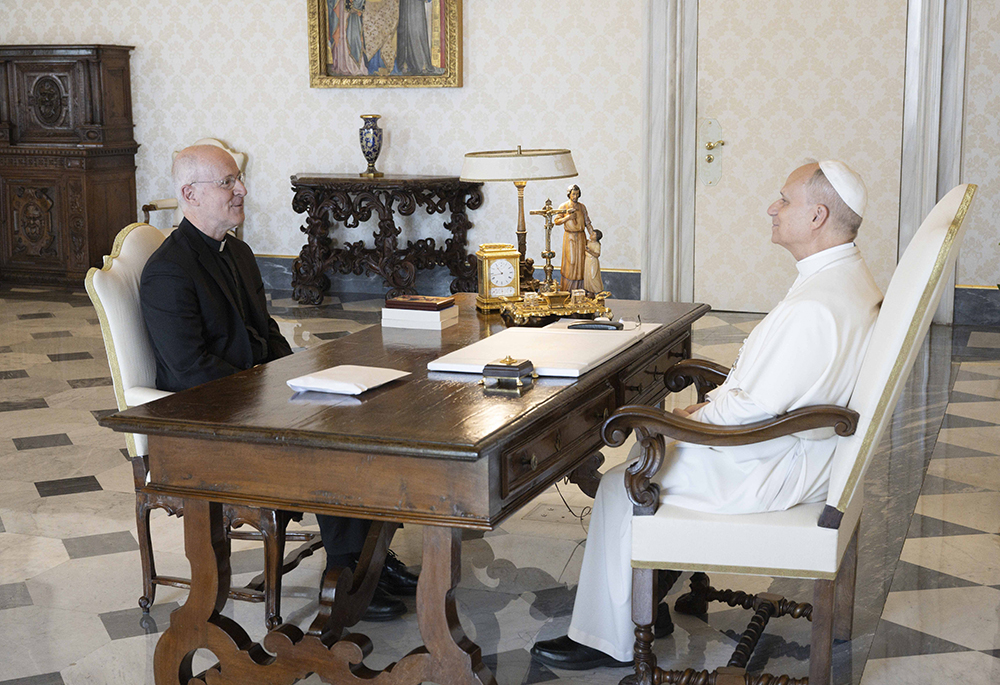
Pope Leo XIV meets with Jesuit Fr. James Martin, an author and editor at large at America magazine, in the library of the Apostolic Palace at the Vatican Sept. 1, 2025. (CNS/Vatican Media)
"Pope Leo wants to continue the pastoral outreach that Pope Francis had done, which was characterized by openness," said Martin, describing Leo as "a very knowledgeable cleric who understands the modern world." And with the message of the pilgrimage, "The door has opened even further."
In a wide-ranging interview at the Vatican this July, Leo promoted acceptance and respect for "others who are different than we are," but characterized debates over LGBTQ inclusion as divisive and called doctrinal change unlikely.
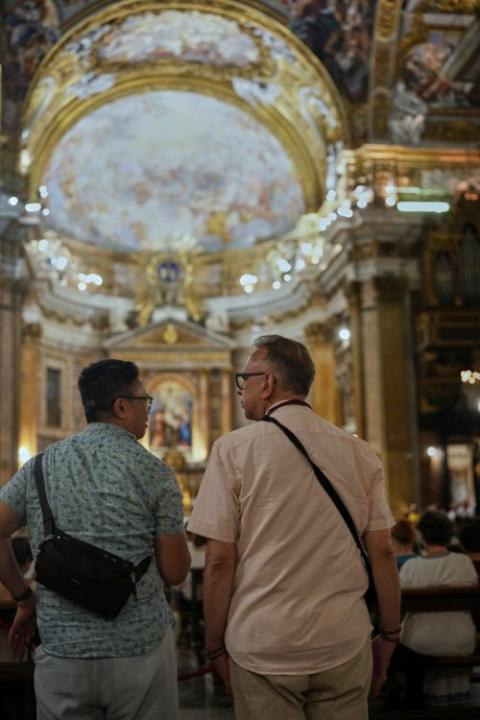
Justin Del Rosario, left, and John Capozzi attend a vigil prayer for members of the LGBTQ+ community in the Church of the Gesu in central Rome Sept. 5. (AP/Andrew Medichini)
Yet some advocates remain optimistic.
"It's clear he understands how doctrinal change happens: from the bottom up. Attitudes first, doctrine second," said Natalia Imperatori-Lee, a theologian and associate professor of systematics at Fordham University.
Imperatori-Lee cautioned LGBTQ Catholics hoping for revisions to church teaching, which prohibits sexual acts between members of the same sex, that doctrine always changes last. But she noted that the church's posture towards LGBTQ Catholics has shifted dramatically over the past two decades, largely due to the example set by Francis. And she said the size of the recent pilgrimage suggests that the changes enacted by Francis are here to stay.
"I hope that is a sign of the movement of the [Holy] Spirit, that the Spirit is alive and well in the church," she said.
Speaking from Turin, Alessandro Previti, a member of the Florence-based LGBTQ Catholic organization that petitioned the Vatican to greenlight the recent pilgrimage, described his "gut feeling" that Leo would be a positive force for gay communities.
Advertisement
Leo "sounded and looked like the kind of person who would take Pope Francis' surprising and unexpected acts of kindness and make them into rules," said Previti. In response to the pope's July interview, Previti said that a sitting pontiff publicly using the term "LGBTQ" demonstrates how much attitudes towards this historically marginalized group have changed. (Martin has said that Francis was the first pope ever to use the word gay in public.)
Although Leo did not directly address LGBTQ pilgrims, Previti says he does not expect LGBTQ Catholics to receive "special treatment" from the pope, interpreting the absence of an official statement as a sign that LGBTQ Catholics already belong in the church.
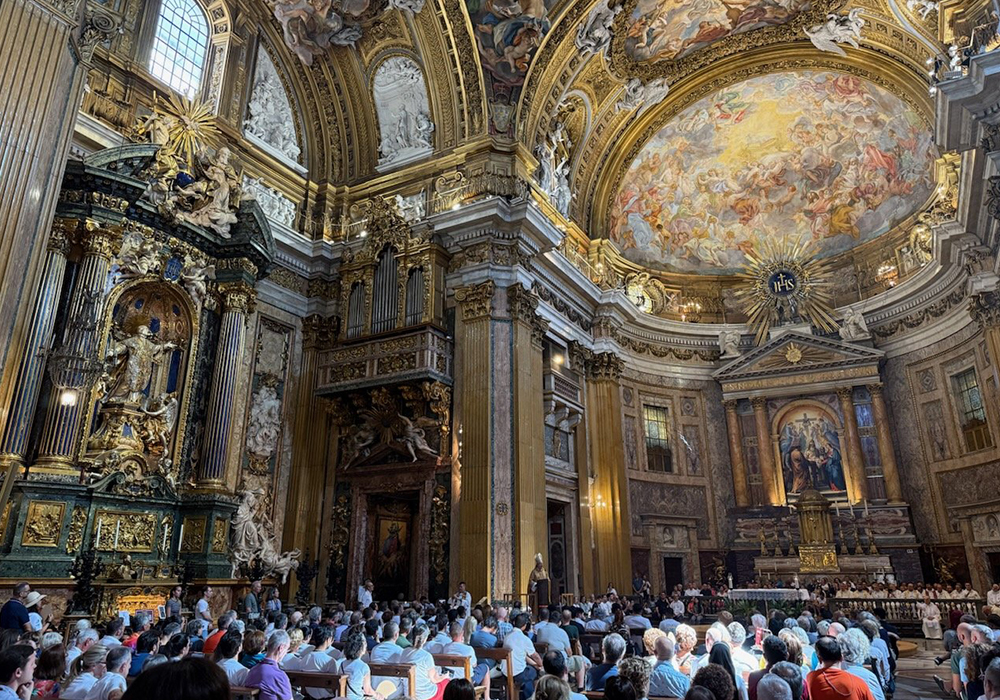
LGBTQ Catholics, their family, friends and people who minister with them attend a Jubilee Mass in Rome's Church of the Gesù Sept. 6, 2025, before walking in procession through the Holy Door of St. Peter's Basilica at the Vatican. (CNS/Courtesy of Outreach, Jack Consolie)
During his homily during a Mass for LGBTQ pilgrims at the Church of the Gesù, the Jesuit mother church in Rome, Bishop Francesco Savino described Leo as "the pope of listening" and said the pope encouraged him to celebrate Mass with the group.
While LGBTQ pilgrims were not met with large-scale protests, Martin notes that there is both energy in the church to move ahead with Leo's gestures of welcome and a desire among other Catholics to oppose efforts aimed toward LGBTQ inclusion, illustrating a kind of theological tug-of-war.
However, 70% of U.S. Catholics believe that gay and lesbian couples should be allowed to marry, and 74 % say that homosexuality "should be accepted by society," according to 2023-24 data from the Pew Research Center.
Amid these ethical debates, Martin urges Catholics to consider Leo as a kind of "guiding star" that illuminates the way forward. "He's the symbol and figure of unity in the church. He's the one that sets the path," said Martin.