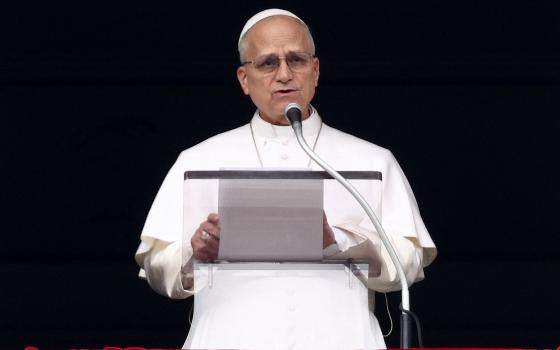
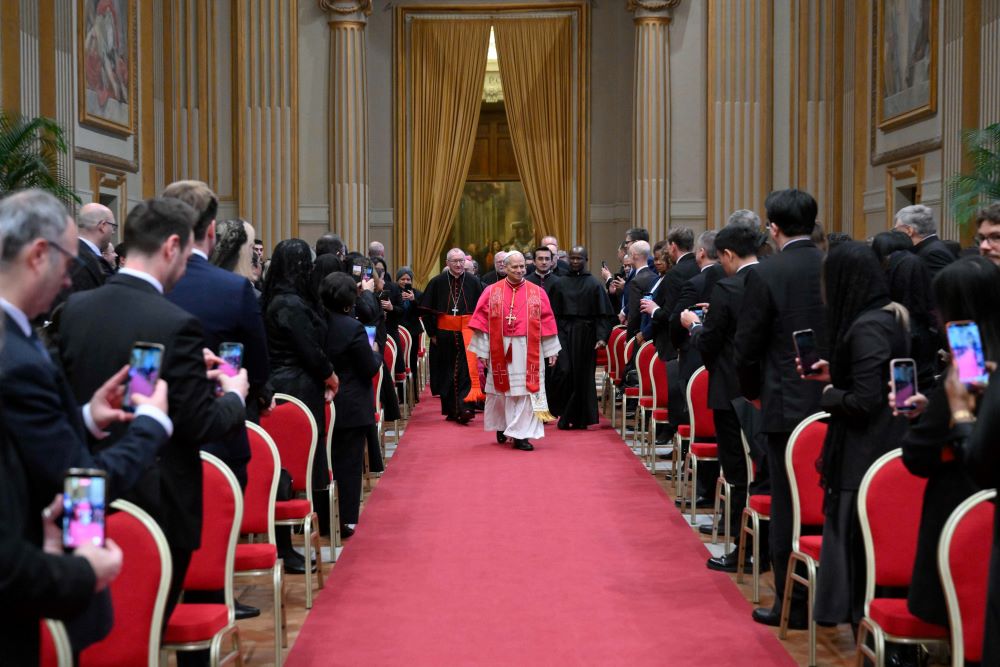
Pope Leo XIV walks down the aisle to meet with members of the diplomatic corps accredited to the Vatican at the Apostolic Palace at the Vatican Jan. 9, 2026. (CNS/Vatican Media)

Pope Leo XIV warned diplomats of a breakdown in multilateralism and the rise of a "diplomacy based on force" Friday (Jan. 9) in a wide-ranging address that also included his strongest language to date on abortion and surrogacy.
In his annual address to ambassadors accredited to the Holy See, the pope surveyed the global crises of chief concern to the Vatican, including the situation in Venezuela following the United States' Jan. 3 capture of its president, Nicolás Maduro.
"I renew my appeal to respect the will of the Venezuelan people, and to safeguard the human and civil rights of all, ensuring a future of stability and concord," he said.
The pope also called for "an immediate ceasefire" in Ukraine as peace talks continue to stall and renewed appeals for peace in Gaza, reiterating support for a two-state solution that would secure Palestinians "a future of lasting peace and justice in their own land."
A fraying global order
Addressing the ambassadors in English, the pope signaled concern that global cooperation is eroding before a global breakdown of multilateralism.
"A diplomacy that promotes dialogue and seeks consensus among all parties is being replaced by a diplomacy based on force, by either individuals or groups of allies," he said. "War is back in vogue and a zeal for war is spreading."
"The principle established after the Second World War, which prohibited nations from using force to violate the borders of others, has been completely undermined," he continued.
'A diplomacy that promotes dialogue and seeks consensus among all parties is being replaced by a diplomacy based on force. War is back in vogue and a zeal for war is spreading.'
—Pope Leo XIV
The morning after The New York Times published its interview with U.S. President Donald Trump, in which he said, "I don’t need international law," Leo lamented how today "peace is sought through weapons as a condition for asserting one's own dominion."
"This gravely threatens the rule of law, which is the foundation of all peaceful civil coexistence," the pope said.
And as the United Nations is increasingly unable to prevent conflicts from breaking out, Leo said the U.N. "should play a key role in fostering dialogue and humanitarian support, helping to build a more just future."
Focus on life issues
Leo also issued some of his harshest criticisms as pope so far against abortion, expressing the Holy See's "deep concern about projects aimed at financing cross-border mobility for the purpose of accessing the so-called 'right to safe abortion.' "
The Holy See, he said, "considers it deplorable that public resources are allocated to suppress life, rather than being invested to support mothers and families."
While Pope Francis had condemned the idea of a "right to abortion" in his 2025 address to ambassadors, Leo dedicated noticeably more attention to abortion and other life issues.
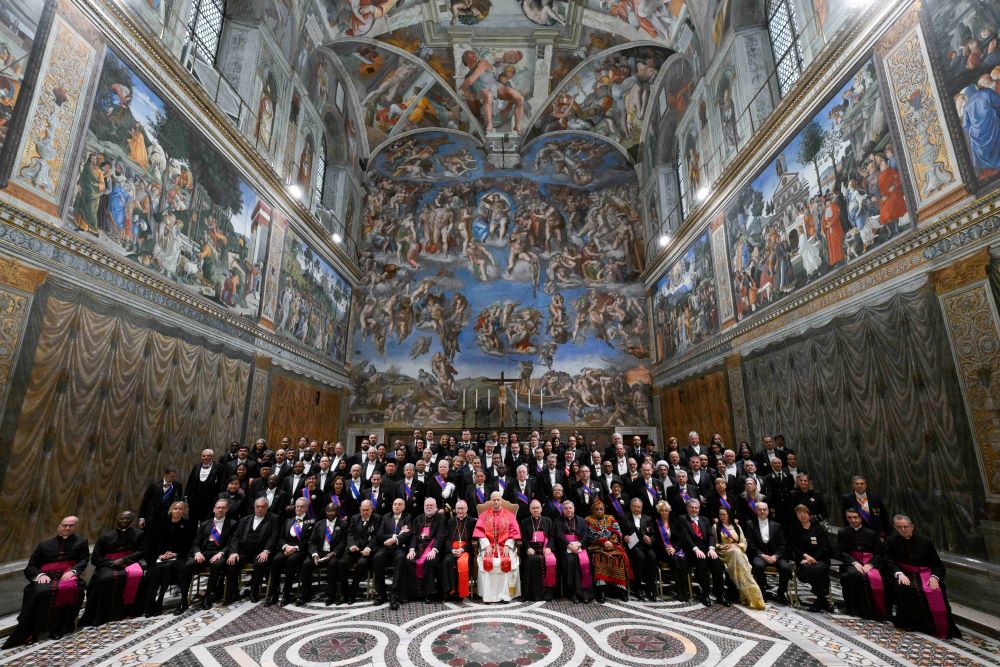
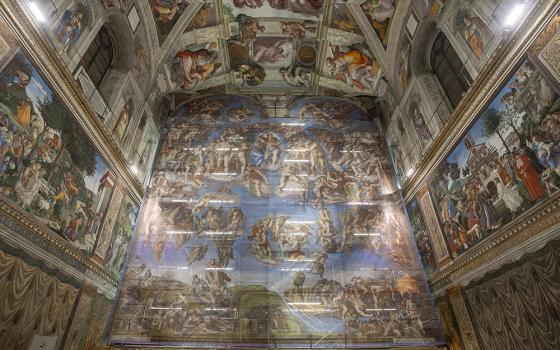
Pope Leo XIV poses for a group photo with members of the diplomatic corps accredited to the Holy See inside the Sistine Chapel at the Vatican Jan. 9, 2026. (CNS/Vatican Media)
The pope also issued a sharp critique of surrogacy, which he said transforms the development of an unborn child "into a negotiable service."
"This violates the dignity both of the child, who is reduced to a product, and of the mother, exploiting her body and the generative process and distorting the original relational calling of the family," he said.
The world's governments, he continued, also have an obligation to dedicate resources to caring for the elderly and isolated, "rather than encouraging deceptive forms of compassion such as euthanasia."
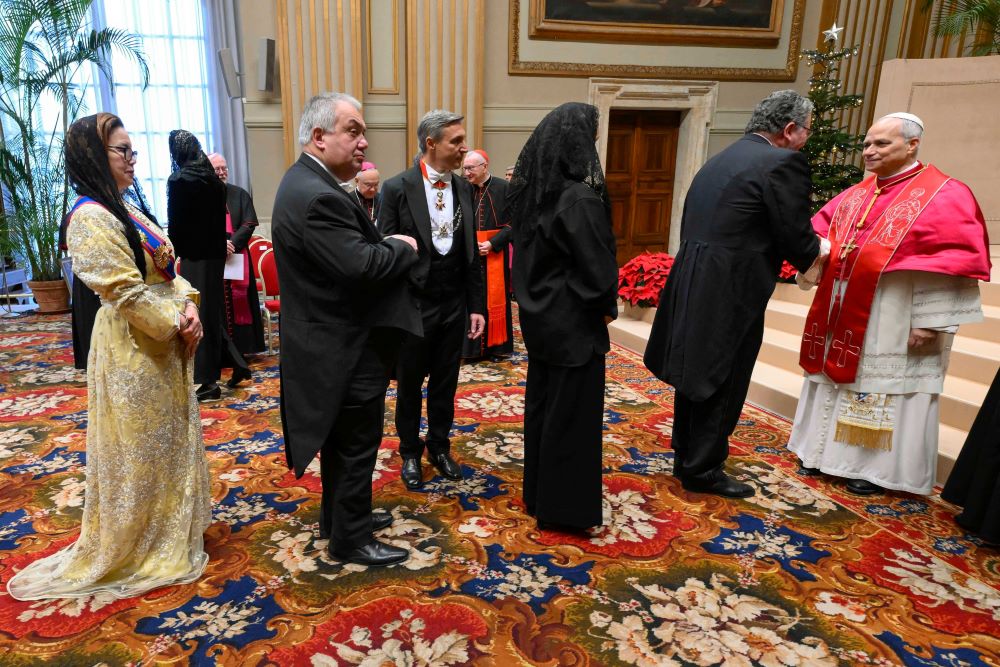
Pope Leo XIV meets with members of the diplomatic corps accredited to the Vatican at the Apostolic Palace at the Vatican Jan. 9, 2026. (CNS/Vatican Media)
Leo also stressed the "inalienable rights" of migrants and incarcerated people and condemned what he described as the "progressive institutional marginalization" of the family worldwide.
Breakdown in language, human rights
The pope linked the erosion of multilateralism to what he described as a broader breakdown in language.
"Rediscovering the meaning of words is perhaps one of the primary challenges of our time," he said. "Language is becoming more and more a weapon with which to deceive, or to strike and offend opponents."
Leo warned that today "a new Orwellian-style language is developing which, in an attempt to be increasingly inclusive, ends up excluding those who do not conform to the ideologies that are fueling it."
A consequence of such linguistic breakdown, the pope said, is the restriction of fundamental human rights such as the possibility for conscientious objection or religious freedom.
Advertisement
Today, "freedom of conscience seems increasingly to be questioned by states," he said, citing the refusal of military service and objections to abortion or euthanasia as examples. He also lamented the curtailing of religious freedom worldwide, noting that Christian persecution "remains one of the most widespread human rights crises today."
In Western countries, he added, more subtle forms of discrimination prevent Christians from publicly professing their beliefs "for political or ideological reasons, especially when they defend the dignity of the weakest, the unborn, refugees and migrants, or promote the family."
"The right to freedom of expression, freedom of conscience, religious freedom and even the right to life are being restricted in the name of other so-called new rights," the pope said, "with the result that the very framework of human rights is losing its vitality and creating space for force and oppression."
The National Catholic Reporter's Rome Bureau is made possible in part by the generosity of Joan and Bob McGrath.