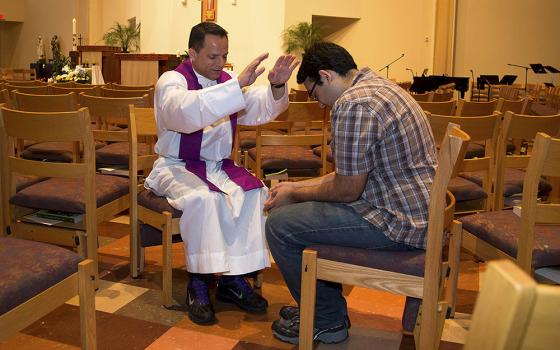
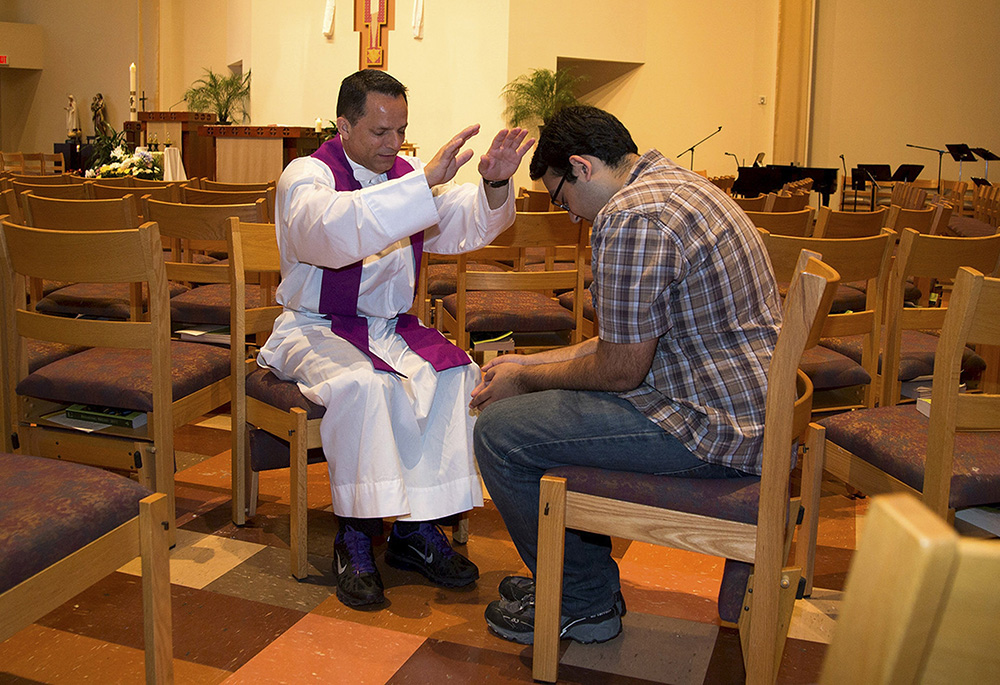
In this 2015 file photo, Paulist Fr. Jamie Baca blesses a student involved with the Fellowship of Catholic University Students at a church on the campus of the University of Texas at Austin at the University Catholic Center. (CNS/courtesy FOCUS)

by Patricia Zapor
A majority of U.S. Catholic college students regularly participate in Mass and consider their Catholic beliefs and identity to be important, according to a survey conducted for the National Catholic Reporter and the Wittcoff Foundation.
Eight in 10 of the students said they are currently involved with the church, most commonly by attending Mass. Nearly two-thirds of the respondents said they are at least somewhat familiar with Catholic social teaching and social justice. Most of those students described Catholic teaching as influential in how they consider social and political issues.
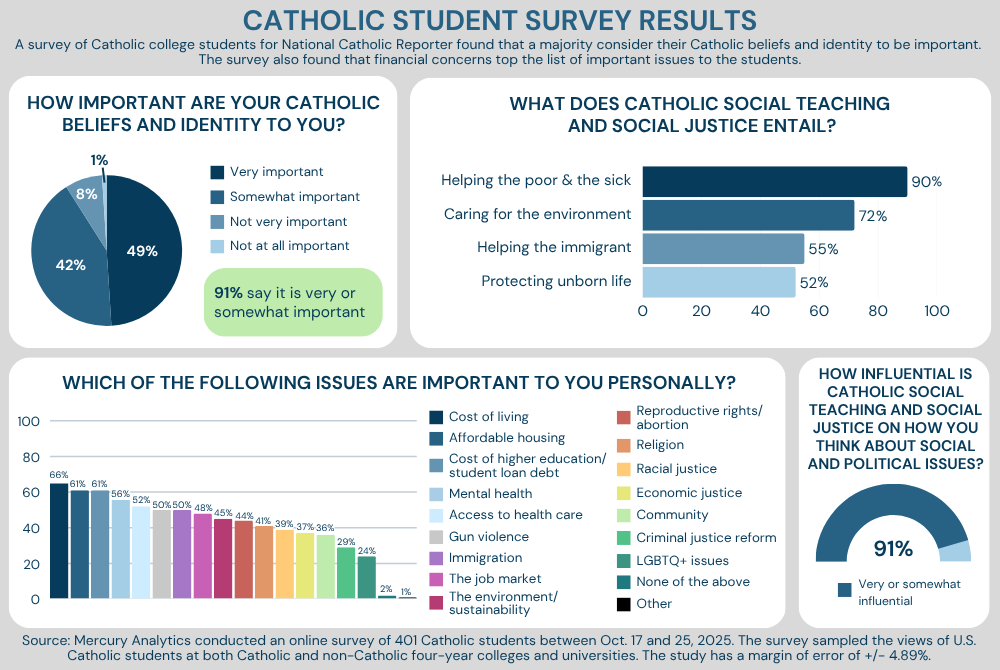
The NCR/Wittcoff Foundation Survey of Young Catholics polled 401 Catholic students in both Catholic and non-Catholic four-year colleges and universities. It was conducted online Oct. 17-25 by Mercury Analytics, a Virginia-based custom research company that regularly surveys the public for organizations including news outlets and nonprofits. The Wittcoff Foundation is a philanthropic group that supports health, education and climate action initiatives.
Fifty-five percent of all the students surveyed said they attend Mass at least a few times a month and 65% said they pray daily or a few times a week.
Brandon Katz, senior research associate for insights and analytics for Mercury Analytics, said a data point that particularly struck him is "the heavy influence of Catholic social teaching and social justice on how respondents think about social and political issues — 91% of respondents who are very/somewhat familiar with Catholic social teaching and social justice indicate that it is very/somewhat influential."
Even when the data about Catholic social teaching is broadened to include all respondents, whether or not they expressed understanding of it, Katz noted that 59% of Catholic college students say that those church teachings influence how they think about social and political issues.
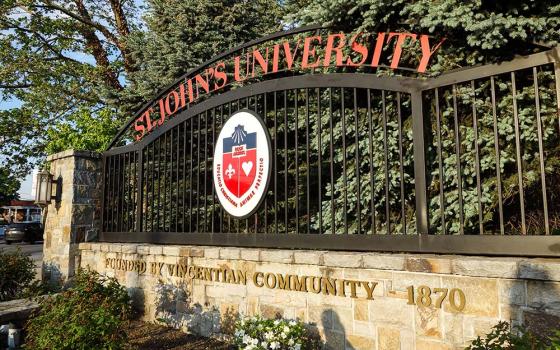
In nearly all breakouts of individual questions, students who attend Catholic colleges were more likely to engage in various faith practices, such as paying attention to the words of Pope Francis or Pope Leo, going to Mass or participating in community service activities. For instance, 41% of students at Catholic colleges said they receive the sacraments, while 25% of students from non-Catholic colleges said so.
But the type of school the students attend made little difference in their perspectives about the influence of Catholic social teaching and social justice in their lives. Regardless of whether they are at a Catholic or non-Catholic college, 91% of those who are familiar with Catholic social teaching and social justice said it is somewhat or very influential on how they think about social and political issues.
For more detail about the survey results, see the file below.
Sixty-five percent of the students said they have at least some understanding of the elements of Catholic social teaching and social justice. Ninety percent of them cited "helping the poor and the sick"; 72% cited "caring for the environment"; 55% listed "helping the immigrant"; and 52% listed "protecting unborn life" as what Catholic social teaching and social justice entail.
The survey also asked about voting practices and what issues concern them. Just 47% said they always or almost always vote in general elections.
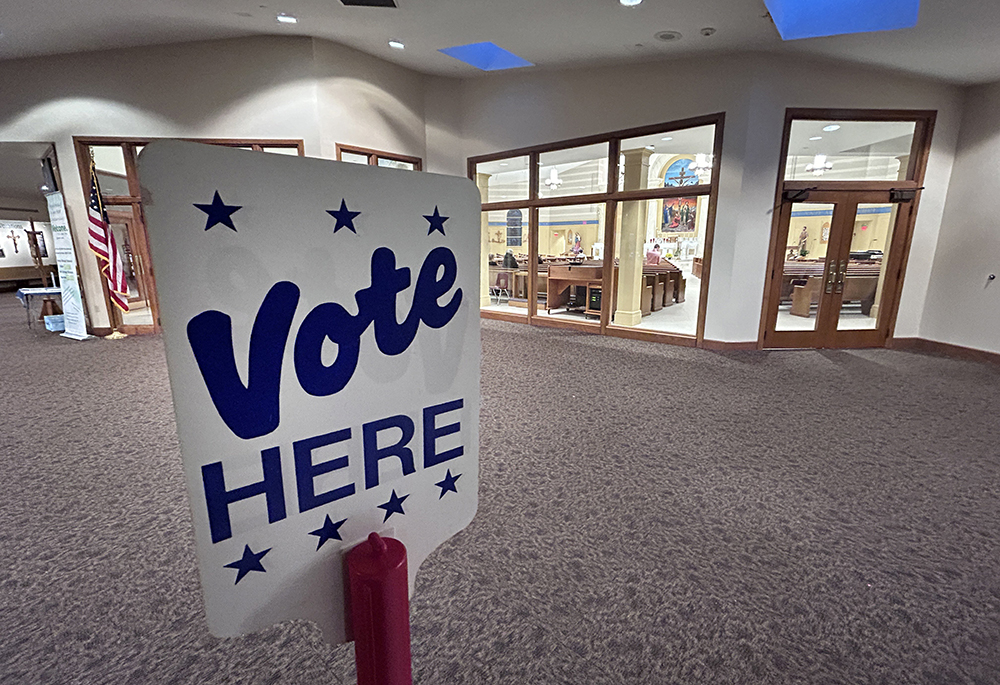
A voting sign is seen in the narthex of St. Elizabeth Ann Seton Church in Fort Wayne, Indiana, as the Eucharist is adored in the sanctuary Nov. 6, 2024. (OSV News/Gretchen R. Crowe)
Financial issues topped the students' concerns. They included cost of living at the top, cited by 66%; affordable housing and cost of higher education/student loan debt were both cited by 61%; mental health, 56%; access to health care, 52%; gun violence and immigration both were cited by 50%.
The job market, 48%, and the environment, 45%, both were cited by more students overall than "reproductive rights/abortion," 44%. Among students at Catholic schools, "reproductive rights/abortion" at 48%, came in higher than concerns about the job market, 46%, and the environment, 47%. The Catholic school students also listed "religion" as an important issue at 52%, far higher than their non-Catholic institution counterparts, at 38%.
More than half the participants, 60%, said their Catholic faith is influential in how they vote. Seventy-three percent of students at Catholic institutions said their faith is at least somewhat influential in voting, compared with 56% of those at non-Catholic schools.
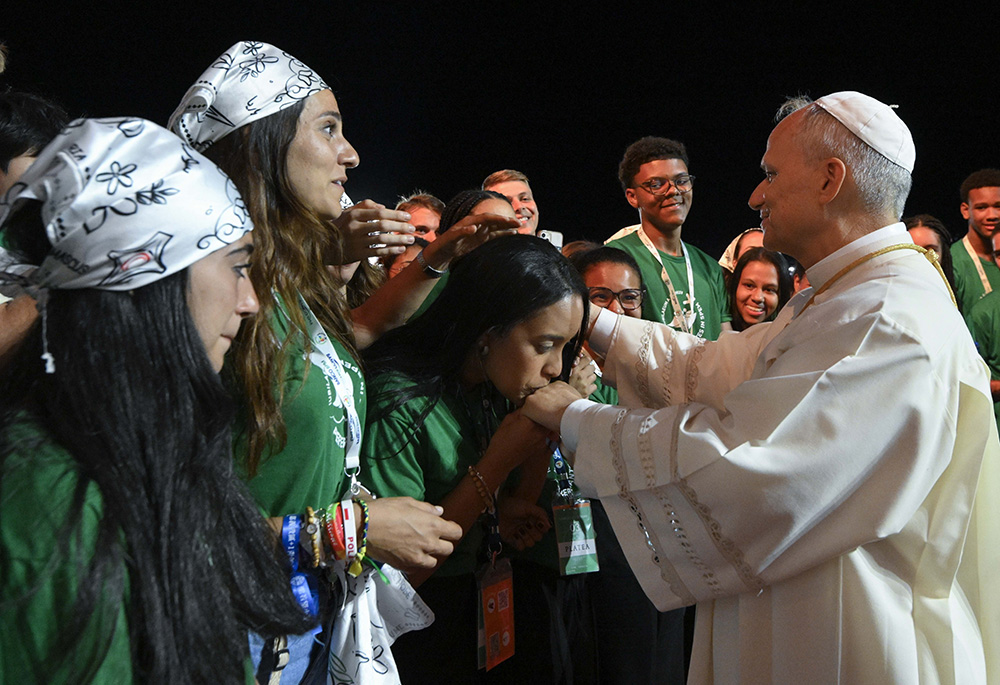
Pope Leo XIV greets young people after presiding over a prayer vigil with hundreds of thousands of young people in Rome's Tor Vergata neighborhood Aug. 2, 2025. Pope Leo will digitally address and dialogue on Nov. 21 with attendees at the 2025 National Catholic Youth Conference in Indianapolis, which is expected to draw about 15,000 young people ages 14-18. (CNS/Vatican Media)
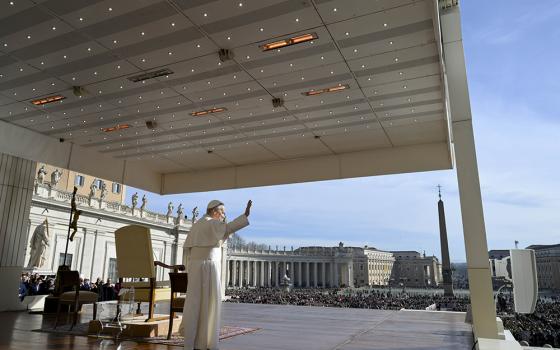
The students also were asked how much they pay attention to what Pope Francis and Pope Leo have said, written or done. In comments they shared with the surveyors, students pointed to their teachings and examples of compassion, social justice and service to the poor.
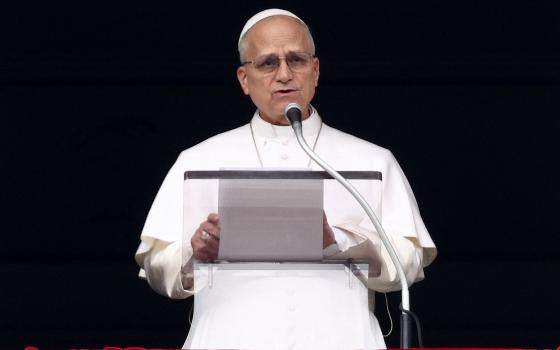
Sixty-two percent of the students said Pope Francis had a large or somewhat large impact on their Catholicism, while 54% said the same about Pope Leo, who was elected pope in May 2025.
Advertisement
"Pope Francis's focus on tolerance and compassion, rather than just dogmatic rules, has greatly impacted my Catholicism," said one comment from a student. "For example, his statement, 'Who am I to judge?' and his stance on welcoming divorced and remarried people, as well as the LGBTQ community, into the Church, made me feel that Catholicism could be a home where everyone could find a sense of belonging, not just a set of rules to follow. This perspective made me feel more comfortable and genuine in my faith."
Another student commented that Pope Leo's election earlier this year "led me to see that Catholicism is more widespread in America" and that they had been affected "with his dedication to spreading Catholicism to more diverse groups and in general creating a more accepting faith so many more can join us."
The study has a margin of error of plus or minus 4.89%.