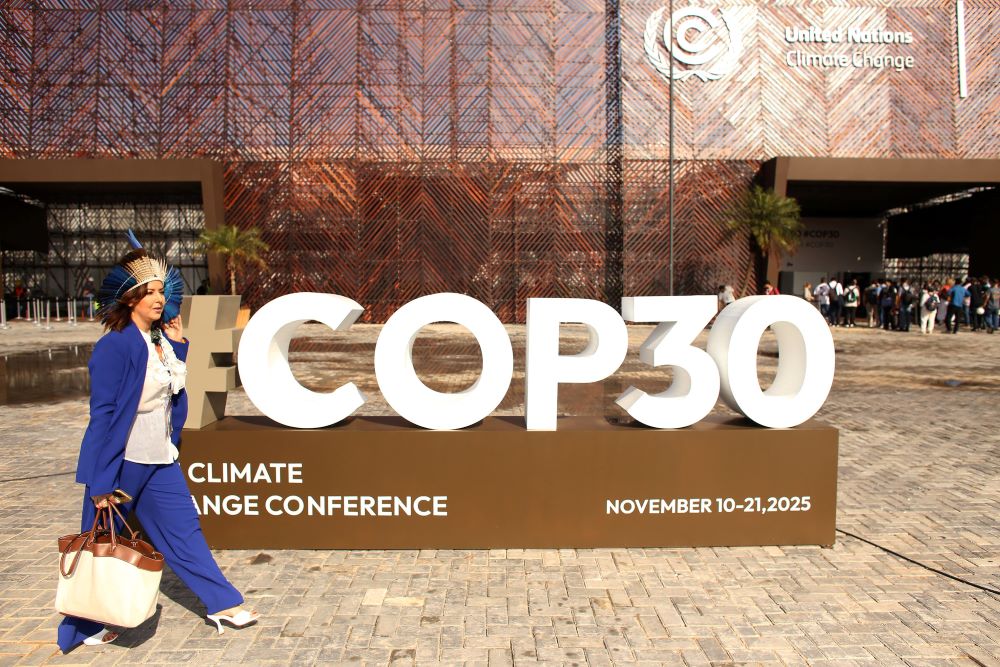
The city of Belém, Brazil, near the edge of the Amazon rainforest, will play host to the COP30 United Nations climate change conference Nov. 10-21. (COP30/Raimundo Pacco)

Urging people not to lose sight of "the human face of the climate crisis," Pope Leo XIV called on the nations of the world to set aside self-interests and "courageously accelerate" global action to limit suffering arising from rising global temperatures.
"It is vital to turn words and reflections into choices and actions based on responsibility, justice and equity to achieve lasting peace by caring for creation and our neighbors," Leo wrote in a Nov. 7 message to world leaders gathered in Belém, Brazil, on the edge of the Amazon rainforest, for the United Nations climate summit known as COP30.
"This Conference should become a sign of hope, through the respect shown to the views of others in the joint endeavor to search for common language and consensus, while putting aside selfish interests, bearing in mind the responsibility for one another and for future generations," Leo wrote in a message read aloud by Cardinal Pietro Parolin to start the second day of the leaders summit that saw more than 140 heads of state deliver remarks.
COP30 will officially open Nov. 10 and is scheduled to conclude Nov. 21. Against the backdrop of the Amazon Basin, the annual two-week conference will host 50,000 delegates from more than 190 countries, with a sizable Catholic presence expected in a country that is nearly 80% Catholic.
'Peace is also threatened by a lack of due respect for creation, by the plundering of natural resources and by a progressive decline in the quality of life because of climate change.'
—Pope Leo XIV
It comes a decade after the Paris Agreement, a historic deal where for the first time nearly 200 countries committed to reducing heat-trapping greenhouse gas emissions — primarily released from burning fossil fuels — that are altering the climate and leading to more extreme heatwaves, stronger storms, devastating wildfires and rising seas.
Since then, countries have made meager advances in meeting the Paris accord's main goal of limiting average temperature rise to "well below" 2 degrees Celsius, and ideally to 1.5 C.
Seventy-eight countries, representing two-thirds of global emissions, have submitted new climate plans (known as "nationally determined contributions") as required under the Paris Agreement every five years. Among them was the Holy See, which pledged to slash emissions in the world's smallest country by 28% by 2035.
A U.N. report issued ahead of COP30 showed that if fully implemented, those plans would yield temperature rise between 2.3 C and 2.8 C — a decline from prior trajectories but still well off pace from 1.5 C. Global emissions continue to rise, the report found, and temperatures will likely surpass 1.5 C, at least temporarily, within the next 10 years.
Eclipsing the 1.5 C target represents a "moral failure and deadly negligence," U.N. Secretary-General Antonio Gueterres said Nov. 6 at the leaders summit.
"Every fraction of a degree means more hunger, displacement and loss — especially for those least responsible," he said, adding the 1.5 C target must be kept within reach through deep emissions cuts this decade and massive expansion of renewable energy.
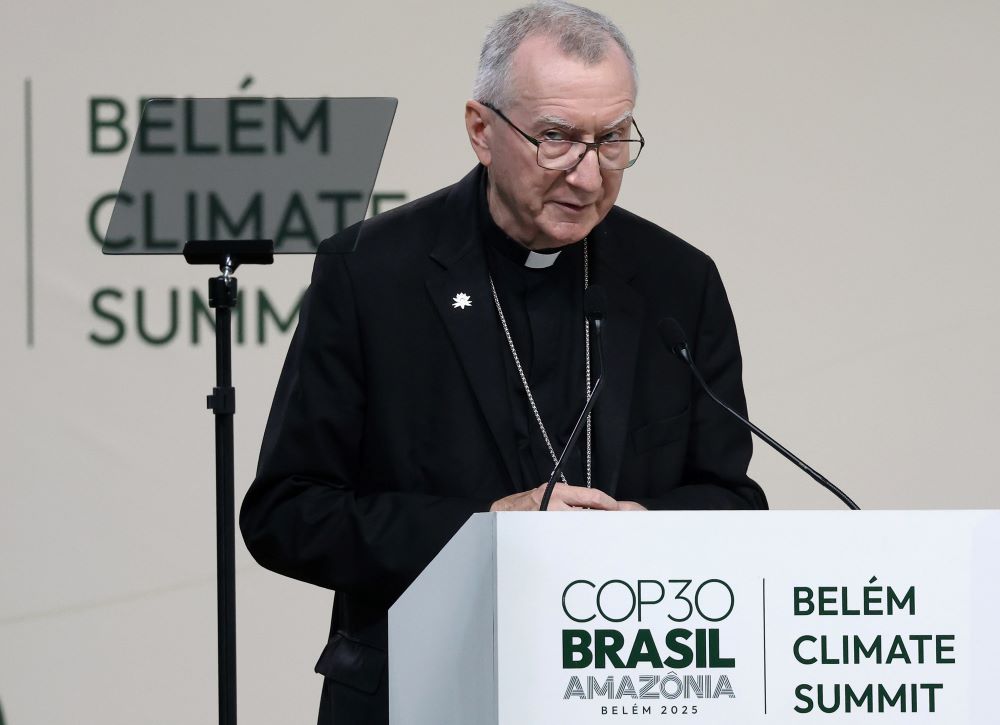
Cardinal Pietro Parolin, Vatican secretary of state, delivers a message from Pope Leo XIV during a leaders summit Nov. 7 at COP30, the United Nations climate change conference, in Belém, Brazil. (COP30/Isabel B.)
The stalled action on climate led Pope Francis in 2023 to issue Laudate Deum, a follow-up to his 2015 encyclical "Laudato Si', on Care for Our Common Home," in which he warned the world "may be nearing the breaking point." Francis timed the release of Laudato Si' just months ahead of the December 2015 Paris meeting in December to spur nations to reach a deal after years of falling short.
Likewise, Leo in his message acknowledged limited progress countries have made in achieving the Paris Agreement's goals, saying the path "remains long and complex." He lamented a disregard for the common good in current politics that has been defined by "collective selfishness, disregard for others and short-sightedness."
"Against this backdrop, State Parties are urged to courageously accelerate the implementation of the Paris Agreement and the United Nations Framework Convention on Climate Change," the pope said.
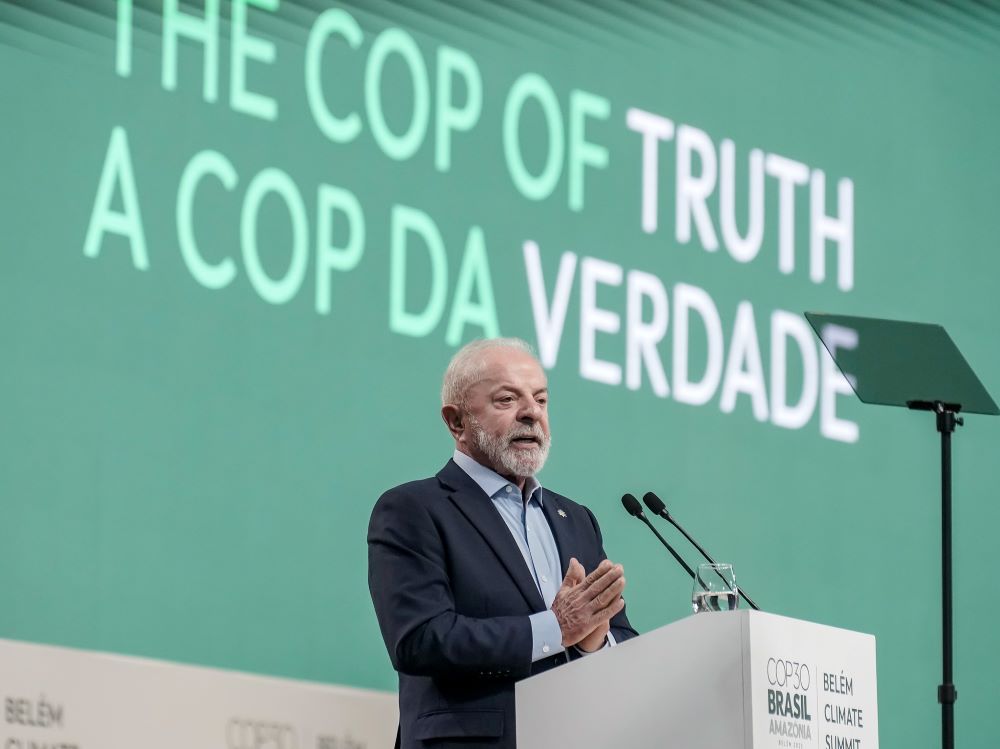
Brazil's President Luiz Inacio Lula da Silva attends the opening of the leaders summit during the COP30 United Nations climate change conference, in Belém, Brazil, on Nov. 6, 2025. (COP30/ Rafa Neddermeyer)
During the first six months of his papacy, Leo has repeatedly raised environmental concerns and the need for action in the face of intensifying climate change. In October, he urged Catholics to find new ways to awaken people's hearts on climate and other environmental crises during a conference marking the 10-year anniversary of Laudato Si'.
Reflecting the long history of church teaching on creation, Leo in his message to COP30 quoted each of the past three popes, as well as the homily he delivered in July in celebrating the first Mass under a new formulary for care of creation.
He repeated Francis' call for an ecological conversion to awaken and animate all people to self-reflection and action to limit grave threats to life that climate impacts pose. And he opened his address by lifting up Pope Benedict XVI's linkage of peacebuilding and stewardship of creation, most notably in Benedict's 2010 World Day of Peace message.
With the international community mostly focused on conflicts raging among nations, Leo said, "there is also an ever growing awareness that peace is also threatened by a lack of due respect for creation, by the plundering of natural resources and by a progressive decline in the quality of life because of climate change."
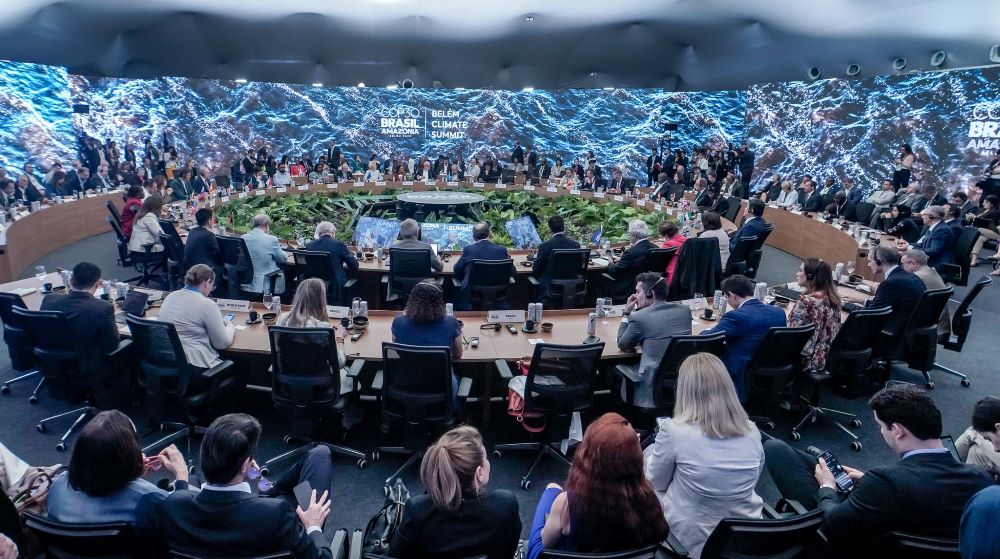
More than 140 heads of state and ministers took part in the two-day leaders summit preceding the COP30 United Nations climate change conference, in Belém, Brazil. (COP30/Rafa Neddermeyer)
Leo also cited Pope John Paul II's framing of the ecological crisis as a moral crisis and echoed the Polish pope's call for solidarity, especially between industrialized nations and developing countries, emphasizing that people who are economically poor face climate impacts first and worst, despite contributing little to global emissions.
"Tragically, those in the most vulnerable situations are the first to suffer the devastating effects of climate change, deforestation and pollution. Caring for creation, therefore, becomes an expression of humanity and solidarity," Leo said.
Such solidarity, the pope added, must extend through financing for climate mitigation and adaptation solutions. He endorsed linking foreign debts held by developing countries to "ecological debt" compiled by many wealthy countries that built economies through extracting natural resources from the Global South.
Advertisement
Resolving such debts was a priority from the bishops of the Global South in an unprecedented joint appeal earlier this year, which also demanded the end of the use of fossil fuels. The heads of each of the continental episcopal conferences of Latin America, Africa and Asia will be in Belém during COP30.
The pope himself received numerous invitations to attend as well — including from Brazilian politicians leading the proceedings — but declined, instead sending Parolin, the Holy See secretary of state, who will again lead the Vatican delegation.
In concluding his message, Leo wrote, "May all the participants in this COP30 commit themselves to protecting and caring for the creation entrusted to us by God in order to build a peaceful world."