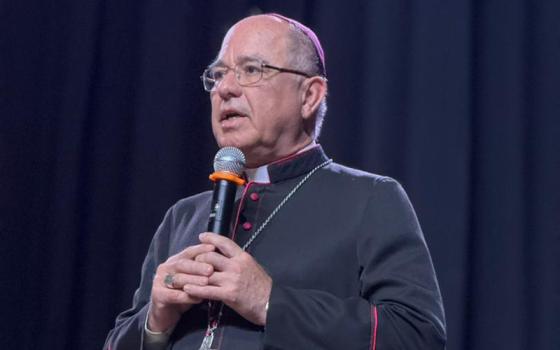
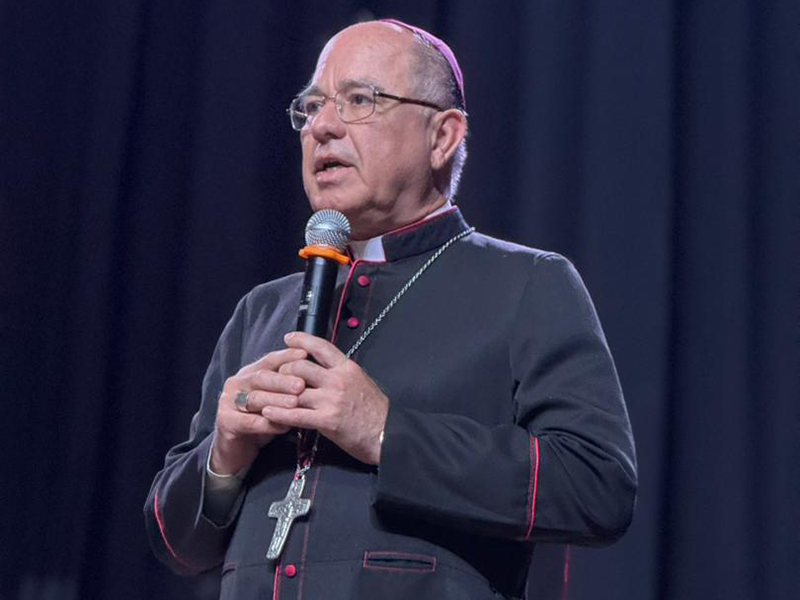
Archbishop Jesús González de Zárate of Valencia, Venezuela, speaks Nov. 5, 2025. NCR interviewed González via email days after the U.S. attack on Caracas Jan. 3, 2026. (Courtesy of Archdiocese of Valencia Press Department)

As Venezuela absorbs the shock of the U.S. military operation that led to the capture of President Nicolás Maduro, the country's Catholic Church is confronting a kind of reckoning that is measured in fear, grief and moral uncertainty among the faithful. In an email interview with the National Catholic Reporter days after the attack on Caracas, Archbishop Jesús González de Zárate, president of the Venezuelan bishops' conference and archbishop of Valencia, described a nation struggling to steady itself emotionally and spiritually as daily life cautiously resumes.
"These have been tense days, lived in a tense calm and with mixed feelings," González said, summarizing what he sees across parishes and communities. While shops reopen and schools return to the official calendar, the archbishop noted that many Venezuelans remain shaken by the violence and its aftermath. "The greatest impact is on the emotional state – unease, fear," he said, pointing also to the wounded and dead left behind by the operation, and to the private suffering of families now in mourning.
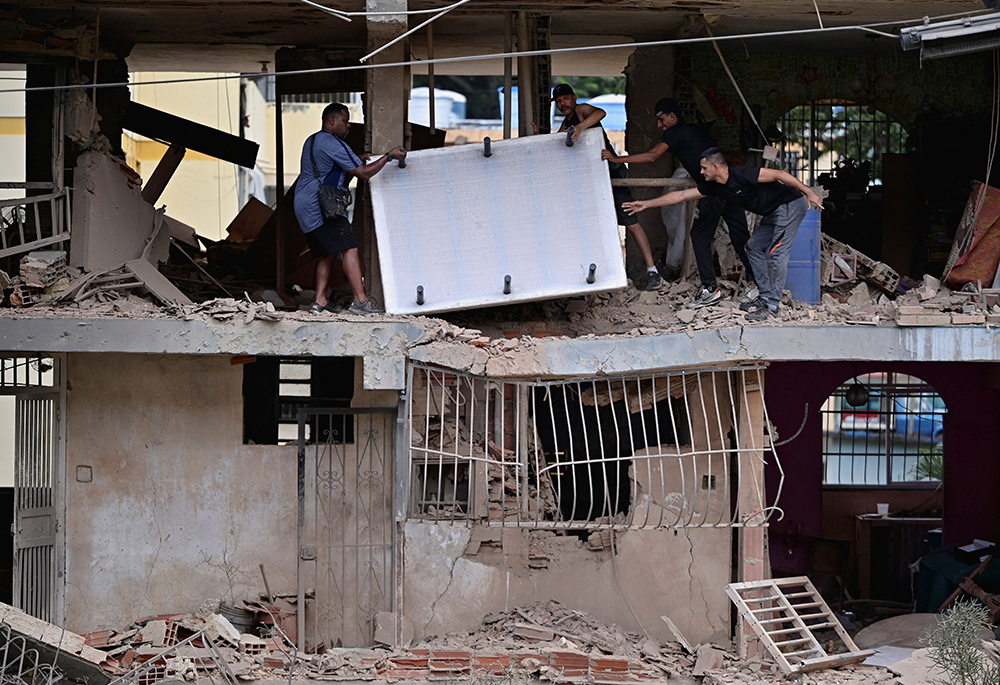
People carry personal belongings at a damaged building in Catia La Mar, Venezuela, Jan. 4, 2026, following U.S. strikes the previous day on Venezuela during which President Nicolás Maduro and his wife, Cilia Flores, were captured. (OSV News/Reuters/Gaby Oraa)
The Catholic Church, which has long served as one of Venezuela's most trusted institutions amid political polarization and economic collapse, is once again operating at the intersection of national crisis and personal trauma. Clergy across the country report parishioners seeking reassurance and clarity in the face of events that raise profound questions about legality, sovereignty and the rule of law.
According to González, these questions are being asked unevenly, reflecting the country's deep divisions. Reactions differ sharply between Venezuelans who remain in the country and those living abroad and between citizens aligned with opposing political camps. Yet even among those who welcomed the end of Maduro's rule, the archbishop said, there is uncertainty about the means used and the long-term consequences for Venezuelan society.
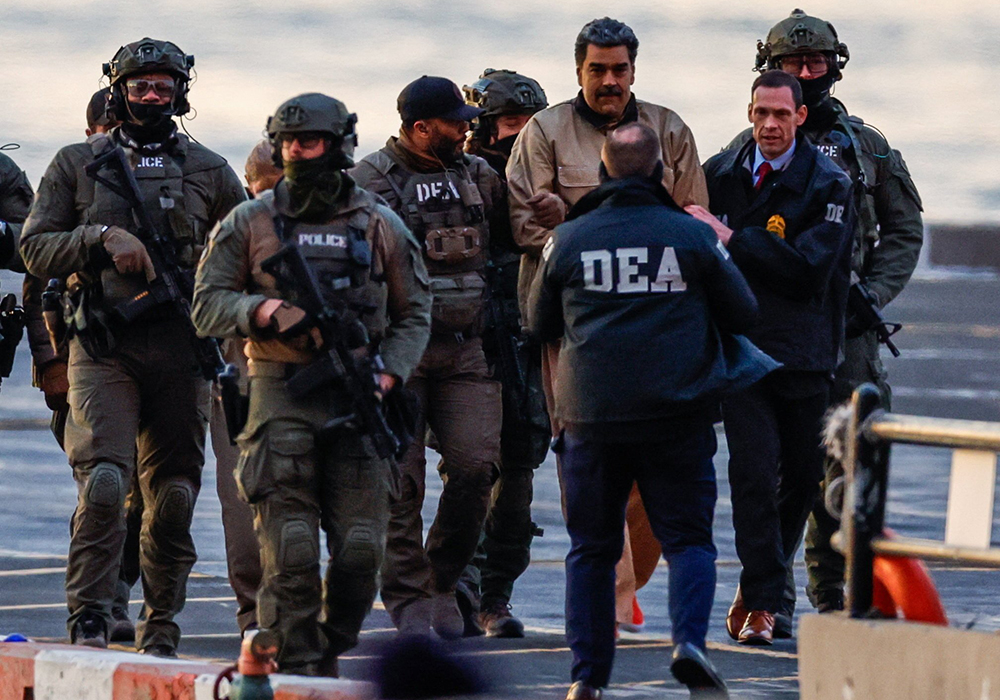
Captured Venezuelan President Nicolás Maduro arrives at the Downtown Manhattan Heliport in New York City Jan. 5, 2026, as he heads towards the Daniel Patrick Moynihan United States Courthouse for an initial appearance to face U.S. federal charges including narco-terrorism, conspiracy, drug trafficking, money laundering and others. (OSV News/Reuters/Eduardo Munoz)
In the immediate aftermath of the operation, Caracas and other major cities experienced disruptions to transport, commerce and public services. Those disruptions have begun to ease, driven less by political confidence than by economic necessity.
"The economic situation is precarious," González said, explaining why many people returned to work quickly despite lingering fear. Authorities have also announced the resumption of school activities, reinforcing a fragile sense of normalcy.
For the Venezuelan church, the priority now is accompaniment. As president of the national bishops' conference, González has been in close contact with fellow bishops assessing pastoral needs in their dioceses, particularly in poorer communities already strained by years of instability and food shortage. The challenge, he said, is to acknowledge the pain and confusion without inflaming division — and to keep attention focused on human dignity amid rapidly shifting political realities.
The interview was originally conducted in Spanish and has been edited for purposes of length and clarity.
NCR: Archbishop González, to what extent has the recent intervention of U.S. forces influenced the role of the church in Venezuelan public life? Do Catholics see the church more as a moral guide, or are they divided in their expectations regarding what different religious leaders say?
González: Church activity has resumed in many places since Saturday, Jan. 3. The presence of the faithful at Sunday Eucharistic celebrations was almost as usual. With the necessary precautions imposed by a situation of this nature, and the measures dictated by the government, the life of the church is proceeding normally. In these types of situations, calm and prudence are essential.
The Catholic Church continues to be a primary moral reference point for the majority of the Venezuelan people. Their role in public life is characterized as pastoral, not political, a fact underscored by recent opinion polls.
We Venezuelan bishops have worked diligently to maintain unity among ourselves and within our dioceses, respecting the plurality of perspectives and striving for inclusivity.
Some recent criticisms of the bishops' public statements come from groups, both within the government and the opposition, who would like the episcopate to endorse their partisan positions.
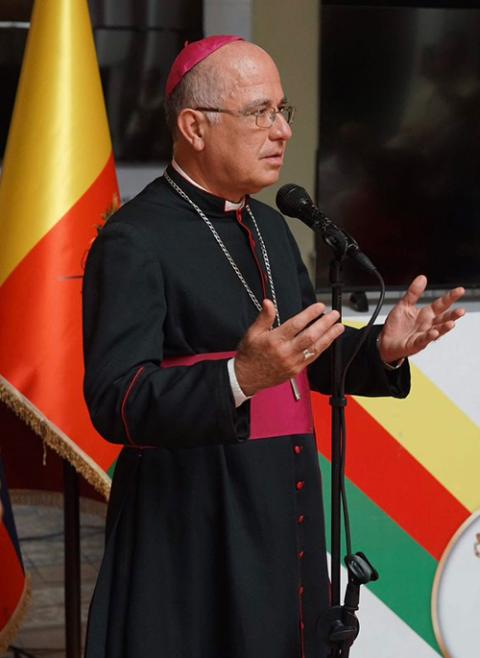
Archbishop Jesús González de Zárate, pictured Oct. 27, 2024 (Leonardo Rojas Magallanes)
Given your repeated emphasis on dialogue and peaceful resolution, how do you reconcile these calls for peace with the frustration of many faithful who have suffered for years under autocratic rule and economic collapse?
Venezuelans continue to hope for a peaceful solution, within the framework of democratic legality, to the many problems that have afflicted them in recent times. As we bishops affirmed in our recent Christmas message, Venezuelans are people of peace, of a true peace born of truth and justice, of the common good.
The fact that initiatives to find a solution with the participation of all have been frustrated for so long has generated, in vast sectors of the population, great distrust and even discredit toward anything that smacks of dialogue and negotiation. This makes it more difficult to put forward proposals in this regard. Faced with this reality, some saw the possibility of other paths to a solution, without sufficiently weighing the consequences they entail.
The release of those imprisoned for their political positions, so often requested by the bishops, would be a sign of openness in this area.
The Venezuelan Episcopal Conference, or CEV, has previously described the political situation as a "closed autocracy" with grave consequences. How has the pastoral mission of the Venezuelan church adapted to the "closed autocracy" you have described, particularly with regard to evangelization, social action and the defense of human rights, without endangering the clergy or the laity?
In this difficult context, we have acted guided by faith and strengthened by Christian hope. It has required redoubled creativity and the ability to adapt methods and strategies to respond to the turbulent and precarious situations we have faced during this time.
With prudence, but without shying away from the challenges and risks involved, the church in Venezuela has continued its work of evangelization, charity, integral education, human development and the defense of the individual. In this task, we rely on the invaluable contributions of priests, deacons, religious men and women and numerous laypeople.
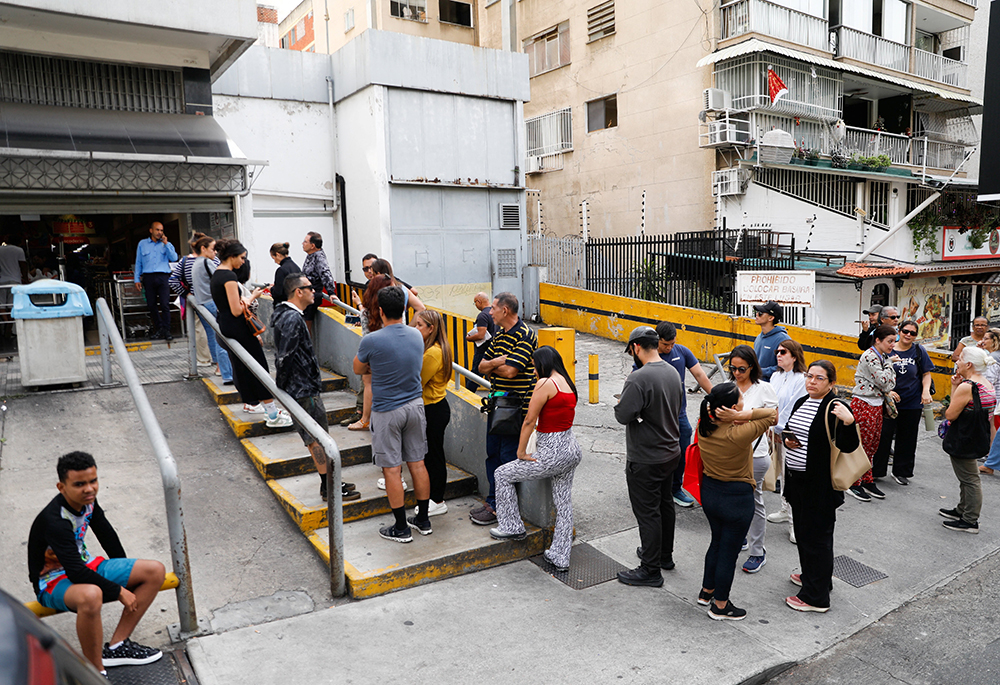
People wait to buy food at a supermarket in Caracas, Venezuela, Jan. 3, 2026, after U.S. President Donald Trump said the U.S. has struck Venezuela and captured its President Nicolas Maduro. (OSV News/Reuters/Leonardo Fernandez Viloria)
In practical terms, what are the greatest material needs of Venezuelan Catholics at this time, and what role can the church realistically play in alleviating suffering where the Venezuelan state has almost completely failed?
The economic reality of Venezuela is one of widespread impoverishment, meaning that the vast majority of the population can barely cover basic needs such as food, health care and transportation. We live in a fragmented economy where wages have been decimated and are subject to high rates of inflation.
With the help of international institutions, but above all, thanks to the generosity and training of a large network of social volunteers, we carry out various programs to address childhood malnutrition, pregnancy and breastfeeding and situations of environmental risk. Food assistance programs have also been developed at the local level (community kitchens, soup kitchens for children and the elderly), along with various health services, legal defense for displaced persons and vulnerable individuals and training in the social doctrine of the church.
We have also closely monitored and established constant communication and joint working groups with the episcopates of various countries and international organizations, the migration situation, which is currently of great concern to us bishops, given the unfavorable changes in the migration policies of some nations for Venezuelans.
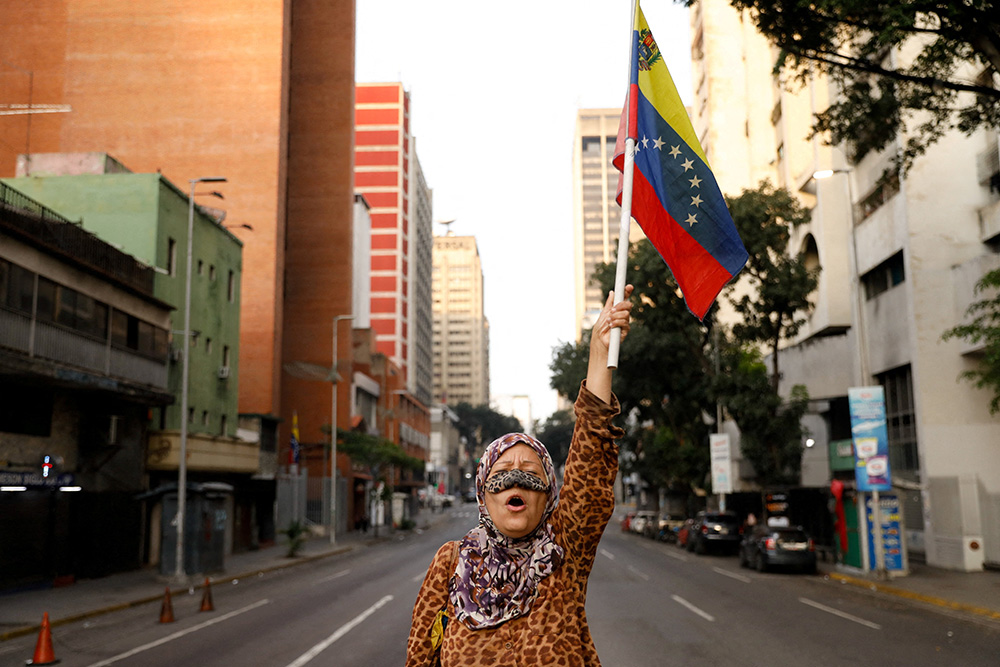
A supporter of Venezuelan President Nicolás Maduro holds a flag of Venezuela on a street near Miraflores Palace in Caracas, Jan. 3, 2026, after U.S. President Donald Trump said the U.S. has struck Venezuela and captured Maduro. (OSV News/Reuters/Leonardo Fernandez Viloria)
Has the church suffered any direct pressure, censorship, or repression from Venezuelan authorities for speaking out on issues such as justice, human rights or freedom? How does it protect its mission and its voice in such an environment?
Over the years, our positions have been questioned, not only by the authorities but also by other political sectors. There have been moments of heightened tension that have affected the daily lives of many communities. As I mentioned before, we Catholics in Venezuela have learned to navigate these difficulties with a spirit of faith.
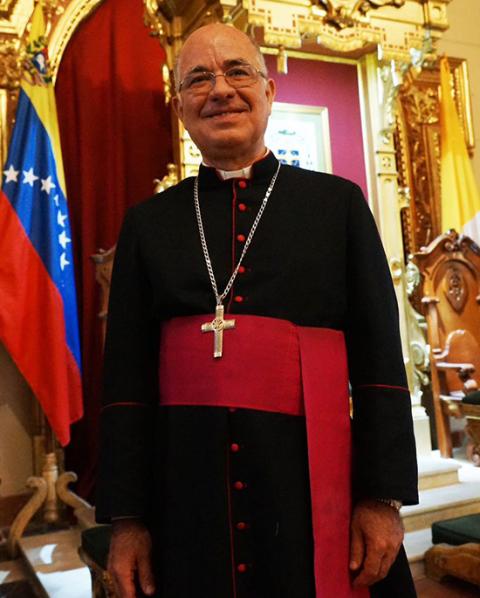
Archbishop Jesús González de Zárate, pictured Oct. 27, 2024 (Leonardo Rojas Magallanes)
Some Catholics express a crisis of confidence in political and religious institutions after years of hardship. How does the church address issues of trust, commitment and spiritual renewal among young people and families?
Trust in institutions will only be restored through concrete actions. This is the great challenge. A change of personnel is not enough; there must be a real transformation of the values that underpin the institutions of the country's social, political, economic and cultural life. Here, issues such as truth, justice, responsibility, honesty in administration and the fair distribution of resources belonging to all Venezuelans are very important.
In its daily work, the church has strived to maintain this trust through social, family and youth pastoral programs, educational and vocational training institutes, its charitable works, human development initiatives and defense of human rights. The family, and young people within it, are a constant focus of the church in Venezuela.
Advertisement
Looking to the future, what message would you like to convey to the international Catholic community and world leaders, including the Vatican, regarding their responsibility toward Venezuelan Catholics in these turbulent times?
That the responsibility for resolving the situations Venezuelans are experiencing today is, first and foremost, ours. Foreign aid is necessary, but it will not be effective if it disregards our participation, our specific needs and problems, and our way of seeing and confronting reality.
I want to express my gratitude for the closeness and words of encouragement that we have received at all times from Pope Leo XIV and the various bodies of the Holy See, with whom we maintain constant communication.